Table of Contents
Introduction: Why STEM Subjects Matter More Than Ever Today
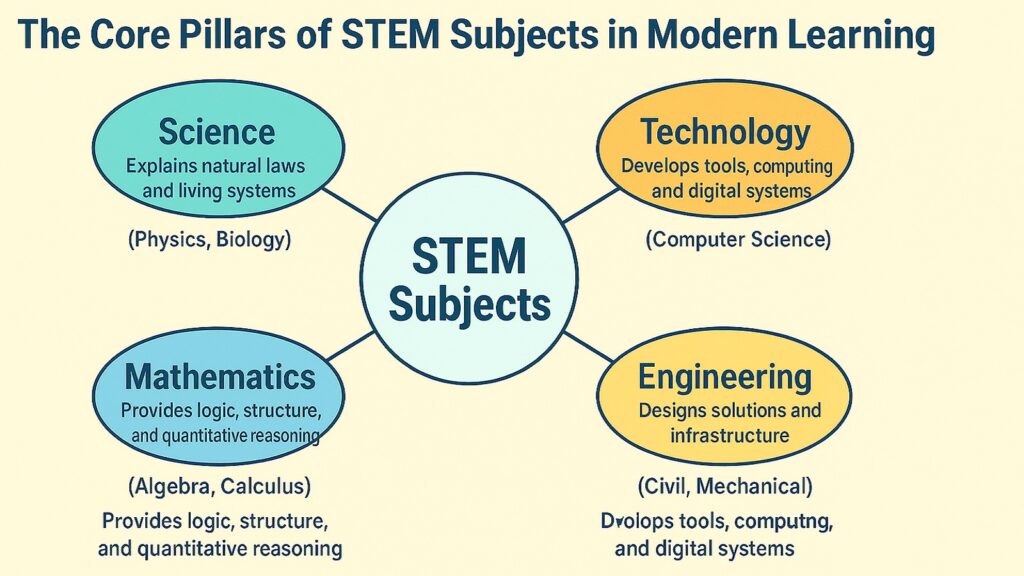
The world stands at a remarkable crossroads where human potential meets technological possibility. STEM subjects—Science, Technology, Engineering, and Mathematics—form the bedrock upon which modern civilization builds its future. These disciplines are not merely academic categories but living frameworks that shape how we understand reality, solve problems, and create pathways toward progress.
In classrooms across continents, students encounter STEM subjects as their first gateway to systematic thinking. A child learning basic algebra begins to see patterns in chaos. A teenager studying chemistry witnesses matter transforming before their eyes. These moments kindle something essential: the recognition that the universe operates by discoverable principles, and human minds possess the capacity to grasp them.
The importance of STEM subjects extends far beyond individual enlightenment. Nations recognize that their economic vitality depends on citizens who can navigate technical landscapes with confidence. Companies seek employees who bring analytical rigor to complex challenges. Researchers push boundaries in laboratories where STEM subjects converge to unlock nature’s secrets. From artificial intelligence reshaping industries to biotechnology extending human lifespans, every major advancement traces back to foundations laid by STEM education.
What makes STEM subjects particularly vital now is the accelerating pace of change. Technologies that seemed futuristic a decade ago have become commonplace. Automation transforms workplaces at unprecedented speed. Climate patterns shift in ways that demand sophisticated scientific responses. In this environment, literacy in STEM subjects is no longer optional—it has become a fundamental requirement for participating meaningfully in modern society.
This article explores eight essential insights that reveal why STEM subjects matter so profoundly. Each insight illuminates a different facet of how these disciplines empower individuals, drive innovation, create opportunities, and address the pressing challenges facing humanity. Whether you are a student choosing a field of study, an educator shaping curriculum, a parent guiding children, or simply someone curious about the forces shaping tomorrow, understanding STEM subjects provides clarity about where the world is heading.
Top 16 STEM Subjects Shaping Modern Education and Innovation
| STEM Subjects | Core Focus and Real-World Impact |
|---|---|
| Physics | Studies matter, energy, forces, and fundamental laws governing the universe; enables technologies from semiconductors to renewable energy systems |
| Chemistry | Explores substances, reactions, and molecular interactions; drives pharmaceutical development, materials innovation, and environmental solutions |
| Biology | Examines living organisms and life processes; underpins medicine, agriculture, biotechnology, and conservation efforts |
| Mathematics | Provides language of patterns, relationships, and quantitative reasoning; essential for all scientific modeling and technological design |
| Computer Science | Focuses on computation, algorithms, and information systems; powers software, AI, cybersecurity, and digital infrastructure |
| Engineering (General) | Applies scientific principles to design solutions for practical problems; builds infrastructure, machinery, and technological systems |
| Environmental Science | Studies ecosystems, climate, and human-environment interactions; guides sustainability policies and conservation strategies |
| Data Science / Statistics | Analyzes patterns in large datasets; informs business decisions, policy making, and scientific research across all domains |
| Astronomy / Astrophysics | Investigates celestial objects and cosmic phenomena; advances understanding of the universe and drives space exploration |
| Robotics / Automation | Develops intelligent machines and automated systems; transforms manufacturing, healthcare, and service industries |
| Geology | Studies Earth’s structure, processes, and history; supports resource extraction, hazard prediction, and environmental management |
| Microbiology | Examines microscopic organisms; crucial for understanding disease, developing vaccines, and advancing biotechnology |
| Genetics | Investigates heredity and gene function; enables personalized medicine, crop improvement, and evolutionary insights |
| Neuroscience | Explores nervous system structure and function; advances treatments for neurological disorders and understanding of consciousness |
| Materials Science | Studies properties and applications of materials; creates advanced composites, nanotechnology, and sustainable alternatives |
| Marine Biology | Focuses on ocean life and ecosystems; supports fisheries management, conservation, and pharmaceutical discoveries |
1. STEM Subjects and Their Expanding Role in Modern Education
Education systems worldwide have undergone quiet revolutions over the past few decades. The changes run deeper than new textbooks or digital classrooms. At the heart of this transformation lies a fundamental recognition: STEM subjects provide the conceptual tools students need to thrive in a world increasingly defined by scientific and technological forces.
Elementary schools now introduce coding alongside reading and arithmetic. Middle school curricula weave engineering design challenges into science classes. High schools offer advanced placement courses in computer science that did not exist a generation ago. This expansion reflects more than passing trends. Educational leaders have come to understand that STEM subjects cultivate ways of thinking that transcend any single discipline.
The shift toward STEM subjects in education responds to observable realities in the job market. Labor economists note that positions requiring technical skills grow faster than those that do not. Employers across industries seek candidates who can interpret data, troubleshoot systems, and apply quantitative reasoning. Even careers not traditionally considered technical now demand fluency with the tools and concepts that STEM subjects provide.
Yet the expansion of STEM subjects in education serves purposes beyond career preparation. These disciplines teach students to approach problems systematically, to distinguish reliable evidence from speculation, and to embrace failure as part of the learning process. A student struggling through a challenging mathematics proof develops persistence. A young person conducting experiments in a biology lab learns that nature reveals its secrets only to those who ask precise questions.
Countries that prioritize STEM subjects in their educational frameworks consistently outperform peers in international assessments. Singapore’s mathematics curriculum, Finland’s inquiry-based science instruction, and South Korea’s technology integration demonstrate how intentional focus on STEM subjects yields measurable results. These nations understand that educational investment in STEM subjects translates directly into economic competitiveness and innovation capacity.
The democratization of STEM subjects also matters profoundly. Historically, access to quality science and mathematics education correlated strongly with privilege. Today, online platforms, open educational resources, and community programs work to ensure that STEM subjects reach learners regardless of background. This widening access holds potential to unlock talent that might otherwise remain undiscovered.
Ten Proven Strategies for Excelling in STEM Subjects
| Strategy | How It Strengthens STEM Learning Skills |
|---|---|
| Practice Active Problem-Solving Daily | Regular engagement with challenging problems builds familiarity with concepts and strengthens pattern recognition abilities |
| Connect Concepts to Real Applications | Understanding how abstract ideas apply to actual situations makes learning meaningful and improves retention |
| Form Study Groups with Peers | Explaining concepts to others and discussing different approaches deepens understanding and reveals knowledge gaps |
| Use Visual Representations | Diagrams, graphs, and models help translate abstract concepts into concrete forms that are easier to comprehend |
| Embrace Mistakes as Learning Tools | Analyzing errors reveals misconceptions and strengthens understanding more effectively than only reviewing correct answers |
| Build Strong Mathematical Foundations | Mathematics underpins all STEM subjects; solid arithmetic, algebra, and geometry skills enable progress in advanced topics |
| Engage in Hands-On Experiments | Practical laboratory work and projects make theoretical knowledge tangible and develop experimental skills |
| Read Beyond Required Coursework | Exploring scientific literature, biographies of scientists, and popular science writing provides context and inspiration |
| Seek Mentorship from Experienced Practitioners | Guidance from teachers, professionals, or advanced students provides personalized advice and opens new perspectives |
| Maintain Consistent Study Schedules | Regular, distributed practice proves more effective than cramming; consistent engagement allows concepts to consolidate |
2. STEM Subjects as Drivers of Innovation and Global Progress
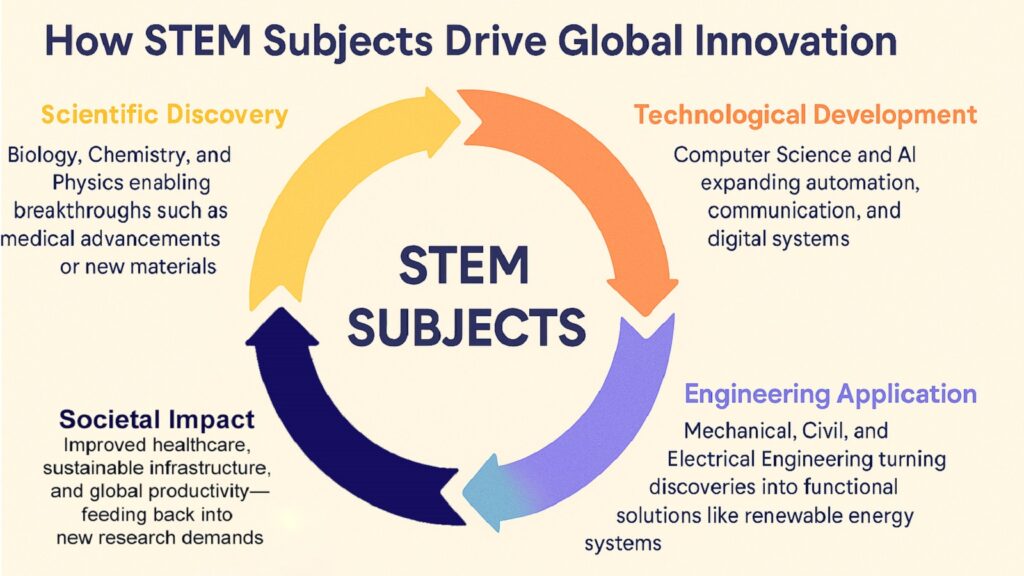
Innovation does not emerge from thin air. Behind every technological breakthrough, medical advancement, or engineering marvel stands a foundation built from STEM subjects. The smartphones in billions of pockets, the vaccines protecting populations, the renewable energy systems powering cities—all trace their lineage to insights gained through rigorous study of science, technology, engineering, and mathematics.
Consider how STEM subjects converge to create transformative technologies. The development of lithium-ion batteries required chemistry to understand electrochemical reactions, physics to optimize energy transfer, materials science to select appropriate components, and engineering to design safe and efficient systems. This interdisciplinary approach characterizes modern innovation, where boundaries between traditional STEM subjects blur in service of solving complex problems.
The pharmaceutical industry provides another compelling illustration. When researchers develop new medications, they draw upon biology to understand disease mechanisms, chemistry to synthesize compounds, computer science to model molecular interactions, and statistics to analyze clinical trial data. Each STEM subject contributes essential knowledge, and the absence of any one would cripple the entire endeavor.
Global challenges demand solutions rooted in STEM subjects. Climate change requires atmospheric scientists to model carbon cycles, engineers to design clean energy systems, and data analysts to interpret vast climate datasets. Food security depends on agricultural scientists improving crop yields, geneticists developing drought-resistant varieties, and environmental scientists managing ecosystems sustainably. These challenges cannot be addressed through good intentions alone—they require the rigorous methodologies that STEM subjects provide.
The pace of innovation accelerates as STEM subjects themselves advance. Machine learning algorithms now assist researchers in discovering new materials. Quantum computers promise to solve problems beyond the reach of classical computation. CRISPR gene-editing technology enables precise modifications to DNA. Each breakthrough opens new territories for exploration and creates opportunities for further innovation.
Developing nations increasingly recognize that investment in STEM subjects offers pathways to prosperity that bypass older industrial models. A country with strong STEM education can leapfrog directly to advanced technologies without replicating the environmental damage of earlier industrialization. India’s information technology sector, Rwanda’s focus on STEM education, and Vietnam’s electronics manufacturing demonstrate how strategic emphasis on STEM subjects can transform economies within a generation.
Ten Major Innovations from STEM Subjects Driving Global Progress
| Innovation | STEM Foundation and Global Impact |
|---|---|
| mRNA Vaccine Technology | Combines molecular biology, genetics, and immunology; enabled rapid COVID-19 vaccine development and promises treatments for cancer and other diseases |
| Artificial Intelligence and Machine Learning | Built on computer science, mathematics, and statistics; transforms industries from healthcare diagnostics to autonomous vehicles |
| Renewable Energy Systems | Integrates physics, materials science, and engineering; provides sustainable alternatives to fossil fuels and reduces carbon emissions |
| CRISPR Gene Editing | Emerged from microbiology and genetics research; offers precise tools for treating genetic disorders and improving agriculture |
| Quantum Computing | Applies quantum physics and advanced mathematics; promises exponential increases in computational power for complex problems |
| Advanced Battery Technology | Relies on chemistry, materials science, and physics; enables electric vehicles and grid-scale energy storage |
| Nanotechnology Applications | Uses physics, chemistry, and materials science; creates materials with novel properties for medicine, electronics, and manufacturing |
| Quantum Sensors and Metrology | Leverages quantum physics principles; enables unprecedented precision in measuring gravitational fields, magnetic fields, and time for applications in navigation and medical imaging |
| Particle Accelerator Medical Applications | Applies particle physics technology; delivers targeted radiation therapy for cancer treatment and produces medical isotopes for diagnostic imaging |
| Immunotherapy for Cancer Treatment | Draws from biology, genetics, and medical science; harnesses the immune system to target cancer cells more effectively |
3. How STEM Subjects Shape High-Growth Career Opportunities
The relationship between STEM subjects and career prospects has never been more direct or consequential. Labor market data reveals a consistent pattern: occupations requiring STEM knowledge grow faster, pay better, and offer greater stability than most alternatives. This trend shows no signs of reversing as automation and artificial intelligence reshape the employment landscape.
Traditional career paths once provided predictable trajectories from education to retirement. Those certainties have eroded. Manufacturing jobs that sustained communities for generations have vanished. Clerical positions have been automated. Retail faces disruption from e-commerce. Yet careers rooted in STEM subjects remain resilient and continue expanding because they center on skills that machines cannot easily replicate: creative problem-solving, complex analysis, and the ability to work at the frontiers of knowledge.
The diversity of careers stemming from STEM subjects surprises many people who imagine scientists working in isolation or engineers confined to factories. A degree in biology opens pathways to genetic counseling, pharmaceutical research, environmental consulting, science journalism, and biotechnology entrepreneurship. Mathematics graduates find opportunities in financial modeling, cryptography, actuarial science, operations research, and data analysis. The skills developed through STEM subjects transfer across industries in ways that few other disciplines match.
Salary data underscores the economic value of STEM expertise. According to employment statistics, median salaries for STEM occupations consistently exceed those in non-STEM fields by substantial margins. Software developers, petroleum engineers, data scientists, and nurse practitioners earn wages that provide comfortable middle-class lifestyles. These compensation levels reflect genuine scarcity—employers struggle to find qualified candidates with robust STEM backgrounds.
The future of work tilts even more strongly toward STEM subjects. Artificial intelligence will eliminate many routine tasks while creating demand for professionals who can design, implement, and maintain intelligent systems. Climate change will require engineers to build resilient infrastructure and scientists to develop mitigation strategies. An aging global population will need healthcare workers trained in advanced medical technologies. Each of these trends amplifies the importance of STEM education.
Geography matters less than it once did for STEM careers. Remote work enabled by digital technologies allows programmers in Vietnam to collaborate with teams in California. Researchers in Kenya contribute to international scientific projects. This globalization of STEM employment creates opportunities for talented individuals regardless of location, though it also intensifies competition and raises the bar for skills and knowledge.
Ten High-Growth Career Opportunities Emerging from STEM Subjects
| Career Field | STEM Foundation and Growth Outlook |
|---|---|
| Data Scientist | Requires statistics, computer science, and mathematics; demand grows as organizations seek insights from large datasets |
| Artificial Intelligence Engineer | Combines computer science, mathematics, and engineering; essential for developing machine learning systems and automation |
| Quantum Computing Specialist | Requires quantum physics, mathematics, and computer science; develops quantum algorithms and maintains quantum computing systems |
| Astrophysicist / Space Scientist | Built on astronomy, physics, and mathematics; researches cosmic phenomena, analyzes space data, and supports space exploration missions |
| Biomedical Engineer | Integrates biology, engineering, and medical science; creates medical devices, prosthetics, and diagnostic equipment |
| Cybersecurity Specialist | Applies computer science, mathematics, and systems engineering; protects digital infrastructure from increasing threats |
| Genetic Counselor | Uses genetics, biology, and healthcare knowledge; helps patients understand hereditary conditions and treatment options |
| Robotics Engineer | Requires engineering, computer science, and mathematics; develops automated systems for manufacturing, healthcare, and services |
| Aerospace Engineer | Built on physics, mathematics, and engineering; designs aircraft, spacecraft, satellites, and propulsion systems |
4. STEM Subjects and the Essential Skills Needed for Tomorrow
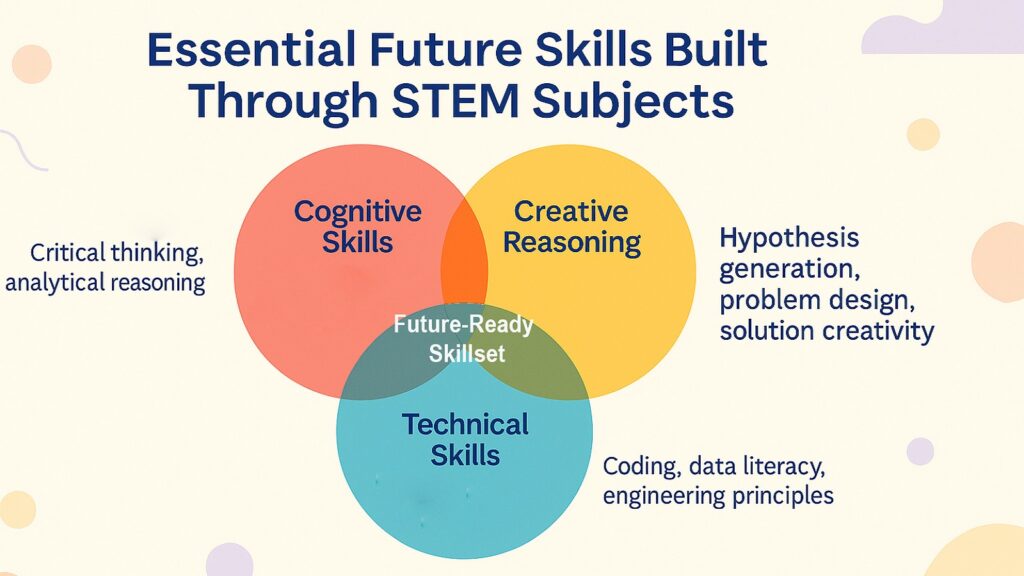
The skills that matter most in the twenty-first century differ markedly from those that defined success in previous eras. Rote memorization and routine task completion—once valuable—have diminished importance as machines handle such work more efficiently. What remains distinctly human, and what employers increasingly prize, are capabilities that STEM subjects naturally cultivate: analytical thinking, creative problem-solving, adaptability, and the capacity to learn continuously.
Consider critical thinking, perhaps the most frequently cited skill for future success. STEM subjects teach students to evaluate evidence, identify logical fallacies, distinguish correlation from causation, and recognize when conclusions exceed what data actually support. A physics student learning to critique experimental designs develops skepticism tempered by respect for empirical evidence. A mathematics student working through proofs learns that rigorous reasoning admits no shortcuts.
Computational thinking represents another essential skill that STEM subjects foster. This involves breaking complex problems into manageable components, recognizing patterns, abstracting core principles from specific cases, and designing step-by-step solutions. Computer programming explicitly teaches computational thinking, but the same cognitive approach applies to diagnosing medical conditions, optimizing supply chains, or designing experiments.
Creativity might seem distant from STEM subjects, yet innovation in science and technology demands imaginative leaps. Einstein conceived relativity through thought experiments that challenged conventional assumptions. Watson and Crick deduced DNA’s structure by considering how chemical constraints might permit elegant solutions. Engineers routinely imagine possibilities that do not yet exist and devise ways to bring them into reality. STEM subjects, when taught well, nurture creativity alongside analytical rigor.
Collaboration skills grow increasingly vital as problems become more complex and interdisciplinary. Modern scientific research typically involves teams spanning multiple institutions and countries. Engineering projects require coordination among specialists in different domains. STEM subjects prepare students for collaborative work through laboratory partnerships, group projects, and shared problem-solving sessions where diverse perspectives yield better outcomes than individual efforts.
Resilience and persistence matter greatly in STEM subjects because most attempts at innovation fail before succeeding. Scientists design dozens of experiments that yield null results before finding meaningful patterns. Engineers iterate through countless prototypes before achieving functional designs. Students grappling with challenging STEM coursework learn that struggle precedes mastery, a lesson that serves them throughout life.
Eight Essential Skills Developed Through STEM Subjects
| Skill | How STEM Subjects Cultivate This Capability |
|---|---|
| Analytical Thinking | Breaking down complex problems into components, identifying relationships, and drawing evidence-based conclusions |
| Quantitative Reasoning | Interpreting numerical data, understanding statistical significance, and making decisions based on mathematical analysis |
| Systematic Problem-Solving | Applying methodical approaches to diagnose issues, generate solutions, test hypotheses, and refine strategies |
| Computational Thinking | Decomposing problems, recognizing patterns, abstracting principles, and designing algorithmic solutions |
| Creative Innovation | Imagining novel possibilities, challenging assumptions, synthesizing ideas across domains, and prototyping solutions |
| Experimental Design | Formulating testable questions, controlling variables, collecting reliable data, and interpreting results objectively |
| Technical Communication | Presenting complex information clearly, visualizing data effectively, and translating technical concepts for diverse audiences |
| Adaptive Learning | Acquiring new knowledge independently, updating mental models with new evidence, and transferring skills to unfamiliar contexts |
5. STEM Subjects as Foundations of Digital and Technological Literacy
Digital technology permeates modern existence so thoroughly that we barely notice its presence until it fails. Banking, communication, entertainment, transportation, healthcare, and countless other domains depend on digital infrastructure. In this environment, technological literacy has become as fundamental as reading and writing once were. STEM subjects provide the knowledge base that transforms passive technology consumers into informed users capable of understanding, evaluating, and shaping the digital world.
The distinction between using technology and understanding it matters profoundly. Millions of people interact with algorithms daily through search engines, social media feeds, and recommendation systems without grasping how these systems function or influence behavior. STEM subjects, particularly computer science and mathematics, reveal the logic underlying digital technologies. Students learn that algorithms embody choices about what to optimize, what to ignore, and whose interests to serve.
Cybersecurity concerns affect everyone connected to networks, yet few people comprehend the vulnerabilities they face or the precautions they should take. STEM education covering encryption, network protocols, and information security helps individuals protect themselves from threats ranging from identity theft to sophisticated social engineering attacks. A population educated in these aspects of STEM subjects becomes harder to exploit and more resilient against digital risks.
Artificial intelligence systems increasingly make consequential decisions about loan approvals, hiring recommendations, criminal sentencing, and medical diagnoses. Understanding how machine learning works—what training data means, how bias enters systems, what limitations exist—requires grounding in STEM subjects. Citizens lacking this literacy cannot meaningfully participate in debates about AI governance or recognize when automated systems behave inappropriately.
The digital divide increasingly separates not just those with internet access from those without, but those who understand technology from those who merely use it. Children learning to code acquire more than programming skills; they gain insight into how software shapes their world and confidence that they can create rather than only consume technology. This empowerment potential makes STEM subjects crucial for educational equity.
Emerging technologies like blockchain, quantum computing, and extended reality will transform society in ways difficult to predict. Those with strong foundations in STEM subjects will adapt more readily to these changes, understanding core principles even as specific technologies evolve. This adaptability represents perhaps the greatest gift STEM education provides—the capacity to learn continuously in a rapidly changing technological landscape.
Ten Ways STEM Subjects Build Digital and Technological Literacy
| Digital Competency | How STEM Subjects Develop This Understanding |
|---|---|
| Programming and Software Logic | Computer science teaches how to write code, debug programs, and understand software architecture and algorithms |
| Data Analysis and Interpretation | Statistics and mathematics enable reading charts, understanding trends, and evaluating claims based on data |
| Algorithmic Thinking | Exposure to algorithms reveals how systems make decisions and prioritize information in digital platforms |
| Network and Internet Fundamentals | Computer science and engineering explain how data travels, how networks function, and what enables connectivity |
| Cybersecurity Awareness | Understanding encryption, authentication, and security protocols helps protect personal information and systems |
| Artificial Intelligence Literacy | Mathematics and computer science clarify how machine learning works, its capabilities, and its limitations |
| Digital Problem-Solving | STEM approaches teach systematic troubleshooting when technology fails or behaves unexpectedly |
| Technological Ethics | Science education emphasizes responsible use of technology and consideration of social consequences |
| Hardware and Systems Understanding | Physics and engineering reveal how electronic devices work at fundamental levels |
| Future Technology Adaptation | Strong STEM foundation enable learning new technologies as they emerge throughout one’s lifetime |
6. How STEM Subjects Strengthen National Competitiveness and Growth
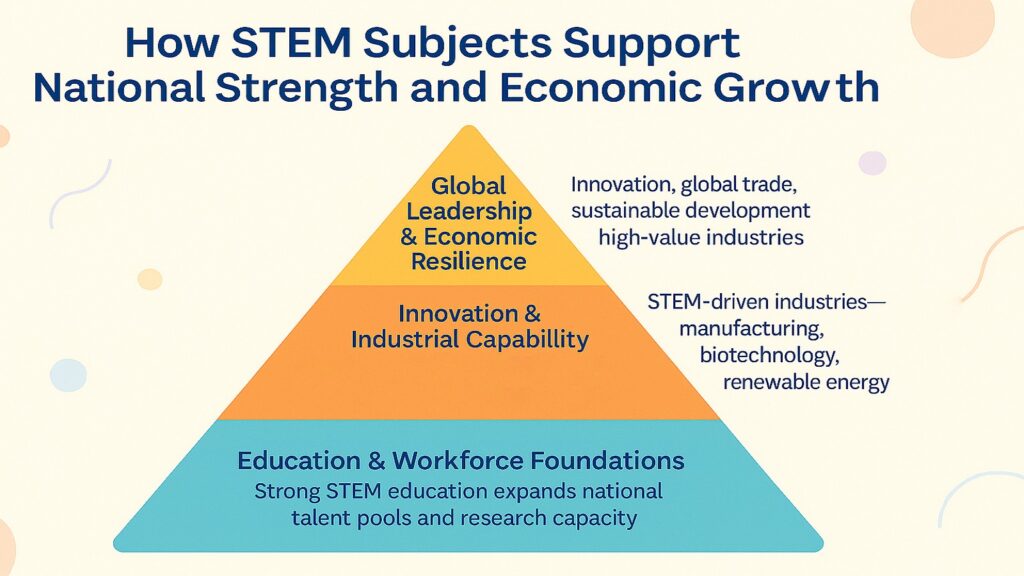
Nations compete economically not primarily through military might or natural resources but through the knowledge and capabilities of their populations. The countries that thrive in the twenty-first century are those that cultivate robust STEM subjects education, invest in research infrastructure, and create environments where innovation flourishes. This reality has prompted governments worldwide to prioritize STEM subjects as strategic assets essential for national prosperity.
Economic data confirms the connection between STEM education and national wealth. Countries with higher proportions of STEM graduates tend to experience faster economic growth, higher productivity, and greater resilience during economic downturns. These nations attract multinational corporations seeking skilled workforces, develop domestic companies that compete globally, and create intellectual property that generates ongoing revenue streams.
South Korea’s transformation from a war-torn nation in the 1950s to a technological powerhouse illustrates this dynamic. The country invested heavily in STEM subjects education, established world-class research universities, and supported companies like Samsung and LG in developing advanced technologies. Today, South Korea exports sophisticated electronics, leads in semiconductor manufacturing, and ranks among the most innovative nations globally—achievements rooted in decades of commitment to STEM subjects.
Research and development spending correlates strongly with STEM subjects education. Nations cannot maintain competitive research sectors without steady pipelines of trained scientists and engineers. The United States, China, Japan, and Germany lead global R&D spending and also maintain extensive STEM subjects educational programs. These investments yield patents, scientific publications, and technological breakthroughs that confer competitive advantages.
Manufacturing increasingly requires sophisticated technical knowledge as automation and precision engineering become standard. Countries hoping to attract or retain manufacturing must offer workforces capable of operating advanced equipment, troubleshooting complex systems, and continuously improving processes. STEM subjects education prepares workers for these demands while signaling to investors that a nation possesses the human capital necessary for modern industry.
National security concerns also motivate investment in STEM subjects. Cyber capabilities, advanced weapons systems, intelligence analysis, and space programs all depend on STEM expertise. Countries lacking domestic STEM talent become dependent on foreign experts or vulnerable to technological coercion. Defense establishments worldwide, therefore, support STEM subjects education as a matter of strategic necessity.
Ten Ways STEM Subjects Education Strengthens National Competitiveness
| Competitive Advantage | How STEM Subjects Enable This Benefit |
|---|---|
| Innovation Ecosystem | Trained scientists and engineers generate new technologies, products, and intellectual property that drive economic growth |
| Skilled Workforce Development | STEM education creates workers capable of filling technical roles essential to modern industries |
| Foreign Direct Investment Attraction | Companies locate facilities in countries with strong STEM talent pools capable of supporting operations |
| Research Excellence | Universities and laboratories with STEM strengths attract top researchers and produce groundbreaking discoveries |
| Space Exploration Leadership | STEM capabilities in physics, engineering, and astronomy enable satellite technology, space missions, and positioning systems crucial for communications and defense |
| Manufacturing Sophistication | STEM-trained workers enable advanced manufacturing processes and quality control systems |
| Healthcare System Quality | Medical professionals trained in STEM subjects improve public health outcomes and reduce healthcare costs |
| Infrastructure Development | Engineers and scientists design efficient transportation, energy, and communication systems |
| Environmental Resilience | STEM capabilities enable nations to address climate change, manage resources, and develop sustainable practices |
| Technology Independence | Domestic STEM capacity reduces reliance on foreign technology and strengthens strategic autonomy |
7. STEM Subjects and Their Role in Solving Real-World Challenges
Humanity faces challenges of unprecedented scale and complexity. Climate change threatens ecosystems and economies. Pandemics reveal vulnerabilities in global health systems. Water scarcity affects billions. Energy demands strain resources. Food production must increase even as arable land diminishes. These problems cannot be wished away or solved through political will alone. They demand the systematic approaches, rigorous analysis, and innovative solutions that STEM subjects make possible.
Climate change exemplifies how STEM subjects contribute to addressing existential threats. Atmospheric scientists use physics and chemistry to model greenhouse gas behavior. Environmental scientists track ecosystem changes and predict impacts. Engineers design renewable energy systems to replace fossil fuels. Materials scientists develop more efficient solar cells and batteries. Computer scientists create algorithms to optimize energy grids. Each contribution emerges from deep engagement with STEM subjects, and meaningful progress requires coordinating insights across all these disciplines.
Healthcare challenges similarly demand STEM expertise. When COVID-19 emerged, epidemiologists used mathematical models to project transmission rates. Virologists applied molecular biology techniques to sequence the virus. Pharmaceutical researchers leveraged chemistry and genetics to develop vaccines at unprecedented speed. Public health officials analyzed data to guide policy decisions. This coordinated STEM response saved millions of lives and demonstrated how scientific knowledge translates into tangible human benefit.
Water scarcity affects approximately two billion people globally, and the situation worsens as populations grow and climate patterns shift. Solutions require hydrologists to map water resources, civil engineers to design efficient distribution systems, chemists to develop desalination technologies, and agricultural scientists to breed drought-resistant crops. Each solution draws on knowledge cultivated through STEM subjects, and implementation requires professionals trained in these disciplines.
Food security challenges intensify as the global population approaches ten billion. Agricultural scientists use genetics to improve crop yields and nutritional content. Engineers develop precision farming equipment that reduces waste. Environmental scientists design sustainable practices that maintain soil health. Biotechnologists create alternatives to traditional agriculture. These innovations stem from applying STEM subjects to one of humanity’s oldest challenges.
Urban planning for sustainable cities requires insights from numerous STEM subjects. Transportation engineers minimize congestion and emissions. Architects design energy-efficient buildings. Urban ecologists preserve green spaces. Data scientists optimize resource allocation. As more humans live in cities, the quality of urban environments will depend heavily on how effectively STEM subjects inform planning and development.
Ten Real-World Challenges Being Addressed Through STEM Subjects
| Global Challenge | How STEM Subjects Enable Solutions |
|---|---|
| Climate Change Mitigation | Physics, chemistry, and engineering develop renewable energy systems; environmental science models ecosystem impacts |
| Pandemic Preparedness | Microbiology, genetics, and data science enable rapid vaccine development and disease tracking |
| Water Scarcity | Civil engineering creates efficient distribution systems; chemistry advances desalination and purification technologies |
| Food Security | Agricultural science, genetics, and biotechnology improve crop yields and develop climate-resilient varieties |
| Plastic Pollution | Materials science develops biodegradable alternatives; chemistry creates recycling processes for existing waste |
| Antibiotic Resistance | Microbiology and pharmacology research new antimicrobial compounds and treatment strategies |
| Energy Access | Engineering and physics create affordable renewable energy systems for remote and underserved communities |
| Aging Infrastructure | Civil engineering and materials science design durable, efficient transportation and utility systems |
| Mental Health Crisis | Neuroscience, psychology, and data analysis improve understanding of mental disorders and treatment effectiveness |
| Ocean Acidification | Marine biology and chemistry study impacts on ecosystems; engineering develops mitigation strategies |
8. Why STEM Subjects Are Essential for Lifelong Learning
The notion that education concludes with formal schooling has become obsolete. Technological change accelerates continuously. Career paths wind unpredictably. Knowledge that seemed permanent becomes outdated. In this environment, the capacity to learn throughout life matters more than any particular skill set. STEM subjects cultivate precisely this capacity—not merely imparting facts but teaching how to learn, how to question, and how to adapt when circumstances change.
STEM subjects instill intellectual humility alongside confidence. Students learn that even established scientific theories may be refined or replaced as evidence accumulates. They discover that understanding deepens gradually through sustained effort rather than arriving in sudden epiphanies. This mindset—recognizing that knowledge evolves and that personal understanding remains perpetually incomplete—serves learners well when confronting unfamiliar domains throughout their lives.
The problem-solving approaches taught through STEM subjects transfer remarkably well to non-technical challenges. Someone trained to debug computer code develops systematic diagnostic skills applicable to troubleshooting any complex system. A person experienced with scientific experimentation learns to test assumptions rather than accepting them uncritically. These cognitive tools remain useful whether one changes careers, pursues hobbies, manages household matters, or navigates personal relationships.
Curiosity represents perhaps the most valuable disposition STEM subjects nurture. Good science teaching encourages students to ask why and how, to wonder about mechanisms underlying observable phenomena, to imagine possibilities beyond immediate experience. This curiosity does not disappear when formal education ends but continues driving exploration and learning throughout life. Adults who maintain scientific curiosity find endless fascination in the world around them.
The rapid pace of technological change means that specific technical skills become obsolete quickly. Programming languages evolve. Software platforms come and go. Scientific instruments advance. Yet the foundational understanding provided by STEM subjects endures. Someone with a solid grounding in mathematics can learn new statistical techniques. A person who understands biological principles can grasp emerging biotechnologies. This foundation enables continuous updating of knowledge and skills.
STEM subjects also teach the discipline of continuous practice and incremental improvement. Mastering calculus requires solving hundreds of problems. Becoming proficient in laboratory techniques demands repeated practice. This experience of developing competence through sustained effort generalizes to other domains. Adults who learned perseverance through challenging STEM coursework apply that same persistence when acquiring new capabilities later in life.
Ten Ways STEM Subjects Support Lifelong Learning and Adaptation
| Lifelong Learning Skill | How STEM Subjects Develop This Capability |
|---|---|
| Intellectual Curiosity | Science education encourages questioning, wondering, and seeking to understand how things work |
| Self-Directed Learning | STEM projects teach students to find resources, design experiments, and acquire knowledge independently |
| Comfortable with Complexity | Engaging with difficult STEM concepts builds confidence in tackling unfamiliar and challenging material |
| Critical Evaluation Skills | Scientific training develops ability to assess claims, distinguish reliable from unreliable sources |
| Growth Mindset | Struggling with STEM subjects teaches that abilities develop through effort rather than being fixed traits |
| Adaptability to Change | Learning how scientific understanding evolves prepares people to update their knowledge when new information emerges |
| Transferable Problem-Solving | Systematic approaches learned in STEM contexts apply to challenges in any domain |
| Technological Fluency | Understanding technological principles enables rapid adoption of new tools and platforms |
| Resilience Through Failure | Experiencing setbacks in STEM learning builds persistence and willingness to try different approaches |
| Interdisciplinary Thinking | Seeing connections between different STEM subjects fosters ability to synthesize knowledge from multiple fields |
Conclusion: The Future Built on STEM Subjects and Human Potential
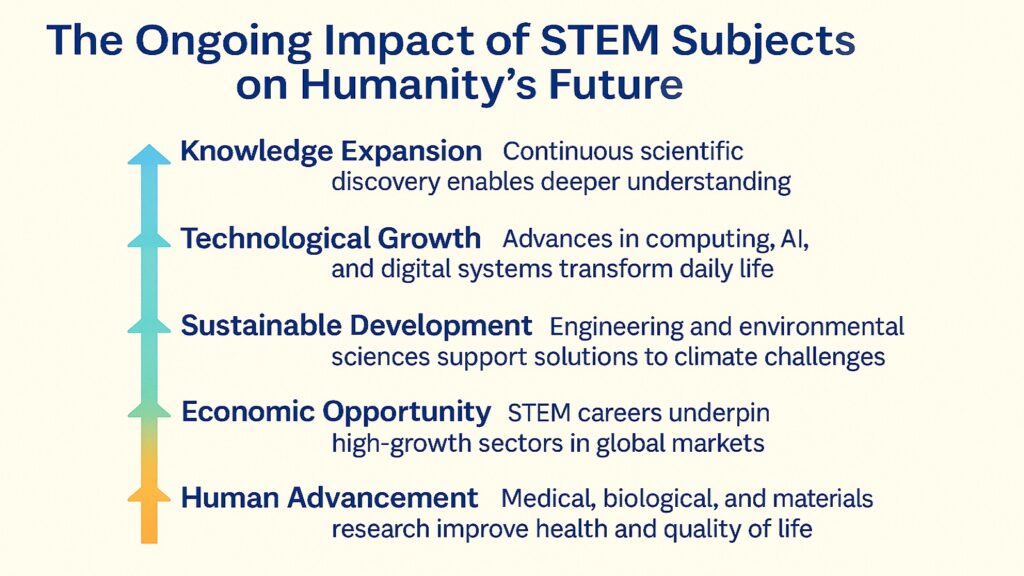
The eight insights explored throughout this article converge on a single truth: STEM subjects represent far more than academic disciplines. They constitute frameworks for understanding reality, tools for solving problems, pathways to opportunity, and foundations for progress. Every major challenge humanity faces, every innovation that improves lives, every career that offers dignity and purpose, connects in some way to the knowledge and capabilities that STEM subjects provide.
Education systems worldwide recognize this reality and continue expanding STEM offerings even as resources remain constrained. Parents encourage children toward STEM pathways, sensing that these directions lead somewhere meaningful. Governments invest in STEM research, understanding that national prosperity depends on scientific and technological strength. Companies seek STEM graduates, knowing that innovation requires people who think rigorously and solve problems systematically.
This article has aimed to serve as a comprehensive guide to why STEM subjects matter across multiple dimensions—from individual career success to collective problem-solving capacity, from educational transformation to national competitiveness, from immediate applications to lifelong learning. Each of the sixteen STEM subjects introduced here—Physics, Chemistry, Biology, Mathematics, Computer Science, Engineering, Environmental Science, Data Science, Astronomy, Robotics, Geology, Microbiology, Genetics, Neuroscience, Materials Science, and Marine Biology—deserves deeper exploration through dedicated resources that examine specific concepts, career paths, and contributions to human knowledge.
The path forward requires expanding access to quality STEM education while maintaining rigor and excellence. It demands teachers who inspire curiosity alongside imparting knowledge. It needs education systems flexible enough to adapt as STEM subjects themselves evolve. Most importantly, it requires recognizing that STEM subjects belong not to a privileged few but to everyone, because the challenges we face and the opportunities we seek concern all humanity.
As you continue exploring STEM subjects, whether as a student, a professional developing new skills, an educator shaping curriculum, or a citizen seeking to understand the forces shaping society, remember that engagement with these disciplines represents an investment in multiple futures—your own, your community’s, and humanity’s collective potential. The journey through STEM subjects never truly ends because knowledge continues to expand and questions multiply faster than answers. That endless frontier of discovery remains one of the most exciting aspects of human existence, and STEM subjects provide our maps for exploring it.
Ten Enduring Benefits of STEM Subjects Education Across Life Stages
| Life Stage | How STEM Subjects Provide Lasting Value |
|---|---|
| Early Childhood | Builds foundational numeracy, spatial reasoning, and curiosity about natural phenomena |
| Elementary Education | Develops systematic thinking, basic scientific literacy, and confidence in problem-solving |
| Secondary Education | Opens career pathways, strengthens analytical abilities, and deepens understanding of how the world works |
| Higher Education | Provides specialized knowledge, research skills, and preparation for professional STEM careers |
| Early Career | Enables access to growing job markets, competitive salaries, and opportunities for advancement |
| Mid-Career | Supports career transitions, leadership roles, and ability to adapt to technological changes |
| Late Career | Maintains professional relevance, enables mentorship roles, and provides intellectual engagement |
| Retirement | Offers continued learning opportunities, supports hobbies like astronomy or gardening, and enables informed civic participation |
| Lifelong Personal Growth | Nurtures curiosity, provides frameworks for understanding news and technology, and enriches everyday experiences |
| Intergenerational Impact | Enables parents and grandparents to support younger generations’ STEM learning and career choices |
Read More Science and Space Articles
- Universe Odyssey: 8 Essential Stages Of A Remarkable Journey
- Cosmic Giants: 8 Incredible Titans Shaping Our Universe
- Cosmic Forces: 8 Powerful Phenomena Shaping Our Universe
- God: 6 Powerful Scientific Insights That Reveal Human Belief
- Hawking Radiation: 6 Powerful Clues to Quantum Gravity
- Hawking Radiation: 6 Powerful Clues to Quantum Gravity
- Black Hole Singularity: 6 Mind-Blowing Truths Explained
- 6 Incredible Ways Missiles Obey The Laws of Physics
- Cherries Reveal 6 Powerful Secrets of Their Red Glow
- Anthropomorphism: 6 Brilliant Benefits and Risks in AI
- Millisecond Pulsars: 6 Incredible Insights Driving Science