Table of Contents
Introduction: Stock Exchange as the Invisible Machine Behind Markets
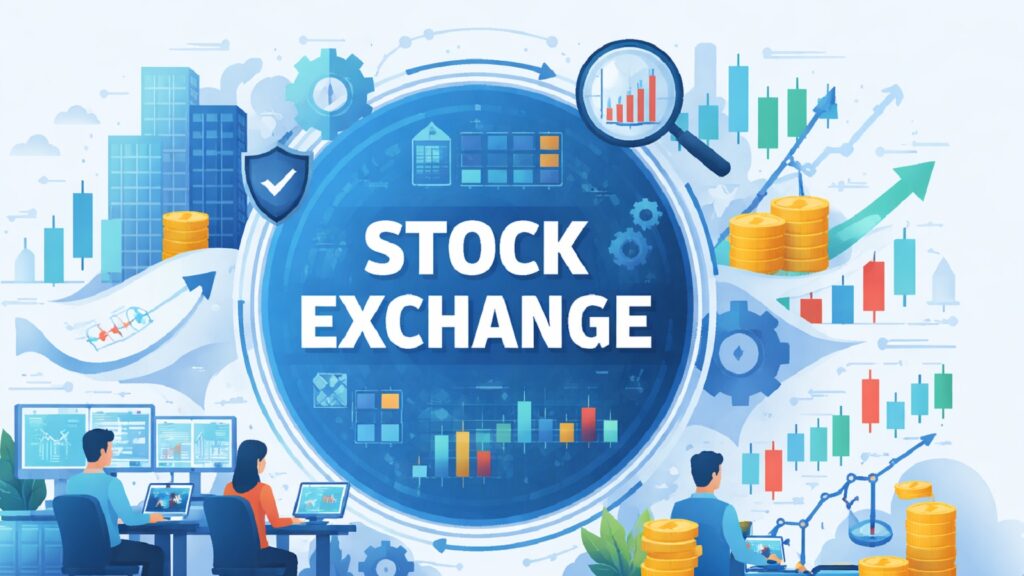
Every trading day, billions of dollars move through markets around the world. Investors place orders, traders react to news, and prices shift in milliseconds. Yet beneath this visible activity lies something far more powerful and less understood. The stock exchange operates as an invisible machine that transforms human emotion, scattered information, and conflicting opinions into a functioning marketplace. While most people focus on what happens in the market, few pause to consider how the market actually works.
The stock exchange is not simply a venue where buying and selling occurs. It serves as the architectural foundation that makes modern finance possible. Without its hidden mechanisms, there would be no reliable prices, no instant transactions, and no trust between strangers separated by continents. The exchange creates order from chaos every second of every trading session, even when panic sets in or euphoria takes over.
This article reveals six powerful forces built into the stock exchange that allow markets to function smoothly. These forces operate quietly in the background, shaping everything from price discovery to crisis management. Understanding them changes how we see financial markets. They stop appearing random and start revealing themselves as carefully designed systems that balance freedom with structure, speed with safety, and competition with fairness.
Stock Exchange and Other Key Components of Share Market
| Component | Role in Share Market |
|---|---|
| Stock Exchanges | Provide the infrastructure and platform where securities are traded, ensuring price discovery, liquidity, and market integrity through rules and technology |
| Global Market Indices | Track overall market performance by measuring a basket of stocks, serving as benchmarks for investment performance and economic health indicators |
| Listed Companies | Issue shares to raise capital from public investors and must comply with disclosure requirements, financial reporting standards, and corporate governance norms |
| Investors and Traders | Bring capital and liquidity to markets by buying and selling securities based on research, speculation, or investment strategies across different time horizons |
| Brokers and Intermediaries | Execute trades on behalf of clients, provide market access, offer research and advice, and ensure proper settlement of transactions between parties |
| Regulators | Oversee market activities to protect investors, maintain fair practices, prevent fraud and manipulation, and ensure systemic stability through rules and enforcement |
| Instruments | Represent various financial products traded in markets including equities, bonds, derivatives, and funds that serve different investment and hedging purposes |
| Clearing and Settlement System | Ensure trades are properly recorded, verified, and settled by transferring securities and funds between parties while managing counterparty risk through guarantees |
1. Stock Exchange as a Price Discovery Engine
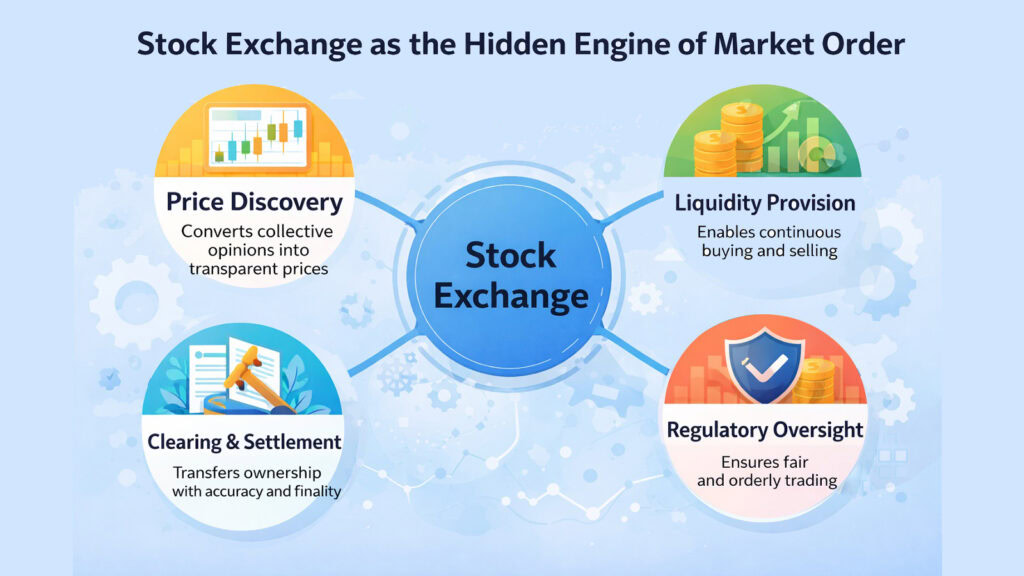
Every stock has a price, but where does that price come from? The answer lies in one of the most elegant mechanisms ever created in finance. The stock exchange turns millions of individual opinions into a single number that represents collective market wisdom. This process happens continuously, silently, and with remarkable precision.
Price discovery begins when buyers and sellers express their intentions through orders. A buyer believes a stock is worth a certain amount and places a bid. A seller thinks it should command a different value and posts an ask. The stock exchange collects these competing views and displays them in an order book. When a bid matches an ask, a trade executes and a new price emerges. This price then becomes the reference point for the next round of negotiations.
What makes this system powerful is its transparency. Anyone can see the current bid, the current ask, and the spread between them. The volume of shares waiting at each price level reveals the depth of conviction behind different viewpoints. Large volumes at specific prices signal strong beliefs, while thin order books suggest uncertainty. The stock exchange makes all of this information visible in real time, allowing participants to adjust their strategies based on what others are willing to pay or accept.
No central authority decides what a stock should cost. The stock exchange simply provides the infrastructure where truth can surface from disagreement. When new information enters the market, prices adjust instantly as participants revise their bids and asks. If a company announces strong earnings, buyers rush in with higher bids. If negative news breaks, sellers lower their asking prices. The exchange processes these changes without judgment, allowing supply and demand to find equilibrium naturally.
This mechanism works across different types of markets and securities. Whether trading happens on the New York Stock Exchange, the London Stock Exchange, or the Tokyo Stock Exchange, the fundamental process remains the same. The stock exchange creates a neutral space where competing interests meet, negotiate, and agree on value. That agreed value becomes the market price, which then guides investment decisions, portfolio valuations, and economic analysis worldwide.
Stock Exchange Price Discovery Mechanisms
| Mechanism | Function in Price Formation |
|---|---|
| Order Book | Displays all buy and sell orders at different price levels, showing market depth and the balance between supply and demand in real time |
| Bid-Ask Spread | Represents the gap between highest buy price and lowest sell price, indicating market liquidity and the cost of immediate execution |
| Matching Engine | Automatically pairs compatible buy and sell orders based on price and time priority, executing trades in milliseconds without human intervention |
| Tick Size | Sets the minimum price increment for orders, preventing excessive fragmentation while allowing precise price expression within defined boundaries |
| Opening and Closing Auctions | Aggregate orders before market open and after close to determine reference prices that reflect accumulated demand during non-trading periods |
| Last Traded Price | Serves as the most recent agreement point between buyer and seller, acting as the baseline for subsequent negotiations and valuations |
2. Stock Exchange as a Liquidity Machine
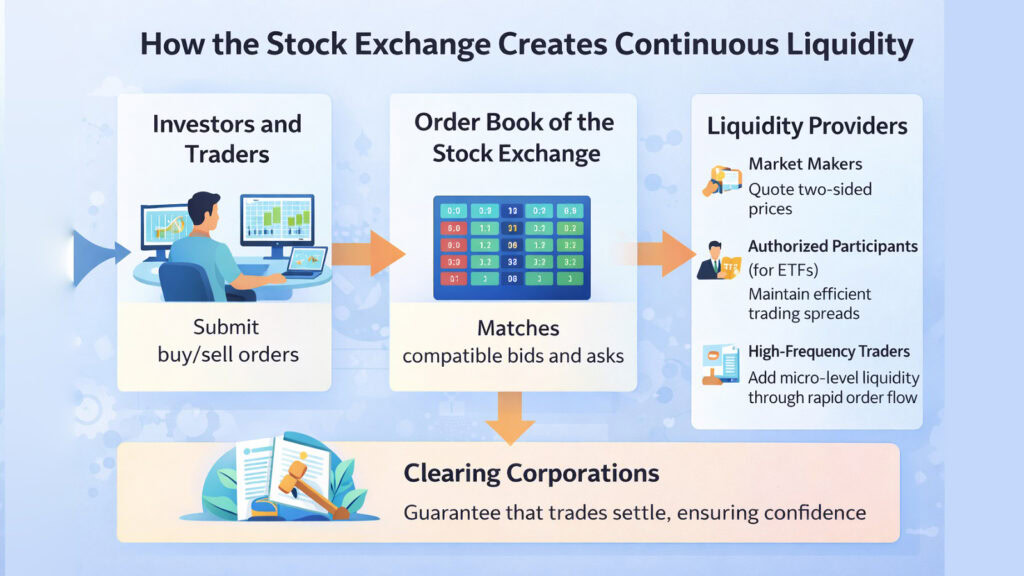
Markets only work when participants can enter and exit positions freely. The stock exchange creates this freedom through liquidity, which means the ability to buy or sell without significantly affecting the price. Liquidity transforms markets from occasional meeting places into continuous streams of activity where capital flows smoothly between participants.
The stock exchange generates liquidity by attracting a diverse range of participants with different goals and time horizons. Long-term investors hold positions for years, short-term traders move in and out within days, and high-frequency firms operate in milliseconds. This diversity ensures that when someone wants to sell, there is usually someone else ready to buy. The exchange does not create buyers or sellers directly, but it creates the conditions that keep them constantly engaged.
Order books play a central role in maintaining liquidity. Deep order books contain many buy and sell orders at various price levels, which means large trades can execute without dramatic price swings. The stock exchange displays this depth publicly, giving participants confidence that they can transact meaningful amounts without moving the market against themselves. This confidence encourages more participation, which further deepens the order book in a reinforcing cycle.
Market makers contribute to liquidity by continuously quoting both buy and sell prices for specific securities. These firms profit from the bid-ask spread but also take on the responsibility of being available when others want to trade. The stock exchange creates incentives for market makers through reduced fees or other benefits, recognizing that their presence stabilizes markets and improves the experience for all participants.
Technology has dramatically increased the liquidity that stock exchanges can provide. Electronic trading systems process millions of orders per second, matching buyers with sellers almost instantaneously. Co-location services allow trading firms to place their servers physically close to exchange infrastructure, reducing latency to microseconds. These technological advances mean that the stock exchange can maintain liquid markets even during periods of high volatility when order flow surges and emotions run high.
Stock Exchange Liquidity Components
| Component | Contribution to Market Liquidity |
|---|---|
| Continuous Trading | Allows transactions throughout the trading session rather than at fixed intervals, ensuring participants can respond to information and adjust positions in real time |
| Market Makers | Provide continuous buy and sell quotes for assigned securities, guaranteeing that other participants always have a counterparty available for immediate execution |
| Order Types | Offer flexibility through limit orders, market orders, stop orders, and others that let participants express precise trading intentions and manage execution risk |
| Electronic Trading Systems | Process vast numbers of orders instantly using automated matching algorithms, eliminating delays associated with manual floor trading and human intermediaries |
| Displayed Depth | Shows pending orders at each price level so participants understand available liquidity before trading and can plan executions accordingly |
| Fragmentation Reduction | Concentrates trading volume in centralized venues where order flow aggregates, making it easier to find counterparties and execute larger positions efficiently |
3. Stock Exchange as a Trust and Verification System
Financial markets require trust, but not the personal kind that exists between friends or family members. Instead, the stock exchange builds structural trust through systems that verify, monitor, and guarantee without requiring any two participants to know each other. This impersonal trust makes global markets possible.
The foundation of this trust begins with listing requirements. Before a company can trade on a stock exchange, it must meet specific standards related to financial disclosure, governance practices, and minimum capitalization. The exchange reviews applications, verifies information, and only approves companies that satisfy these criteria. This filtering process gives investors confidence that listed companies have undergone scrutiny and agreed to ongoing transparency obligations.
Once listed, companies must continue reporting financial results quarterly and disclosing material events promptly. The stock exchange enforces these requirements and can suspend or delist companies that fail to comply. This ongoing verification ensures that the information available to investors remains current and reliable. Investors do not need to trust company management directly because the exchange creates consequences for dishonesty or negligence.
Settlement systems provide another layer of structural trust. When a trade executes, the stock exchange ensures that securities transfer from seller to buyer while payment moves in the opposite direction. This happens through clearinghouses that stand between the two parties and guarantee completion even if one side defaults. The guarantee removes counterparty risk, meaning participants can trade with strangers across the world without worrying whether the other party will honor their obligations.
The stock exchange also maintains surveillance systems that monitor trading patterns for signs of manipulation, insider trading, or other abuses. Algorithms scan millions of transactions looking for anomalies that suggest wrongdoing. When suspicious activity appears, the exchange investigates and can refer cases to regulators for enforcement action. This constant monitoring creates deterrence that protects market integrity without requiring investors to police each trade themselves.
All of these mechanisms work together to replace personal trust with systemic trust. An investor in Asia can buy shares from a seller in Europe without ever meeting them, speaking to them, or knowing anything about their reputation. The stock exchange makes this possible by creating a framework where rules, verification, and guarantees substitute for personal relationships. This transformation enabled markets to scale globally and attract trillions in capital from participants who will never meet.
Stock Exchange Trust Mechanisms
| Mechanism | Role in Building Market Trust |
|---|---|
| Listing Standards | Establish minimum requirements for financial health, governance quality, and disclosure practices that companies must meet before accessing public markets |
| Continuous Disclosure | Require listed companies to report quarterly results and material events promptly so investors receive timely information for making informed decisions |
| Clearinghouse Guarantee | Ensure trade completion by standing between buyers and sellers, assuming counterparty risk and guaranteeing settlement even if one party defaults |
| Audit Requirements | Mandate independent verification of financial statements by qualified auditors who provide assurance that reported numbers accurately reflect company performance |
| Trade Surveillance | Monitor all transactions using algorithms that detect unusual patterns suggesting manipulation, insider trading, or other violations of fair trading principles |
| Dispute Resolution | Provide formal processes for handling conflicts between participants, ensuring complaints receive proper review and legitimate grievances find remedies |
4. Stock Exchange as a Discipline Enforcer
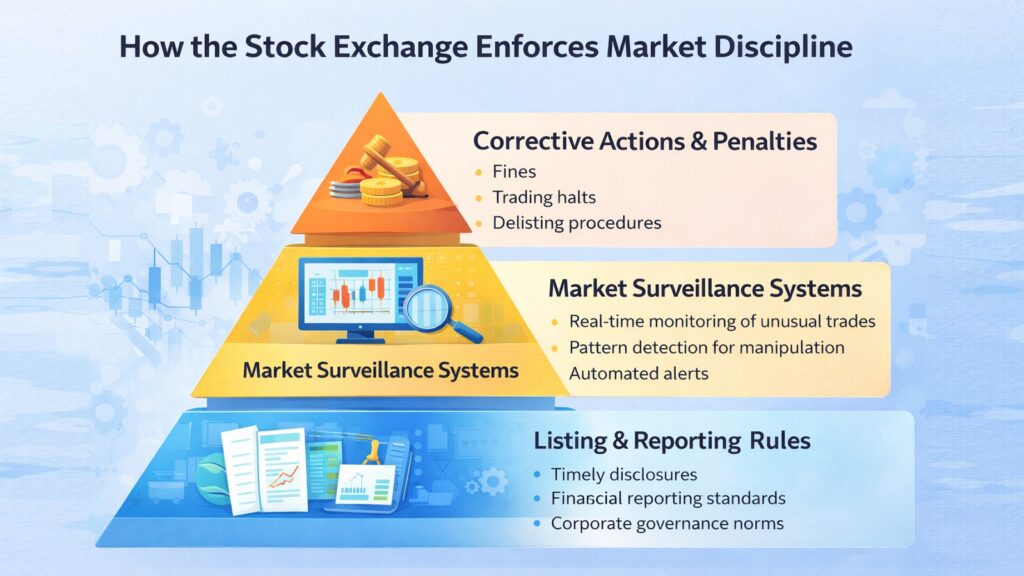
Markets need rules, but rules only matter if they carry consequences. The stock exchange enforces discipline not through constant supervision but through built-in mechanisms that punish non-compliance automatically. This structural enforcement maintains order without requiring armies of regulators watching every transaction.
Delisting represents the most severe penalty a stock exchange can impose. Companies that violate listing rules, fail to file required reports, or fall below minimum financial thresholds face removal from the exchange. Delisting destroys liquidity, damages reputation, and makes it far harder for companies to raise capital. The threat of delisting creates powerful motivation for compliance even when direct oversight seems distant.
Trading halts provide real-time discipline during unusual market conditions. If a stock price moves too far too fast, the exchange can pause trading temporarily to allow information to spread and participants to reassess their positions. These halts prevent panic from spiraling out of control while giving the market time to digest news properly. The stock exchange triggers these halts automatically based on predefined criteria, removing human discretion and ensuring consistent application.
The exchange also enforces discipline through order validation systems that reject improperly formatted trades before they reach the market. Price limits, size restrictions, and other filters catch obvious errors that could disrupt orderly trading. A trader attempting to sell shares at an absurdly low price might find their order rejected, protecting them from their own mistakes and preventing erroneous trades from distorting market signals.
Fines and penalties add financial teeth to enforcement. When the stock exchange detects rule violations through its surveillance systems, it can levy fines against offending parties. These penalties scale with the severity of the violation, making serious misconduct extremely expensive. The revenue from fines typically goes back into maintaining market infrastructure, creating a self-funding enforcement system.
Perhaps most importantly, the stock exchange maintains transparency around enforcement actions. When companies receive sanctions or individuals face penalties, this information becomes public. The resulting reputational damage often exceeds the direct financial cost, creating additional deterrence. Market participants know that violations will not stay hidden, which encourages voluntary compliance as the path of least resistance.
Stock Exchange Enforcement Tools
| Tool | Disciplinary Function |
|---|---|
| Delisting Procedures | Remove companies from trading when they violate listing rules or fall below financial minimums, eliminating market access and destroying shareholder liquidity |
| Trading Halts | Pause trading temporarily when prices move excessively or pending material news, allowing time for information dissemination and preventing panic-driven volatility |
| Order Validation | Screen incoming orders against predefined rules to catch errors, prevent fat-finger trades, and block orders that violate price or size restrictions |
| Financial Penalties | Impose fines on participants who violate exchange rules, with amounts scaling to severity and creating meaningful financial consequences for misconduct |
| Suspension Rights | Temporarily bar individuals or firms from trading when serious violations occur, restricting market access until issues are resolved or penalties served |
| Public Disclosure | Publish details of enforcement actions so the market knows which participants violated rules, creating reputational costs that supplement direct penalties |
5. Stock Exchange as a Shock Absorber During Crises
Markets face regular tests during periods of extreme stress. News breaks, confidence collapses, and fear spreads faster than reason. During these moments, the stock exchange transforms from a facilitator of trading into a protector of stability. Its crisis management tools slow down panic without stopping price discovery, allowing markets to function even when emotions override logic.
Circuit breakers represent the most visible crisis response mechanism. When major indices decline by predetermined percentages, the exchange halts all trading for specified periods. These pauses force participants to step back, reassess information, and make decisions with slightly cooler heads. The breaks do not prevent losses, but they prevent the self-reinforcing spirals where selling triggers more selling purely from momentum rather than fundamental reassessment.
The specific circuit breaker thresholds emerged from lessons learned during past crashes. After the 1987 market crash when the Dow Jones Industrial Average fell over twenty percent in a single day, regulators and exchanges recognized that markets needed built-in pauses. Modern circuit breakers activate at seven percent, thirteen percent, and twenty percent declines, with progressively longer halt durations. The stock exchange implements these automatically, removing any need for human decision-making during chaotic moments.
Price bands create another form of shock absorption by limiting how far individual stock prices can move from their reference points during short periods. If a stock tries to trade outside these bands, the exchange either rejects the order or triggers a brief pause. This mechanism catches both genuine panic and technical errors, preventing isolated incidents from creating broader contagion. The bands adjust dynamically based on market conditions, tightening during volatile periods and relaxing when markets calm.
Order throttling mechanisms limit how many orders participants can submit per second. During extreme volatility, the flood of orders can overwhelm trading systems and create processing delays that make price discovery impossible. The stock exchange sets maximum order rates that maintain system responsiveness while still allowing rapid trading. This ensures the matching engine continues functioning even when activity spikes dramatically.
These protective mechanisms matter because markets serve crucial economic functions beyond trading. Pension funds value their holdings using market prices, companies make capital allocation decisions based on their stock prices, and central banks monitor market indicators when setting policy. If markets froze completely during crises or produced wildly unreliable prices, these broader economic functions would fail. The stock exchange keeps markets operational during stress precisely so these essential functions can continue.
Stock Exchange Crisis Management Tools
| Tool | Crisis Response Function |
|---|---|
| Circuit Breakers | Halt all market trading when indices fall by specific percentages, providing cooling-off periods that interrupt panic selling and allow rational reassessment |
| Price Bands | Limit how far individual stocks can move from reference prices within short timeframes, preventing isolated panic or errors from creating contagion |
| Volatility Pauses | Trigger brief trading halts for individual securities experiencing unusual price swings, giving time for information distribution before trading resumes |
| Order Throttling | Restrict the number of orders participants can submit per second during high volatility, preventing system overload while maintaining orderly price discovery |
| Extended Settlement | Allow longer time periods for trade settlement during market disruptions, reducing pressure on clearing systems and preventing settlement failures |
| Margin Adjustments | Increase collateral requirements during volatile periods to reduce leverage and prevent forced liquidations from amplifying market declines |
6. Stock Exchange as a Feedback Loop for the Economy
The stock exchange does more than reflect economic conditions. It actively shapes them through a continuous feedback process that links market prices to real economic decisions. This loop operates in both directions, with the economy influencing stock prices and stock prices influencing the economy in return.
When companies report strong earnings or positive outlooks, their stock prices typically rise. This increase reflects investor optimism about future performance, but it also creates tangible economic effects. Higher stock prices reduce the cost of raising capital through equity offerings, making it cheaper for companies to fund expansion, research, or acquisitions. The stock exchange translates market sentiment into real resources that flow toward businesses investors believe will grow.
Consumer behavior responds to market movements through what economists call the wealth effect. When stock prices rise, households that own equities feel wealthier and tend to spend more freely. This increased consumption drives demand throughout the economy, boosting sales for businesses and creating employment. Conversely, market declines reduce spending as households feel poorer and become more cautious. The stock exchange thus amplifies economic cycles by converting paper gains and losses into actual changes in behavior.
Corporate decision-making depends heavily on signals from the stock exchange. Management teams watch their stock prices closely because executive compensation often ties to share performance. When prices rise, companies may pursue bolder strategies or make larger investments. When prices fall, they often cut costs, delay projects, or restructure operations. The stock exchange provides continuous feedback about whether investors approve of corporate strategies, and companies adjust accordingly.
Central banks and governments monitor stock exchanges as leading indicators of economic health. Sustained market strength suggests confidence in future growth, while prolonged weakness signals concern about recession or other troubles ahead. Policymakers use these signals when deciding whether to adjust interest rates, implement stimulus programs, or modify regulations. The stock exchange essentially aggregates the collective wisdom of millions of investors into a simple summary statistic that guides macro-level decisions.
This feedback loop creates both stability and instability. When functioning properly, it channels capital toward productive uses and provides early warnings about economic problems. Markets fall before recessions begin, giving businesses and policymakers time to prepare. But the loop can also amplify mistakes. If investors become irrationally optimistic, rising stock prices may encourage excessive risk-taking that leads to bubbles. The stock exchange magnifies both wisdom and folly, making its role as economic feedback mechanism powerful but imperfect.
Stock Exchange Economic Feedback Mechanisms
| Mechanism | Economic Feedback Function of Stock Exchange |
|---|---|
| Capital Allocation | Direct investment toward companies with rising stock prices by making equity issuance cheaper, channeling resources to businesses investors believe will grow |
| Wealth Effect | Influence consumer spending as households feel richer when stock portfolios gain value and more cautious when market declines reduce paper wealth |
| Corporate Incentives | Shape management decisions through stock-based compensation that aligns executive interests with shareholder value and market performance |
| Leading Indicators | Provide early signals about economic direction as market participants price in expected future conditions months before they materialize |
| Sentiment Barometer | Measure collective business and investor confidence through index levels and volatility that reflect optimism or fear about economic prospects |
| Policy Guidance | Inform central bank and government decisions by aggregating market expectations about inflation, growth, and other variables into observable price movements |
Conclusion: Stock Exchange as the Quiet Architect of Market Order
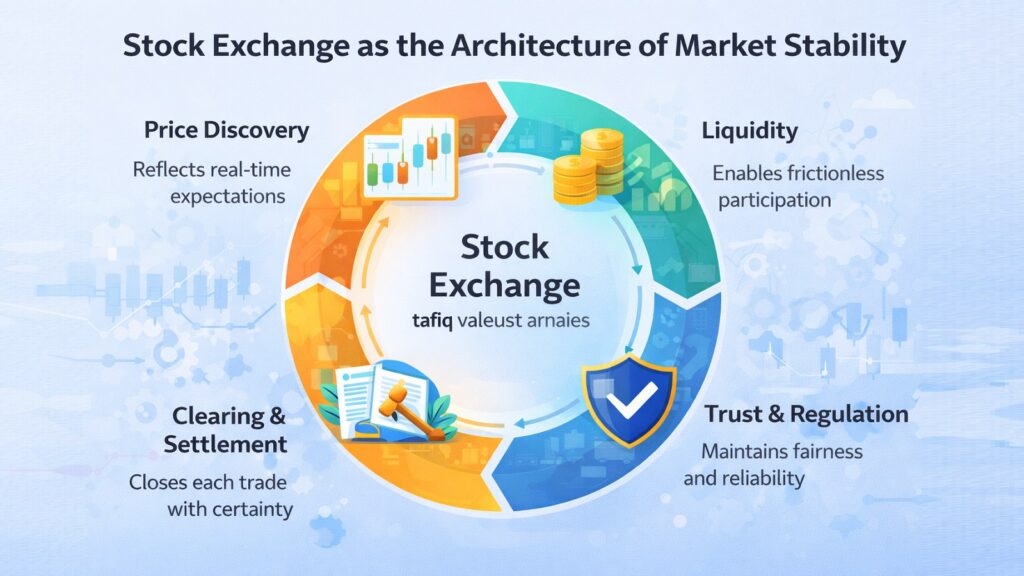
Markets appear chaotic from the outside. Prices jump, volumes surge, and fortunes change hands in seconds. Yet beneath this apparent randomness operates a sophisticated architecture that creates order, stability, and trust. The stock exchange serves as the quiet architect behind this transformation, turning noise into signal and emotion into information.
Each of the six forces examined here contributes to this larger purpose. Price discovery aggregates scattered opinions into reliable values. Liquidity mechanisms ensure continuous trading without disruption. Trust systems replace personal relationships with structural guarantees. Enforcement tools maintain discipline through automatic consequences. Crisis management features absorb shocks during volatile periods. Economic feedback loops connect market movements to real business and policy decisions.
Next time market movements dominate headlines, remember the structure underneath. The stock exchange continues operating through bull markets and bear markets, through calm periods and crises, through rational exuberance and irrational panic. It does not control outcomes, but it shapes the process that determines them. That quiet influence makes it one of the most important institutions in modern finance, even if most participants never pause to notice how the machine actually works.
Stock Exchange Functions Summary
| Function | Overall Market Impact |
|---|---|
| Operational Infrastructure | Provides the technological and organizational foundation that enables billions of transactions to execute reliably across global markets every trading day |
| Market Integrity | Maintains fairness through surveillance, enforcement, and transparency that deters manipulation and protects participants from fraud and abuse |
| Information Aggregation | Synthesizes diverse opinions and data into single prices that represent collective market wisdom about asset values and future prospects |
| Risk Management | Contains systemic threats through circuit breakers, margin requirements, and clearing guarantees that prevent isolated failures from becoming contagion |
| Capital Formation | Enables companies to raise funds efficiently by providing liquid secondary markets that give initial investors confidence they can exit positions |
| Economic Signaling | Delivers real-time indicators about business conditions, investor sentiment, and future expectations that guide decisions by companies, consumers, and policymaker |
Read More Business and Economy Articles
- Pricing Strategy: 6 Powerful Lessons That Actually Work
- Successful Business Owner: 6 Key Mindset Shifts That Work
- Aspiring Entrepreneur: 6 Powerful Ways to Build Real Success
- Global South Economies: 6 Powerful Forces Driving World Growth
- AI Job Growth: 6 Powerful Trends Fueling a Brighter Future
- AI Job Losses: 6 Devastating Impacts You Can’t Ignore
- Sovereign Debt: 6 Alarming Risks Wealthy Nations Ignore
- Marketing Mastery: 6 Proven Ways to Drive Success
- Business 360° Breakthrough: Unlock Powerful Growth Today
- Global Economy: 10 Essential Building Blocks Revealed
- 6 Bold Human Resources Strategies To Boost Engagement
- 6 Amazing Ways Employee Relations Humanize Workplace