Table of Contents
Introduction: How Smart Devices Shape Everyday Living
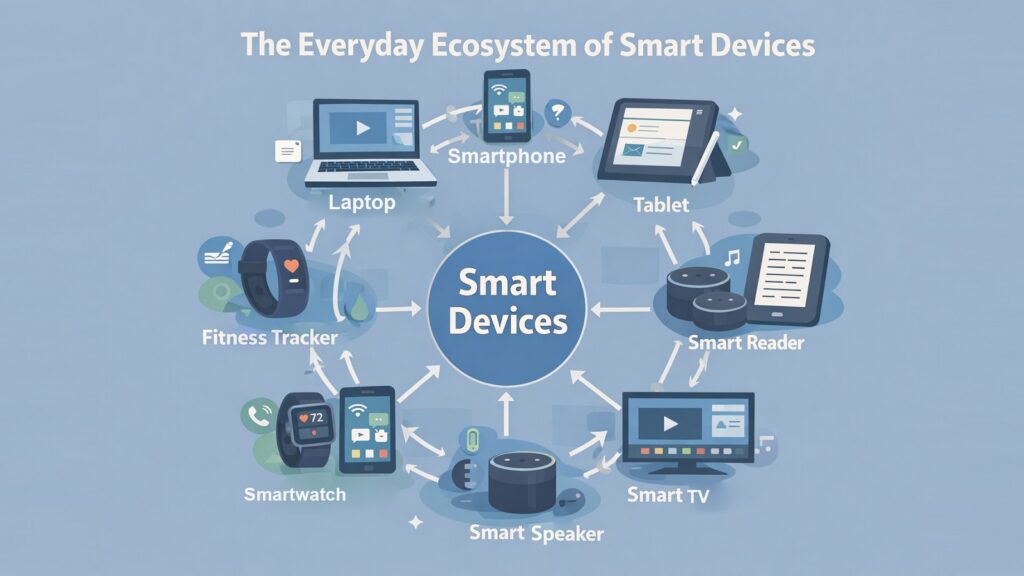
Smart devices have quietly woven themselves into the fabric of our daily existence. What once seemed like luxury gadgets reserved for early adopters now feel like natural extensions of our hands and minds. These digital companions wake us gently, track our steps, remind us of meetings, and keep us connected across oceans.
The shift happened gradually. Smart devices moved from optional enhancements to essential tools that shape how we work, rest, and play. They save precious minutes in rushed mornings, reduce the mental load of remembering every task, and streamline workflows that once demanded multiple tools. More than efficiency boosters, these devices uplift daily routines by creating space for what truly matters.
Consider the parent monitoring a sleeping baby through a smartphone while preparing dinner. Think of the student carrying an entire library on a lightweight e-reader. Picture the remote worker whose laptop transforms any corner into a productive workspace. Smart devices inspire comfort through familiarity, productivity through seamless integration, and creativity through accessible technology.
Key Characteristics of Modern Smart Devices
| Smart Device Type | Primary Function and Core Benefit |
|---|---|
| Laptops | Portable computing for work, creativity, and education with full desktop capabilities |
| Smartphones | Central communication hub connecting all digital aspects of daily life |
| Tablets | Flexible middle-ground device for content consumption and lightweight productivity |
| Smartwatches | Wearable health tracking with instant notifications and hands-free convenience |
| Fitness Trackers | Dedicated activity monitoring for building consistent health habits |
| Smart Speakers | Voice-activated assistance for home automation and information retrieval |
| Smart TVs | Entertainment platform with streaming integration and personalized recommendations |
| E-Readers | Distraction-free reading experience with access to extensive digital libraries |
1. Laptops: The Most Versatile Smart Devices for Work and Creativity
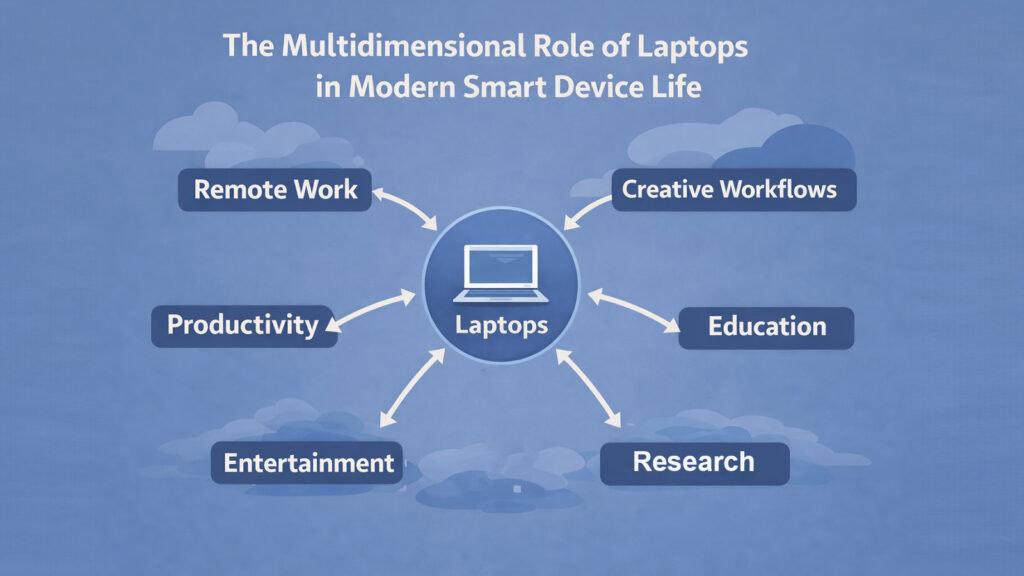
Laptops represent the cornerstone of the smart devices revolution. They embody the perfect balance between portability and power, offering capabilities that smartphones cannot match while maintaining mobility that desktop computers lack. Laptops occupy a unique position as the workhorse that anchors productivity across countless professions.
Modern laptops serve as creative studios for filmmakers, editing suites for photographers, coding environments for developers, and virtual classrooms for students. They handle intensive tasks like video rendering and data analysis while remaining light enough to slip into a backpack. This versatility makes laptops indispensable smart devices for anyone who creates, analyzes, or communicates professionally.
Remote work has elevated laptops from convenient tools to absolute necessities. A professional can transform a coffee shop, co-working space, or home office into a fully functional workplace. The laptop becomes the gateway to video conferences connecting teams across continents, cloud storage housing collaborative projects, and software suites rivaling traditional offices.
Content creators depend on laptops as their primary canvas. Writers draft manuscripts, designers craft visual identities, musicians compose scores, and programmers build applications. The laptop’s full keyboard, large screen, and processing power make complex creative work both possible and enjoyable.
Education has been fundamentally transformed by laptop accessibility. Students attend virtual lectures, submit assignments digitally, collaborate through shared documents, and access research from university databases worldwide. The laptop serves as textbook, notebook, library, and laboratory simultaneously.
Essential Features That Define Modern Smart Devices Like Laptops
| Feature Category | Impact on User Experience |
|---|---|
| Portability | Enables work and creativity from any location without compromising performance |
| Processing Power | Handles demanding applications from video editing to software development |
| Battery Life | Supports full workdays without constant charging interruptions |
| Display Quality | Provides accurate color and sharp detail for professional creative work |
| Storage Capacity | Accommodates large files, applications, and media libraries locally |
| Connectivity Options | Integrates with monitors, peripherals, networks, and other smart devices |
| Operating System | Offers familiar interface and access to extensive software ecosystems |
| Build Quality | Ensures durability for daily transport and extended productive use |
2. Smartphones: The Central Hub of All Smart Devices
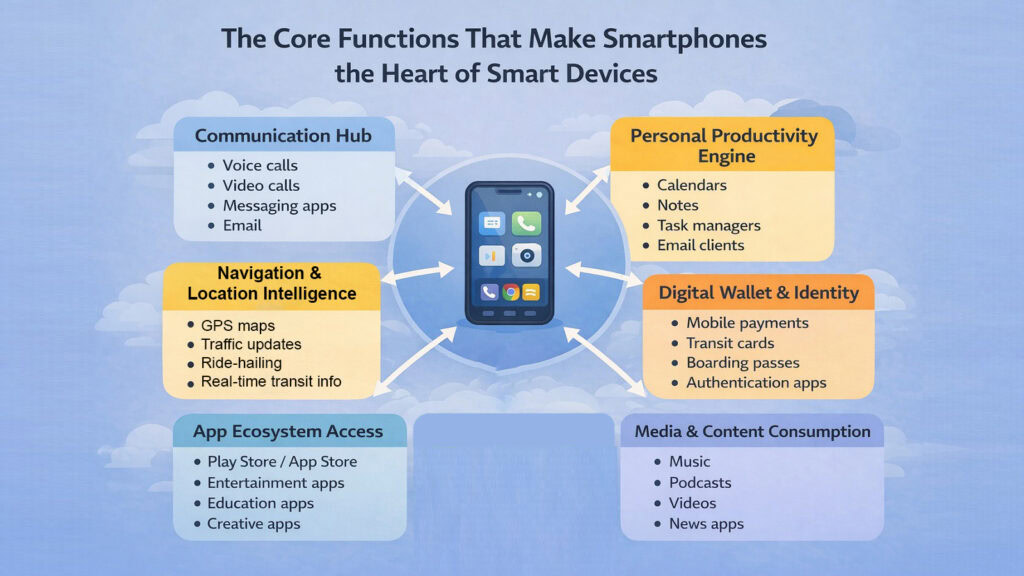
Smartphones command the center of the smart devices universe. They function as the command center that coordinates every other connected device in our lives. This small rectangle manages our communication, controls our homes, captures our memories, and keeps our schedules synchronized.
Communication flows through smartphones in forms our grandparents could scarcely imagine. Voice calls represent just one option among video chats, instant messages, emails, and social media. The smartphone allows us to reach anyone, anywhere, through whatever medium suits the moment.
Workflow management centers on smartphone apps that organize tasks, track projects, schedule meetings, and coordinate teams. Professionals check emails during commutes, approve documents from waiting rooms, and join video conferences from remote locations. The smartphone transforms idle moments into productive opportunities.
Modern smartphone cameras rival dedicated photography equipment, offering computational photography enhanced through artificial intelligence. Parents document childhood milestones, travelers capture foreign landscapes, and content creators produce professional-looking media without bulky equipment.
The true genius of smartphones lies in controlling and coordinating other smart devices. Through dedicated apps, a smartphone adjusts thermostats, monitors security cameras, dims lights, and plays music through speakers. It becomes the universal remote for an entire ecosystem of connected technologies.
Seamless synchronization keeps information consistent across devices. Photos appear instantly on tablets, calendar entries show up in notifications, and documents continue seamlessly between devices. This harmony creates a unified digital experience that feels natural and effortless.
How Smartphones Power the Smart Devices Ecosystem
| Smartphone Role | Real-World Function |
|---|---|
| Universal Communication | Supports calls, SMS, email, video chats, and messaging apps across global networks. |
| Productivity on the Go | Runs tools like Google Workspace, Outlook, and Slack for mobile work management. |
| AI-Driven Photography | Uses computational photography (HDR, Night Mode, AI scene detection) on devices like iPhone and Pixel. |
| Smart Home Control | Manages lights, thermostats, cameras, and appliances through Google Home, HomeKit, or SmartThings apps. |
| IoT Device Hub | Connects to wearables, speakers, trackers, and earbuds via Bluetooth, Wi-Fi, and Matter. |
| Cross-Device Sync | Syncs photos, notes, documents, and calendars across ecosystems like iCloud and Google Drive. |
| Digital Wallet & ID | Enables payments, transit cards, boarding passes, and authentication through Apple Pay or Google Pay. |
| Entertainment Center | Streams video, music, and games through apps like Netflix, Spotify, and Play Games. |
3. Tablets: Flexible Smart Devices for Reading, Work, and Play
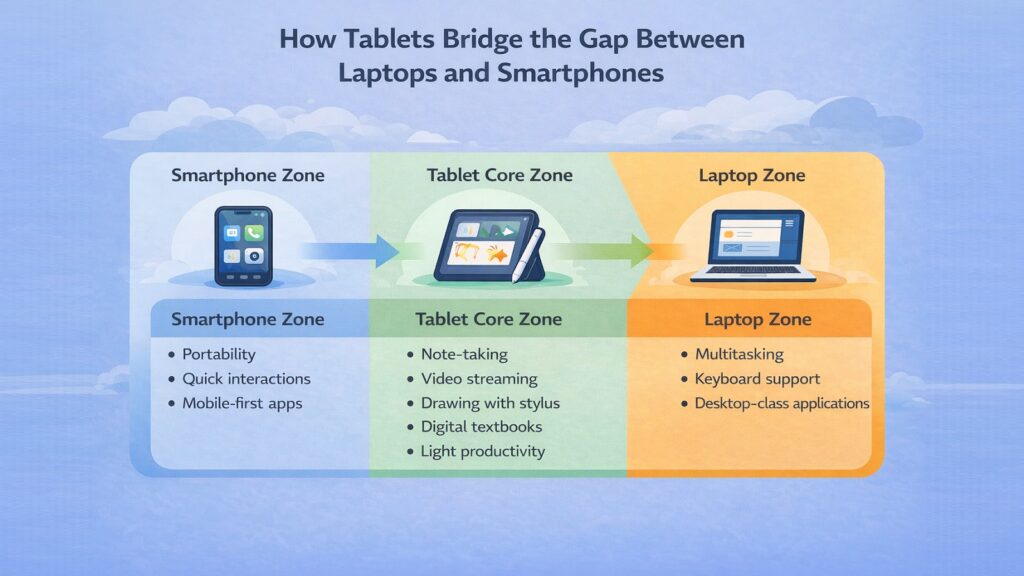
Tablets occupy the comfortable middle ground between smartphones and laptops, offering the best qualities of both. These versatile smart devices provide large-screen experiences without laptop bulk, making them ideal for situations where portability matters but screen size enhances the experience.
Note-taking transforms on tablets, especially with stylus support. Students sketch diagrams during lectures, professionals annotate documents during meetings, and artists create digital illustrations with pressure-sensitive precision. The tablet becomes a digital notebook that never runs out of pages.
Video consumption feels more immersive on tablet screens than smartphones while remaining more portable than laptops. Whether streaming shows during flights, following recipe videos in kitchens, or video chatting with distant relatives, tablets hit the sweet spot for screen size.
The creation of art has seamlessly integrated into the realm of tablets. Digital artists utilize pressure-sensitive styluses to paint, draw, and design with instruments that replicate traditional media, all while providing limitless undo capabilities. This direct interaction fosters an intuitive link between the artist’s hand and their creation.
Educational applications thrive on tablets. Interactive textbooks come alive with embedded videos and quizzes. Language learning apps utilize touch interfaces for engaging practice. Schools increasingly deploy tablets as learning tools because they combine engagement with educational content in ways traditional materials cannot match.
Lightweight productivity works well on tablets with keyboard attachments. Checking emails, editing documents, browsing web content, and managing schedules feel natural. While they may not replace laptops for intensive work, tablets serve admirably for tasks that don’t require full desktop power.
Versatility Features of Tablets Among Smart Devices
| Usage Scenario | Tablet Advantage |
|---|---|
| Note-Taking | Natural handwriting with stylus support and instant digital organization |
| Media Consumption | Larger screen than phones with better portability than laptops |
| Digital Art | Direct stylus input enables intuitive creative expression and precision |
| Reading | Comfortable screen size for magazines, comics, and interactive content |
| Gaming | Touch controls and screen size create engaging mobile gaming experiences |
| Presentations | Portable display for showing content in meetings or small groups |
| Kitchen Use | Recipe access with touchscreen control despite messy hands or ingredients |
| Travel | Entertainment and light productivity without excessive weight or bulk |
4. Smartwatches: Wearable Smart Devices That Bring Wellness to Your Wrist
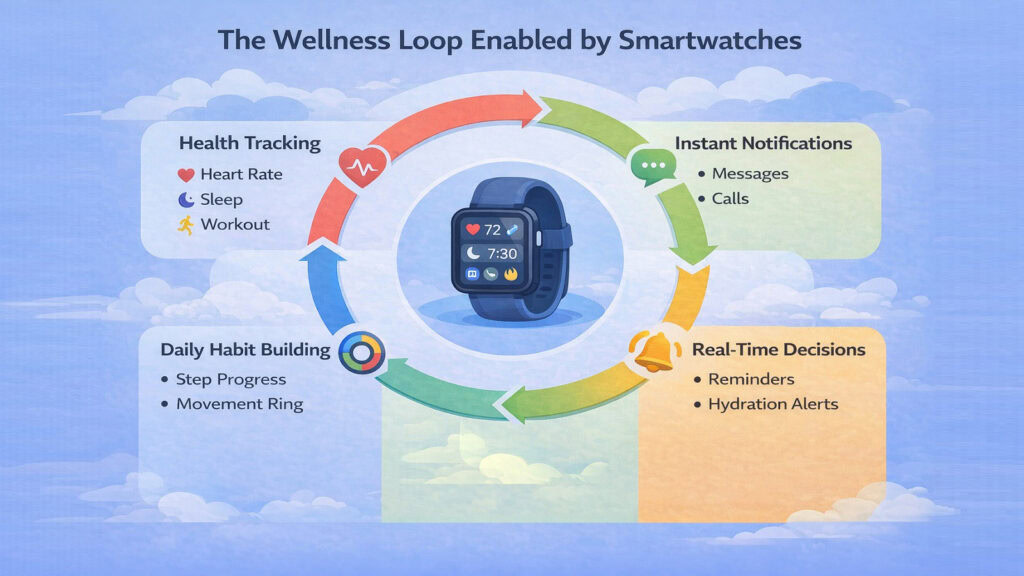
Smartwatches extend the reach of smart devices into constant companionship. Strapped to your wrist, they maintain persistent awareness of your physical state, activity levels, and incoming information. This category represents a fundamental shift from tools we carry to technology we wear.
Health tracking forms the core value of modern smartwatches. They monitor heart rate continuously, detecting irregularities that might indicate medical concerns. Sleep analysis tracks rest quality and patterns, offering insights into recovery. Stress monitoring uses heart rate variability to identify tension, sometimes prompting breathing exercises.
Fitness reminders nudge users toward healthier habits throughout the day. Stand reminders interrupt prolonged sitting. Activity rings visualize daily movement goals. Workout detection automatically logs exercise sessions. These gentle prompts work because smartwatches remain present, offering timely encouragement when motivation wavers.
Notification delivery reaches your wrist instantly, allowing you to stay informed without constantly pulling out your smartphone. Important messages get immediate attention, while less urgent notifications can wait. This filtered approach reduces smartphone dependency while preserving connection.
Real-time accessibility proves valuable in countless situations. Checking the time during meetings without seeming distracted. Viewing navigation directions while cycling. Controlling music playback during workouts. Taking calls when your phone sits across the room.
Integration with broader lifestyle habits makes smartwatches powerful behavior change tools. They celebrate milestones, track streaks, and visualize progress toward goals. The constant feedback loop encourages consistency in ways periodic check-ins cannot match.
Smart Devices: Health and Lifestyle Benefits of Smartwatches
| Health Feature | Practical Benefit for Daily Life |
|---|---|
| Heart Rate Monitoring | Continuous tracking detects irregularities and measures workout intensity accurately |
| Sleep Tracking | Analyzes rest quality and identifies patterns for better recovery habits |
| Activity Rings | Visualizes daily movement goals to encourage consistent physical activity |
| Workout Detection | Automatically logs exercise sessions without manual input or tracking apps |
| Stress Monitoring | Identifies tension through heart rate variability and suggests calming exercises |
| Stand Reminders | Interrupts prolonged sitting to reduce sedentary lifestyle health risks |
| ECG Capability | Provides medical-grade heart rhythm data for detecting atrial fibrillation |
| Blood Oxygen | Measures oxygen saturation for altitude adjustment and respiratory monitoring |
5. Fitness Trackers: Purpose-Built Smart Devices for Health and Daily Movement
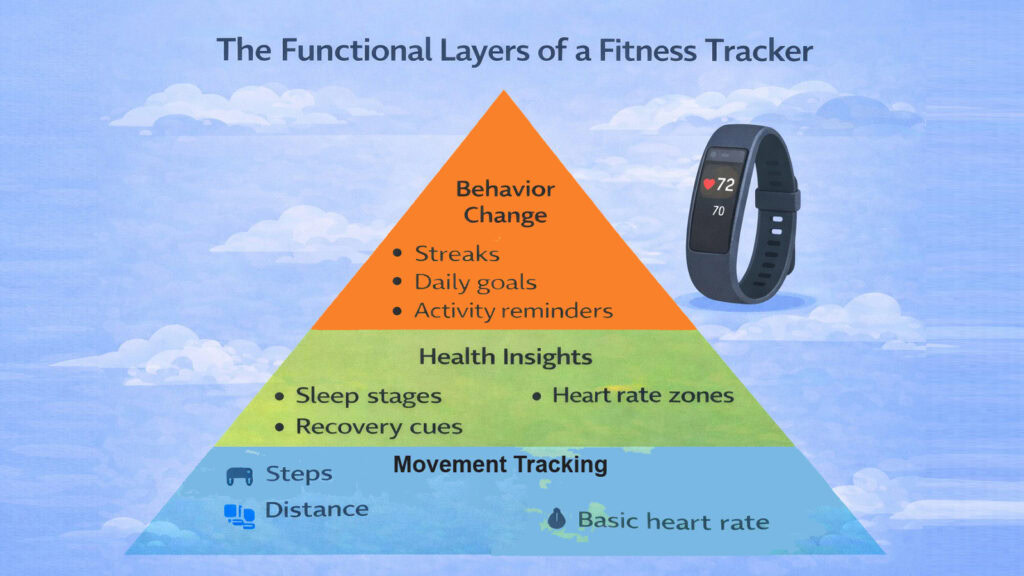
Fitness trackers represent streamlined smart devices engineered for monitoring and encouraging physical activity. While smartwatches bundle fitness features with broader functionality, dedicated trackers focus intensely on movement, exercise, and health metrics. This specialization appeals to users who want activity monitoring without the distractions of full-featured smartwatches.
Step tracking remains the foundational feature that made fitness trackers popular. The simple goal of reaching ten thousand steps daily provides clear targets that motivate movement. Users become more conscious of activity levels, often discovering they move less than assumed.
Workout logging captures exercise sessions with detail that helps understand training effectiveness. Distance, pace, heart rate zones, and calorie estimates contribute to comprehensive activity records. Over time, this data reveals progress, identifies plateaus, and suggests when recovery might be needed.
Heart rate monitoring throughout the day and during exercise provides insights into cardiovascular health and training intensity. Resting heart rate trends can indicate improving fitness or potential overtraining. Real-time heart rate during workouts helps users maintain target zones.
Recovery insights help users balance training with adequate rest. Sleep quality, resting heart rate variability, and activity readiness scores guide decisions about pushing hard or taking recovery days. These metrics prevent overtraining while encouraging consistent effort.
Habit formation receives powerful support from fitness trackers through streaks, badges, and progress visualization. Seeing consecutive days of meeting goals creates psychological momentum. These motivational features tap into human psychology, making fitness trackers effective for building lasting behavioral change.
Core Capabilities of Fitness Trackers
| Tracking Feature | How It Supports Health Goals |
|---|---|
| Step Counting | Provides clear daily movement targets and awareness of activity levels |
| Distance Tracking | Measures running, walking, or cycling distances for training progression |
| Calorie Burn | Estimates energy expenditure to support weight management and nutrition planning |
| Heart Rate Zones | Optimizes workout intensity for specific fitness goals like endurance or fat loss |
| Sleep Quality | Analyzes rest patterns to improve recovery and identify sleep issues |
| Active Minutes | Tracks time spent in moderate to vigorous activity for health guidelines |
| GPS Tracking | Maps outdoor activities and provides accurate pace and route information |
| Water Resistance | Enables swim tracking and worry-free wear during water activities |
6. Smart TVs: Entertainment-Driven Smart Devices That Transform Home Experience
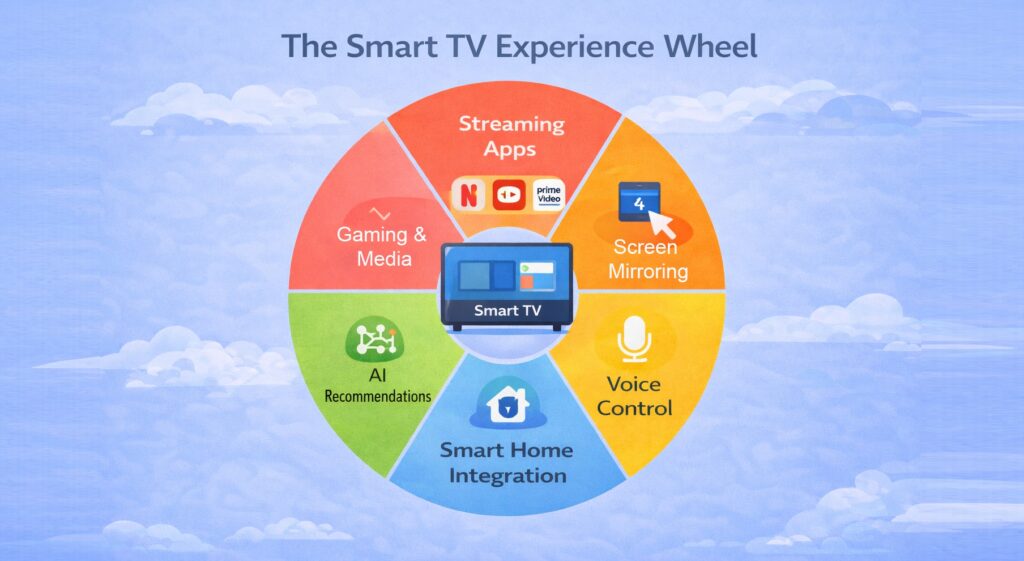
Smart TVs have revolutionized home entertainment by transforming passive screens into interactive platforms. These smart devices bring streaming services, voice control, artificial intelligence recommendations, and app ecosystems into the living room. What once required multiple devices now flows seamlessly from a single elegant screen.
Streaming integration eliminates the need for separate streaming boxes or gaming consoles solely for content access. Built-in apps for major services like Netflix, Disney Plus, Amazon Prime Video, and YouTube mean viewers navigate directly to desired content without switching inputs or managing multiple remotes.
Voice control brings hands-free convenience to content discovery. Asking for specific shows, actors, or genres yields instant results without typing searches on awkward remote keyboards. Volume adjustments, playback control, and input switching all respond to voice commands.
Artificial intelligence recommendations learn viewing habits and suggest content aligned with personal tastes. These algorithms analyze watch history, completion rates, and search patterns to surface shows and movies viewers might enjoy. Recommendation engines reduce the paradox of choice inherent in vast content libraries.
Casting capabilities turn smart TVs into display extensions for smartphones, tablets, and laptops. Photos from recent vacations appear on the big screen for family viewing. Presentations are cast wirelessly during video calls. YouTube videos discovered on phones continue seamlessly on the television.
Personalized viewing experiences emerge as smart TVs remember individual preferences within households. Multiple user profiles maintain separate watch lists, recommendations, and parental controls. This customization means each family member enjoys tailored content suggestions without interference from others’ viewing habits.
Entertainment Features That Define Smart TVs
| Smart TV Feature | Enhancement to Home Entertainment |
|---|---|
| Built-in Streaming | Direct access to content services without external devices or complicated setup |
| Voice Control | Hands-free navigation and search using natural language commands |
| AI Recommendations | Personalized content suggestions based on viewing history and preferences |
| Screen Mirroring | Wireless casting from smartphones and laptops for shared viewing experiences |
| Multiple Profiles | Individual user accounts with separate watch lists and recommendations |
| App Store | Access to diverse applications beyond video streaming like fitness and games |
| 4K and HDR | Superior image quality with enhanced color and contrast for immersive viewing |
| Smart Home Integration | Central control point for other connected devices using TV interface |
7. Smart Speakers: Voice-Powered Smart Devices That Simplify Daily Tasks
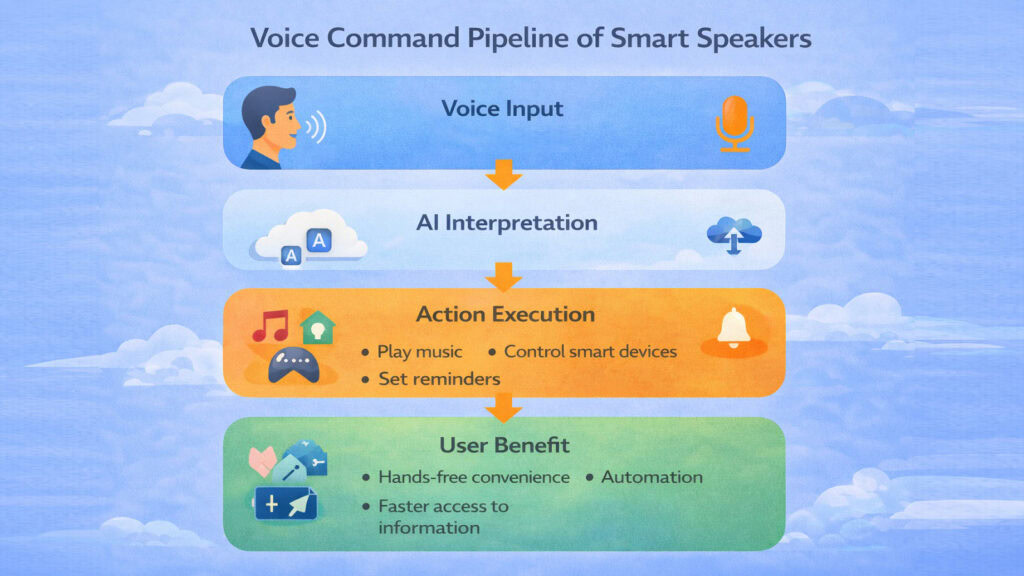
Smart speakers represent the voice-first revolution in smart devices. These compact speakers respond to spoken commands, making technology accessible without screens or buttons. They control other devices, manage reminders, answer questions, play audio content, and automate home routines through simple conversation.
Home automation control flows naturally through smart speakers. Voice commands dim lights for movie watching, adjust thermostats for comfort, lock doors before bed, and activate security systems when leaving. The speaker becomes the central nervous system connecting various smart devices into a coordinated whole.
Reminder and timer management help organize daily life through effortless voice commands. Setting cooking timers while hands are messy. Creating shopping list items as you notice them. Scheduling reminders for appointments or tasks. These conveniences accumulate into significant time savings and reduced mental load.
Information retrieval brings knowledge to your fingertips without typing or scrolling. Weather forecasts guide clothing choices. News briefings deliver morning updates. Unit conversions assist with cooking. Traffic reports inform commute decisions. Trivia questions get instant answers during family discussions.
Audio content playback fills homes with music, podcasts, and audiobooks through simple requests. Genre-based music selection sets moods without curating playlists. Podcast episodes continue where they left off across devices. Audiobooks narrate stories while cooking or cleaning.
Routine automation executes multiple actions through a single command. A morning routine might deliver weather, news, and calendar appointments while gradually brightening lights. An evening routine could dim lights, lock doors, adjust the temperature, and play relaxing music.
Daily Life Applications of Smart Speakers
| Use Case | Practical Daily Benefit |
|---|---|
| Voice Commands | Hands-free device control while cooking, cleaning, or otherwise occupied |
| Smart Home Hub | Central control point for lights, thermostats, locks, and other connected devices |
| Timers and Reminders | Effortless task management without interrupting current activities to type |
| Information Access | Instant answers to questions without searching on phones or computers |
| Music Streaming | Ambient audio throughout home with simple voice requests for songs or genres |
| Routine Automation | Execute multiple smart device actions through single voice command sequences |
| Intercom Function | Broadcast messages to speakers in different rooms for household communication |
| Podcast Playback | Resume audio content across devices for continuous listening during activities |
8. E-Readers: Focus-Driven Smart Devices That Make Reading Effortless
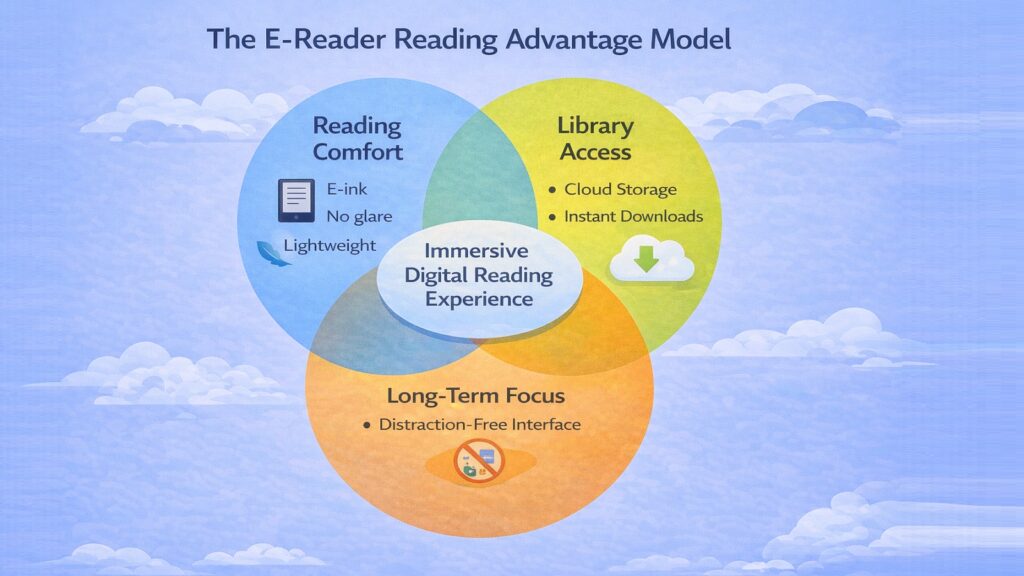
E-readers stand apart from other smart devices through their commitment to a single purpose: reading. These distraction-free devices use electronic ink screens that mimic printed pages while offering conveniences impossible with physical books. The focused design philosophy rejects notifications, apps, and connectivity features that might interrupt immersion.
Electronic ink displays provide reading experiences remarkably close to physical paper. The screens reflect ambient light rather than emitting it, reducing eye strain during extended sessions. Text remains crisp and clear in bright sunlight, where tablet and smartphone screens wash out.
Battery life measured in weeks rather than hours distinguishes e-readers from general-purpose tablets. The low power consumption of e-ink displays means a single charge supports weeks of daily reading. This longevity makes e-readers perfect travel companions, eliminating charging anxiety during long trips.
Lightweight design enables comfortable one-handed reading for extended periods. Even models holding thousands of books weigh less than a single paperback. This portability encourages reading in varied positions and locations.
Digital library access provides instant gratification for book acquisition. New releases download wirelessly within seconds. Impulse reads require no trips to bookstores. Public library integration offers free borrowing without leaving home.
Built-in lighting allows reading in any environment without external lamps. Adjustable warm tones reduce blue light exposure for bedtime reading. Automatic brightness adapts to ambient conditions.
Reading features support comprehension and enjoyment in ways physical books cannot. Built-in dictionaries define unfamiliar words with a tap. Adjustable font sizes accommodate varying vision needs. Bookmarks and highlights sync across devices.
Reading-Focused Advantages of an E-Reader
| E-Reader Feature | Benefit for Reading Experience |
|---|---|
| E-Ink Display | Paper-like appearance reduces eye strain and remains readable in sunlight |
| Extended Battery | Weeks of reading time per charge eliminates frequent charging concerns |
| Lightweight Build | Comfortable extended holding for long reading sessions in any position |
| Library Storage | Thousands of books in single device providing access anywhere without bulk |
| Instant Downloads | Immediate book acquisition without bookstore visits or shipping delays |
| Adjustable Lighting | Built-in illumination enables reading in any environment at any time |
| Dictionary Integration | Instant word definitions without interrupting reading flow or searching elsewhere |
| Customizable Text | Font size and style adjustments accommodate vision needs and preferences |
Conclusion: Why Smart Devices Will Continue to Inspire the Future of Everyday Life
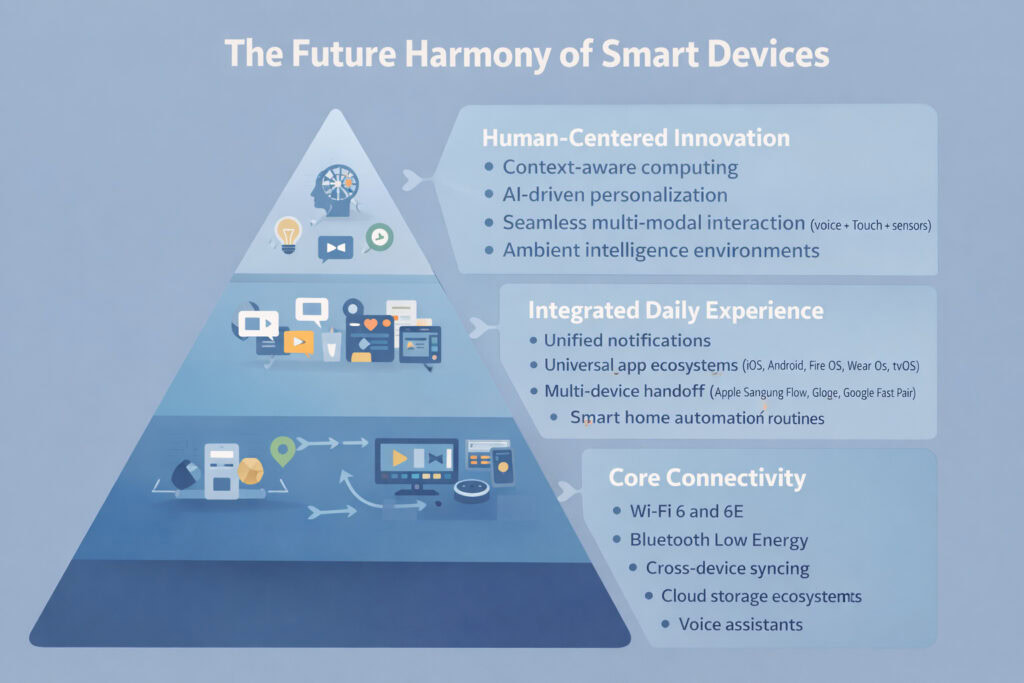
Smart devices have moved beyond impressive gadgets to become essential threads in modern existence. The eight categories explored here—laptops, smartphones, tablets, smartwatches, fitness trackers, smart TVs, smart speakers, and e-readers—each contribute unique value while working together to create experiences greater than the sum of their parts.
The growing harmony between different smart devices amplifies their individual benefits. Your smartphone controls your smart TV, your smartwatch syncs with your laptop, your smart speaker manages your connected home, and your fitness tracker shares data that informs wellness decisions across platforms. This interoperability transforms isolated tools into a coordinated system.
Productivity gains accumulate in ways both obvious and subtle. Remote work becomes viable when laptops provide full computing power anywhere. Communication stays current when smartphones deliver instant notifications. Task management improves when smart speakers capture reminders the moment they occur.
Comfort emerges from the reliability and familiarity of well-designed smart devices. They learn our preferences, adapt to our habits, and anticipate our needs. This personalization makes technology feel less like an imposition and more like a natural extension of our capabilities.
Entertainment experiences have been fundamentally reimagined through smart devices. Streaming libraries rival the largest video stores. Music collections exceed what could fit in a home. Books numbering in the thousands weigh less than a single paperback. Voice control eliminates tedious menu navigation.
Well-being receives continuous support from smart devices monitoring health metrics, encouraging movement, and tracking progress toward fitness goals. The persistent presence of wearable devices creates accountability that drives behavior change. Sleep analysis improves rest quality. Activity reminders interrupt sedentary patterns.
Looking forward, smart devices will continue evolving in sophistication and integration. Artificial intelligence will make them more intuitive and proactive. Battery technologies will extend usage times. Connectivity standards will improve the seamlessness with which devices work together. The ecosystem will expand to include new categories we cannot currently envision.
The future promises smart devices that understand context more deeply, respond more naturally, and fade even further into the background of daily life. They will continue reshaping how people live, work, learn, and communicate through steady incremental improvements that accumulate into transformed lifestyles.
The Interconnected Ecosystem of Modern Smart Devices
| Smart Device Category | Role in Connected Lifestyle Ecosystem |
|---|---|
| Laptops | Foundation for productivity and creativity across work and personal projects |
| Smartphones | Central hub coordinating all other devices and managing daily communication |
| Tablets | Versatile middle-ground devices for content consumption and creative expression |
| Smartwatches | Wearable health monitors providing constant wellness insights and quick access |
| Fitness Trackers | Specialized activity monitors encouraging consistent movement and healthy habits |
| Smart Speakers | Voice-controlled automation centers simplifying tasks and connecting home devices |
| Smart TVs | Entertainment platforms delivering personalized content and multimedia experiences |
| E-Readers | Focused reading devices promoting mindful content consumption and literature access |