Table of Contents
Introduction: Why Entrepreneurship Shapes Modern Success
Entrepreneurship begins with a simple but restless urge to change what already exists. It reaches far beyond the act of starting a company. At its core, entrepreneurship is about creating value where none existed before, solving problems that others walk past, and building something that can stand on its own over time. That kind of thinking has always moved economies forward, and it continues to do so today. Entrepreneurship is one of the most important business essentials of modern times.
Look at the world around you. Many of the jobs that exist today were created because someone decided to take a risk, build a product, or serve a need that the market was ignoring. According to the Global Entrepreneurship Monitor, small and medium enterprises driven by entrepreneurs account for roughly 70 percent of global employment. That is not a small number. Entrepreneurship shapes livelihoods at a scale that few other forces can match.
But entrepreneurship is not just an economic force. It is also deeply personal. It asks something of the individual: a willingness to think long-term, to stay focused when results are slow, and to keep going when the path is unclear. That internal dimension is what separates people who sustain their ventures from those who fade early.
Entrepreneurship also means staying curious. Markets shift. Consumer needs evolve. Technology disrupts settled industries. The entrepreneur who stops learning is the one who eventually gets left behind. In that sense, entrepreneurship is a practice as much as a career.
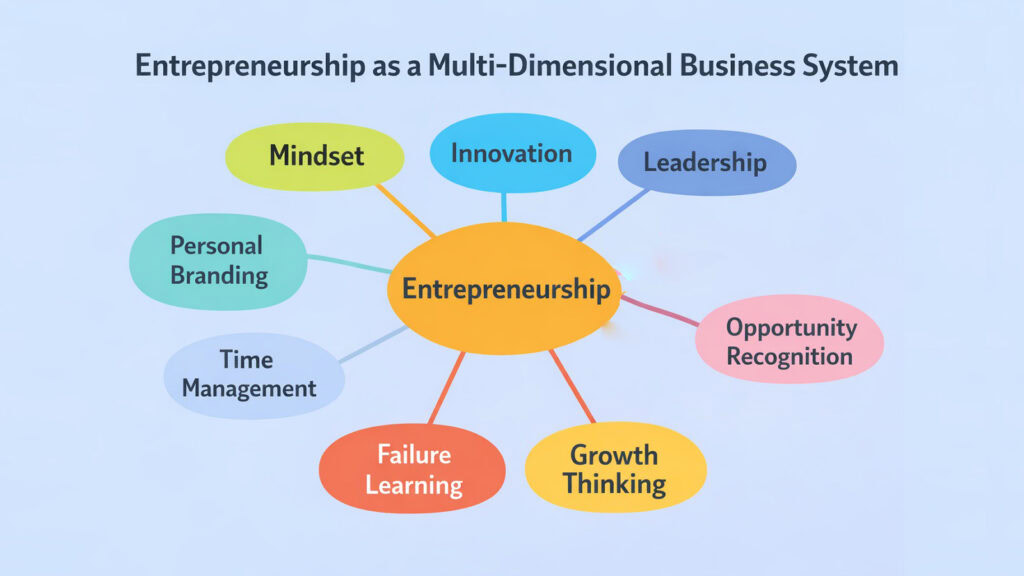
This article explores eight interconnected elements that shape entrepreneurship into something lasting. These are not separate tips. They form a framework, each piece strengthening the others. The eight aspects are the entrepreneurial mindset, business innovation, core leadership traits, the opportunity mindset, growth versus fixed thinking, learning from failure, time management, and personal branding. Together, they offer a complete picture of what it takes to build real success through entrepreneurship.
Entrepreneurship: Overview of 8 Core Aspects
| Core Aspect of Entrepreneurship | What It Means in Practice |
| Entrepreneur Mindset for Long-Term Success | Cultivating resilience, discipline, and patience to sustain effort through slow or difficult growth phases |
| Business Innovation in Modern Entrepreneurship | Adapting products, services, processes, and business models to remain competitive in changing markets |
| Core Leadership Traits of Entrepreneurs | Leading with clarity, emotional intelligence, and accountability to build trust within teams and with customers |
| Opportunity Mindset in Business Growth | Identifying overlooked gaps and underserved needs in the market and turning them into actionable value |
| Growth Mindset vs Fixed Mindset in Entrepreneurship | Choosing to learn and adapt over assuming that abilities and circumstances are fixed or unchangeable |
| Learning from Failure in Entrepreneurship | Treating setbacks as structured data points that refine strategy, rather than as signals to stop |
| Time Management for Entrepreneurs | Prioritizing high-impact tasks, building focused routines, and delegating to preserve decision quality |
| Personal Branding for Entrepreneurs | Building a consistent digital identity that expands reach, builds authority, and supports business trust |
1. Entrepreneurship and the Mindset for Long-Term Success
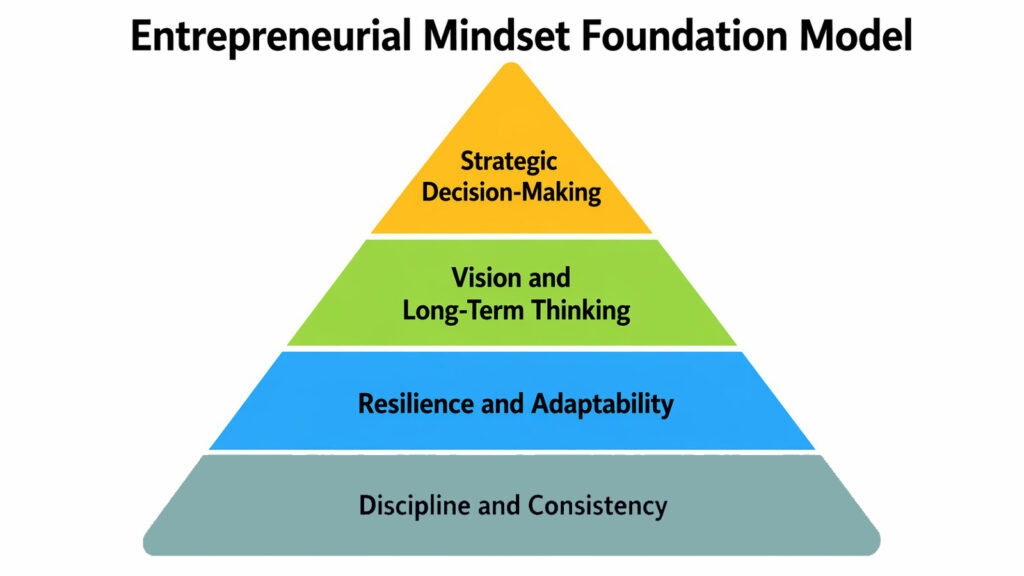
Every entrepreneurial journey begins inside the mind. Before a product is built or a market is entered, there is a way of thinking that either supports the effort or quietly undermines it. The entrepreneur mindset is not a personality type. It is a set of mental habits that can be observed, practiced, and refined over time.
Resilience is one of the most essential of these habits. In entrepreneurship, setbacks happen with regularity. Revenue slows, partners leave, markets shift without warning. The entrepreneur who can process a setback without collapsing into it is the one who stays in the game long enough to find a way forward. Research from the Kauffman Foundation found that the average successful entrepreneur made multiple attempts before building something that worked. Resilience made each attempt possible.
Patience is equally important, though it is often underestimated. Modern culture tends to celebrate overnight success, but most entrepreneurial growth is slow and incremental. Jeff Bezos spent years building Amazon before it became profitable. Howard Schultz rebuilt Starbucks through a long and deliberate process. Patience is what allows an entrepreneur to stay consistent during the quiet periods that precede growth.
Discipline shapes how consistency actually looks in daily life. The entrepreneur who shows up with focus, who keeps working on the right things even when motivation fades, is practicing discipline as a business strategy. It is not glamorous, but it is what compounds over time into real outcomes.
Long-term vision ties these habits together. When an entrepreneur knows where they are heading, short-term discomfort becomes easier to tolerate. Vision provides direction, and direction reduces the temptation to make reactive decisions that feel urgent but damage long-term progress.
Entrepreneurship Mindset: Key Traits and Their Role in Long-Term Success
| Entrepreneurship and Mindset Traits | Role in Entrepreneurship |
| Resilience | Allows entrepreneurs to recover from setbacks and continue pursuing goals without losing direction |
| Patience | Supports consistent effort during slow growth phases, preventing premature abandonment of viable ventures |
| Discipline | Sustains productive habits and focus even when motivation decreases or external pressure increases |
| Long-Term Vision | Provides a clear destination that guides decisions and reduces reactive thinking under pressure |
| Self-Awareness | Helps entrepreneurs recognize their strengths and limitations, supporting better delegation and planning |
| Adaptability | Enables entrepreneurs to shift strategies in response to market changes without abandoning core goals |
| Curiosity | Drives continuous learning, which keeps entrepreneurs relevant and open to new opportunities |
| Emotional Regulation | Reduces impulsive decisions by allowing entrepreneurs to respond thoughtfully rather than reactively |
2. Entrepreneurship and Business Innovation in a Modern World
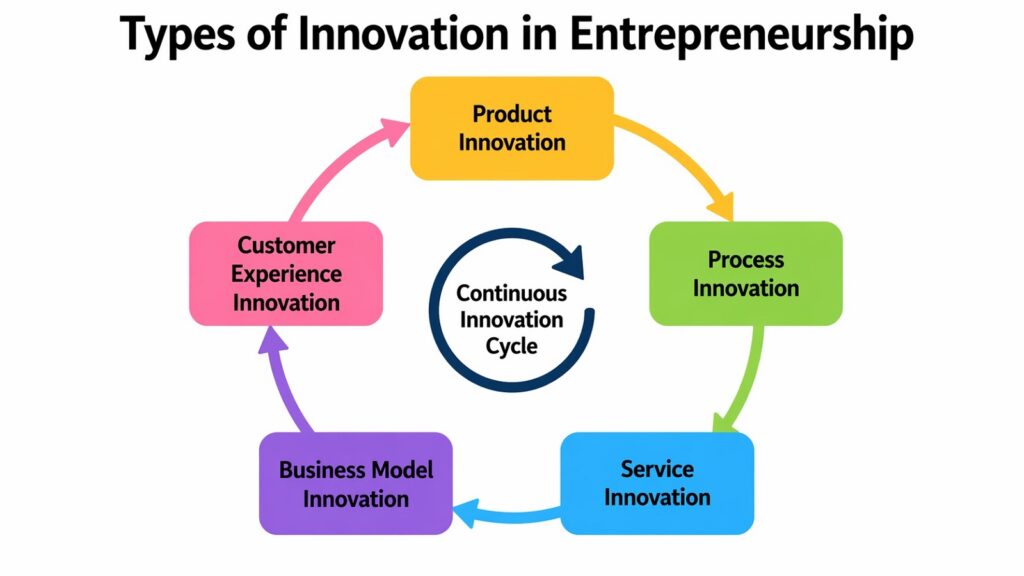
Innovation is the engine that keeps entrepreneurship moving. Without it, a business becomes static, and a static business in a changing market is one that is slowly falling behind. But entrepreneurial innovation does not always mean inventing something entirely new. More often, it means finding a better way to do something that already exists.
Consider the difference between a disruptive innovation and an incremental one. Disruptive innovation, the kind that replaces entire industries, gets most of the attention. But incremental innovation, small and steady improvements to a product, a process, or a customer interaction, is what most successful entrepreneurs rely on day to day. A bakery that introduces an online ordering system is innovating. A logistics company that reduces delivery time by redesigning its routing process is innovating. These are not dramatic changes, but they create real competitive advantages.
Service innovation is another area that is often overlooked. How a customer feels when interacting with a business is a product in itself. Companies like Zappos built enormous brand loyalty not by offering cheaper shoes, but by redesigning the customer service experience entirely. That is innovation applied to relationship, not technology.
Business model innovation is also increasingly common in entrepreneurship. Subscription services, platform models, and freemium structures have redefined how businesses generate revenue. Entrepreneurs who study their industry and ask whether the existing model is truly the best one are often the ones who find new paths to profitability.
The key is continuous adaptation. Markets evolve, and consumer expectations shift with them. The entrepreneur who treats innovation as a permanent practice rather than a one-time event is the one who stays competitive over the long term.
Entrepreneurship and Business Innovation: Types and Real-World Examples
| Entrepreneurship and Type of Innovation | Application in Entrepreneurship |
| Product Innovation | Improving or redesigning a product to better meet changing customer needs or reduce production costs |
| Process Innovation | Redesigning internal workflows to improve efficiency, reduce waste, or deliver faster results |
| Service Innovation | Enhancing the customer experience through responsiveness, personalisation, or ease of use |
| Business Model Innovation | Changing how revenue is generated, such as shifting from one-time sales to subscription models |
| Technology-Driven Innovation | Adopting digital tools, automation, or data analytics to improve decision-making and operations |
| Market Innovation | Identifying and entering underserved segments or new geographic markets with existing solutions |
| Supply Chain Innovation | Restructuring supplier relationships or logistics to reduce cost and improve delivery reliability |
| Customer Experience Innovation | Creating end-to-end interactions that build loyalty and reduce friction in the buying process |
3. Entrepreneurship and Core Leadership Traits That Matter
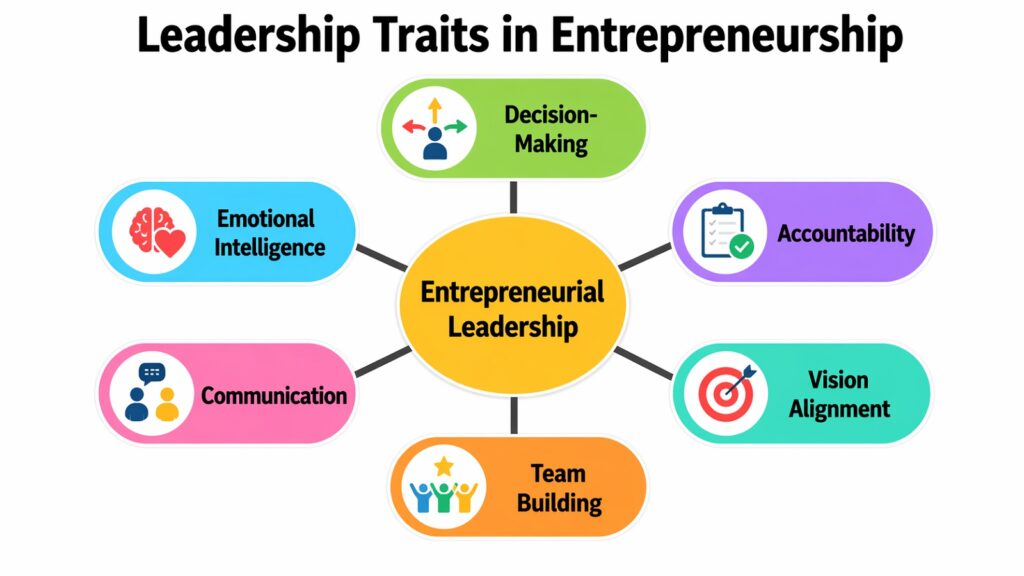
Leadership sits at the center of entrepreneurship. An entrepreneur may have a strong idea and solid market knowledge, but without the ability to lead, the venture will struggle to grow beyond the individual. Leadership in entrepreneurship is practical and evolving. It changes as the business grows, and the entrepreneur who refuses to grow alongside it tends to create ceilings for everyone involved.
Clarity in decision-making is one of the most valuable leadership traits an entrepreneur can develop. Businesses face decisions constantly, and many of them involve incomplete information or competing priorities. The leader who can analyze what is known, acknowledge what is uncertain, and still move forward with a clear direction builds momentum rather than paralysis.
Emotional intelligence is increasingly recognized as a central leadership skill. A 2016 study published in the Leadership and Organization Development Journal found that leaders with higher emotional intelligence were significantly better at motivating teams and managing conflict. For entrepreneurs, who often work with small and close-knit teams, the ability to understand and manage emotions, both their own and others, has a direct impact on retention and performance.
Accountability is what gives leadership its credibility. An entrepreneur who takes ownership of failures, not just successes, earns the trust of their team over time. Trust, once built, becomes a kind of organizational infrastructure. It speeds up communication, reduces friction, and allows teams to work with greater confidence.
Communication ties all of these traits together. The entrepreneur who can clearly articulate vision, give direct feedback, and actively listen to their team creates an environment where people feel both directed and valued. That combination is rare, and when it exists, it is one of the most powerful forces in entrepreneurship.
Entrepreneurship and Core Leadership Traits: What Each Delivers
| Leadership Trait | Impact on Entrepreneurship |
| Clarity in Decision-Making | Reduces hesitation and creates consistent forward momentum even under conditions of uncertainty |
| Emotional Intelligence | Improves team cohesion, conflict resolution, and the ability to retain high-performing people |
| Accountability | Builds trust by demonstrating that the leader takes ownership of both successes and failures |
| Communication | Ensures that vision, feedback, and direction are clearly understood across all levels of the business |
| Empathy | Allows entrepreneurs to understand team and customer perspectives, leading to better decisions |
| Decisiveness | Prevents stagnation by allowing the entrepreneur to act on imperfect information without excessive delay |
| Delegation | Frees the entrepreneur from low-priority tasks, enabling focus on strategy and high-leverage activities |
| Adaptability in Leadership Style | Allows the entrepreneur to shift between coaching, directing, and supporting as the situation demands |
4. Entrepreneurship and the Opportunity Mindset for Business Growth
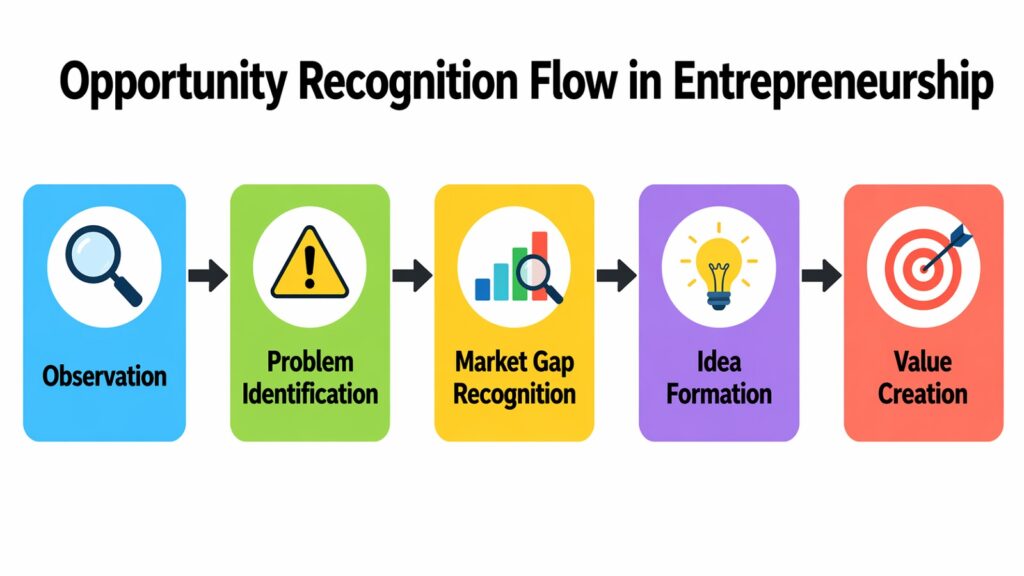
One of the most defining qualities of a successful entrepreneur is the ability to see opportunity where others see problems. This is not wishful thinking. It is a trained way of looking at the world, one that combines market awareness, close observation, and a genuine curiosity about how things could work better.
Most entrepreneurial opportunities do not announce themselves. They exist in the gap between what customers need and what the market currently offers. Identifying that gap requires the entrepreneur to spend time genuinely listening to customers, to competitors, and to trends that are still forming. Howard Schultz noticed that Americans lacked a comfortable third place between home and work. That observation became Starbucks. Sara Blakely noticed that existing hosiery cut off circulation and flattened the foot line in heels. That observation became Spanx. Neither of these opportunities was hidden. They were simply noticed by someone paying close attention.
Underserved markets are among the most reliable sources of entrepreneurial opportunity. Rural populations, non-English-speaking communities, and people with limited access to financial services are examples of groups that existing businesses often overlook. Entrepreneurs who enter these spaces with genuine solutions, not just low-cost versions of existing products, often find that loyalty and word-of-mouth growth are far stronger than in saturated mainstream markets.
The opportunity mindset also involves timing. A good idea presented at the wrong moment is often a missed opportunity. Mobile payments had been conceptualized for years before the smartphone created the conditions for them to succeed. Entrepreneurs who understand the landscape well enough to recognize when conditions are right have a meaningful advantage.
Ultimately, the opportunity mindset is about staying awake to the world as it actually is, not as it was, and not as the entrepreneur hopes it will be. That kind of clear-eyed attention is what turns observation into action.
Entrepreneurship and Opportunity Mindset: Key Drivers of Business Growth
| Opportunity Drivers of Entrepreneurship | How It Supports Entrepreneurship |
| Market Gap Identification | Spotting the distance between what customers need and what current offerings provide creates entry points |
| Customer Listening | Direct conversations with potential users reveal unspoken frustrations that represent viable business ideas |
| Trend Observation | Tracking shifts in technology, culture, or regulation early allows entrepreneurs to position ahead of demand |
| Underserved Market Focus | Entering overlooked segments often yields higher loyalty and lower competition than mainstream markets |
| Problem-First Thinking | Focusing on the problem before the solution ensures that the product actually addresses real needs |
| Competitive Analysis | Understanding what existing players do well and poorly reveals areas where a new entrant can add value |
| Timing Awareness | Recognizing when market, technology, and consumer readiness converge increases the chance of adoption |
| Curiosity and Observation | A habit of noticing inefficiencies and inconveniences is often the first step toward a viable venture |
5. Entrepreneurship and Growth Mindset vs Fixed Thinking
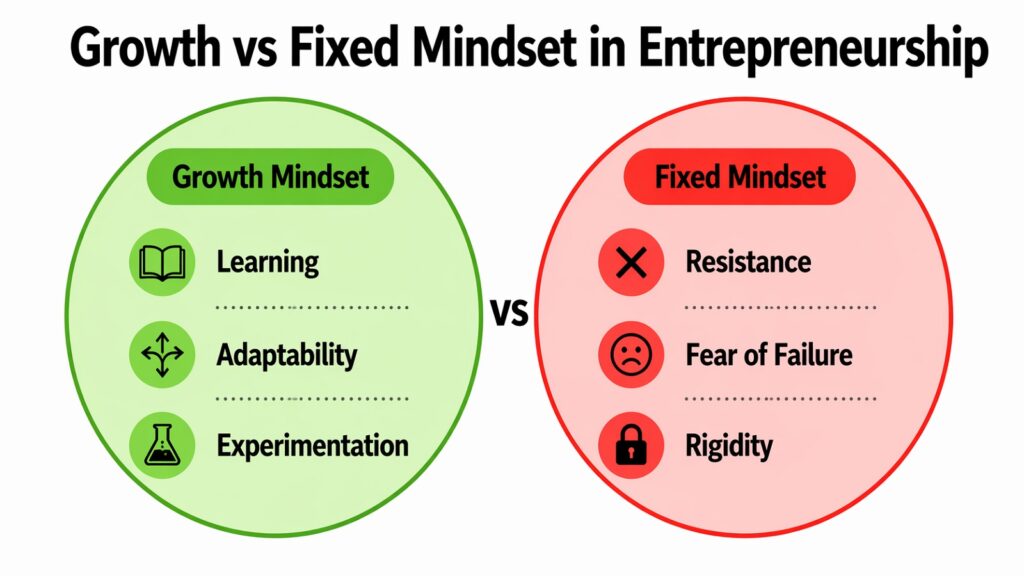
In 2006, psychologist Carol Dweck published research that drew a clear line between two ways of thinking about ability. People with a fixed mindset believe that their talents and intelligence are largely set at birth. People with a growth mindset believe that they can develop their abilities through effort, feedback, and learning. In entrepreneurship, this distinction matters enormously.
A fixed mindset creates invisible walls. The entrepreneur who believes that their skills are essentially fixed will avoid situations that might reveal their limitations. They may resist entering new markets, hesitate to hire people who are more skilled than they are, or resist feedback that challenges their current approach. Each of these behaviors limits what the business can become.
A growth mindset, by contrast, treats every challenge as useful information. Failure is not evidence of inadequacy. It is data about what needs to change. Experimentation is not risky. It is the method through which better answers are found. This orientation allows entrepreneurs to adapt continuously, which is exactly what a changing market demands.
The contrast becomes especially visible when entrepreneurs face competition. A fixed-mindset entrepreneur tends to see a strong competitor as a threat to their position. A growth-mindset entrepreneur tends to study the competitor closely, ask what they are doing better, and use that analysis to improve their own offering. The same situation produces two completely different responses depending on the underlying mental framework.
For entrepreneurs building ventures in fast-moving industries, the growth mindset is not just a personality preference. It is a functional requirement. The market will always change faster than any single entrepreneur’s existing knowledge. The ability to keep learning is the one skill that never becomes obsolete.
Entrepreneurship: Growth Mindset vs Fixed Mindset — Key Differences
| Area of Comparison | Growth Mindset vs Fixed Mindset in Entrepreneurship |
| Response to Failure | Growth: treats failure as feedback and adjusts | Fixed: avoids failure, treats it as proof of limitation |
| View of Effort | Growth: sees effort as the path to mastery | Fixed: sees effort as evidence that talent is lacking |
| Response to Criticism | Growth: uses feedback to improve strategy and performance | Fixed: dismisses or resents critical input |
| Attitude Toward Competition | Growth: studies competitors to find areas for improvement | Fixed: views competition as a personal threat |
| Approach to Learning | Growth: actively seeks new skills and knowledge | Fixed: stays within familiar and comfortable areas |
| Reaction to Change | Growth: adapts to market shifts with curiosity | Fixed: resists change to preserve current stability |
| Decision-Making Under Uncertainty | Growth: experiments and iterates toward answers | Fixed: waits for certainty before acting |
| Long-Term Trajectory | Growth: tends to improve and expand over time | Fixed: tends to plateau and eventually stagnate |
6. Entrepreneurship and Learning from Failure as a Strategy
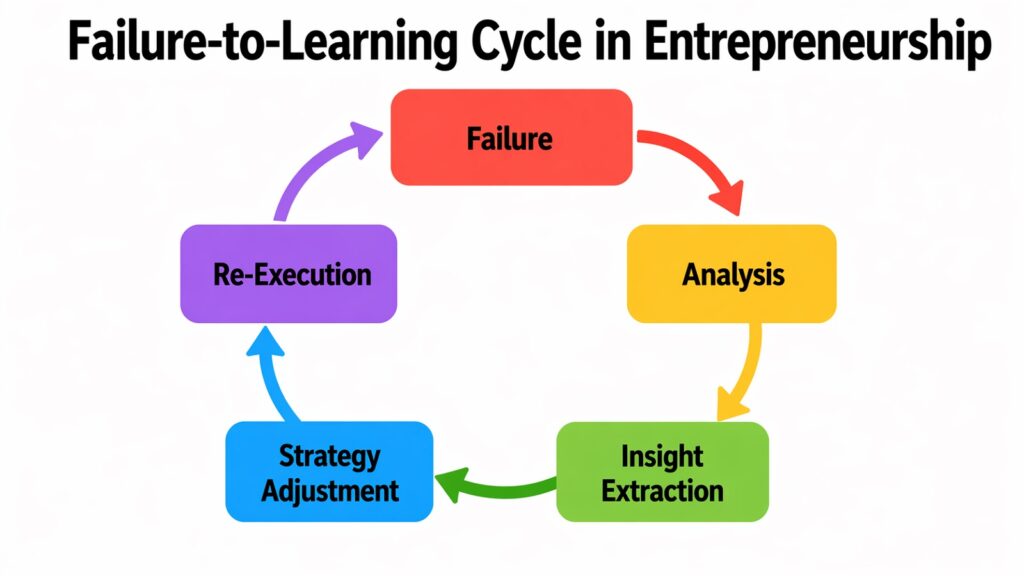
Failure is not a detour in entrepreneurship. It is part of the route. The statistics are sobering. According to the U.S. Bureau of Labor Statistics, approximately 20 percent of new businesses fail within their first year, and around 45 percent do not survive beyond five years. These numbers are not meant to discourage. They are meant to establish something important: failure is common in entrepreneurship, which means learning from it is a critical skill.
The first step is changing how failure is framed. When a venture stumbles, the natural reaction is often to feel embarrassed or defeated. But neither emotion is productive. The more useful response is to treat the failure as a structured problem. What happened? When did it happen? What decisions preceded it? What assumptions turned out to be wrong? This kind of analysis turns a painful experience into something actionable.
James Dyson made 5,126 prototypes of his vacuum cleaner before creating one that worked. Each failed version gave him information he could not have gotten any other way. The failures were not obstacles to the final product. They were the processes by which the final product was built. That is a useful frame for any entrepreneur facing a setback.
Pivoting is one of the most visible ways that entrepreneurs learn from failure. Instagram began as a check-in app called Burbn. Slack started as a gaming company. Twitter emerged from a podcasting platform called Odeo. In each case, the original idea did not work as planned. Instead of abandoning the effort, the founders extracted what was working, discarded what was not, and redirected toward something that better fit the market. That is not failure. That is applied learning.
The entrepreneur who refuses to examine failure honestly is the one who repeats the same mistakes. The one who approaches failure with curiosity and discipline builds institutional knowledge that eventually becomes a source of competitive advantage.
Entrepreneurship and Learning from Failure: How Entrepreneurs Convert Setbacks
| Failure Response Strategy | Application in Entrepreneurship |
| Post-Mortem Analysis | Reviewing what went wrong after a setback to identify root causes rather than surface symptoms |
| Assumption Testing | Identifying and challenging the assumptions that led to a failed decision or product direction |
| Rapid Iteration | Using small-scale failures quickly and cheaply to test ideas before committing larger resources |
| Pivot Decision-Making | Recognising when core aspects of a business need redirection based on evidence from early failures |
| Feedback Loop Creation | Building systems that continuously collect customer and market data to catch problems early |
| Resilience Building | Treating repeated exposure to manageable setbacks as a way to strengthen long-term endurance |
| Knowledge Documentation | Recording what was learned from failures to prevent repetition and guide future decisions |
| Reframing Failure Culturally | Creating team environments where honest reporting of problems is valued over false positivity |
7. Entrepreneurship and Time Management for Productivity
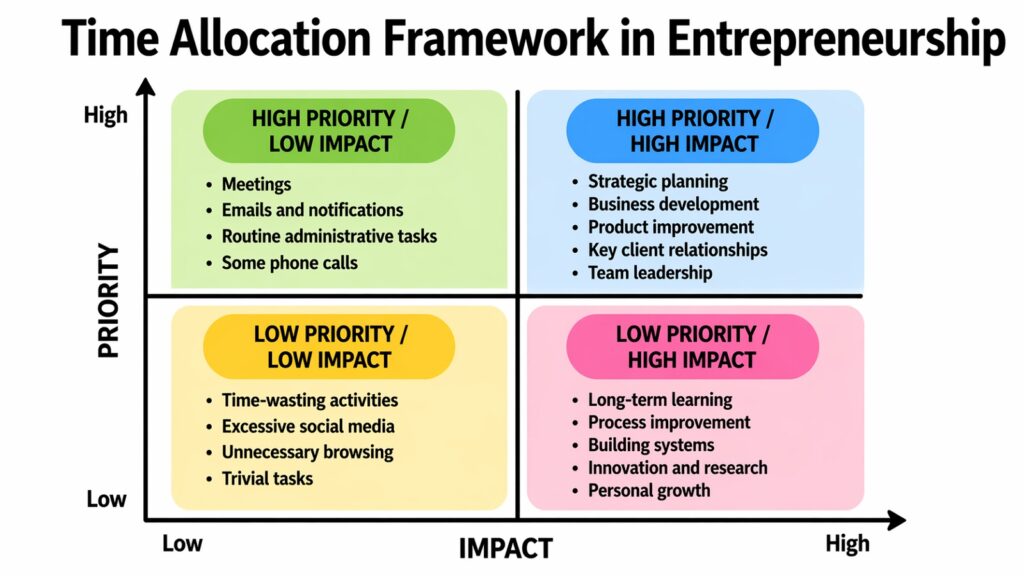
Time is the one resource that every entrepreneur has in equal measure, and yet it is the one most commonly mismanaged. Unlike capital, which can be raised, or skills, which can be developed, time cannot be recovered once it is spent. For entrepreneurs juggling product development, customer relationships, operations, and strategy simultaneously, the way time is spent determines almost everything else.
Prioritization is the foundation of effective time management in entrepreneurship. Not every task carries the same weight. The Pareto principle, commonly called the 80/20 rule, suggests that roughly 80 percent of outcomes come from 20 percent of efforts. For entrepreneurs, identifying that critical 20 percent and protecting it from lower-priority demands is a discipline that pays consistent dividends.
Focus is equally important. Research from the American Psychological Association found that task-switching reduces productivity by as much as 40 percent. For entrepreneurs who tend to operate in environments full of interruptions, building structured blocks of uninterrupted time for deep work is not a luxury. It is a performance strategy.
Delegation is where many entrepreneurs struggle. The instinct to control every aspect of a business, while understandable in the early stages, becomes a bottleneck as the company grows. Effective delegation is not about abandoning responsibility. It is about placing the right tasks with the right people so that the entrepreneur’s attention stays focused on the work that only they can do.
Routines matter more than many entrepreneurs realize. Successful leaders like Tim Cook, who reportedly wakes at 3:45 AM, and Arianna Huffington, who prioritizes sleep as a productivity tool, have both spoken publicly about the role of structured daily habits in sustaining energy and clarity. The specifics vary, but the principle is consistent: a reliable routine reduces the daily decisions required just to function, freeing cognitive resources for the decisions that actually matter.
Entrepreneurship and Time Management: Core Principles and Their Impact
| Entrepreneurship and Time Management Principles | Impact on Entrepreneurship |
| Prioritization Using 80/20 Rule | Focuses energy on the 20 percent of tasks that produce 80 percent of meaningful business outcomes |
| Time Blocking | Allocating dedicated periods for deep, uninterrupted work protects high-value thinking from daily noise |
| Delegation | Assigns lower-priority or specialized tasks to others, freeing the entrepreneur for strategic decisions |
| Routine Building | Reduces daily decision fatigue by automating recurring choices through consistent habits |
| Single-Tasking | Focusing on one task at a time increases output quality and reduces the errors caused by divided attention |
| Weekly Planning | Setting clear priorities at the start of each week aligns daily actions with longer-term business objectives |
| Meeting Discipline | Keeping meetings short and purpose-driven prevents time from being absorbed by low-output conversations |
| Energy Management | Scheduling demanding tasks during peak energy periods maximizes the quality of high-stakes decisions |
8. Entrepreneurship and Personal Branding in the Digital Age
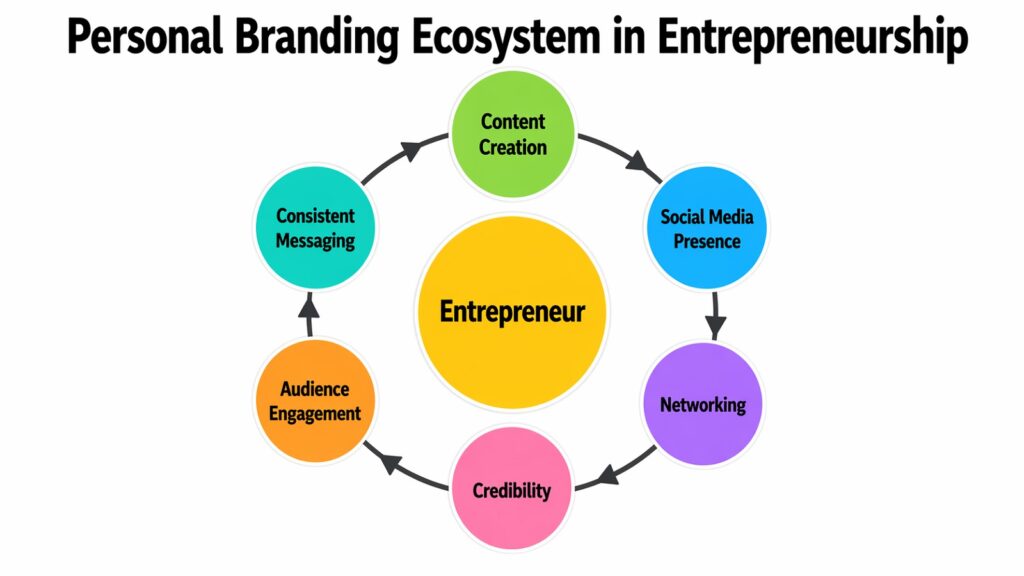
There was a time when a business brand and a personal brand were clearly separate things. A company had its name, logo, and reputation, and the founder stayed largely behind the scenes. That separation has become much harder to maintain in the digital age. Today, the entrepreneur and the business are often perceived as a single entity, and how the entrepreneur presents themselves online has a direct effect on how the business is trusted and remembered.
Personal branding is the practice of deliberately shaping that perception. It involves deciding what you stand for, how you communicate, and what kind of value you consistently deliver to your audience. When done well, personal branding creates a level of credibility that advertising alone cannot replicate. People trust people before they trust companies, and a visible, authentic entrepreneur gives a business a human face that builds connection.
LinkedIn is the most commonly cited professional platform for entrepreneurs’ personal branding, with over 900 million users as of 2023. But the principles extend to any platform where the entrepreneur’s audience spends time. Consistent messaging, regular contributions to conversations in the entrepreneur’s area of expertise, and genuine engagement with followers are the behaviors that build authority gradually and sustainably.
Content creation has become a central tool in this process. Entrepreneurs who write, speak, or create video content about what they know are doing two things at once. They are adding value to their audience, and they are reinforcing their own positioning as a credible voice in their field. Gary Vaynerchuk, who began by creating video content about wine, built a media and marketing empire partly on the credibility that content created over time.
The connection between personal branding and business growth is not abstract. Research from Edelman’s Trust Barometer consistently shows that consumers are more likely to trust a business when the leadership is visible, communicative, and perceived as knowledgeable. For entrepreneurs, especially those building early-stage companies where brand recognition is still limited, personal visibility can serve as a bridge between obscurity and market presence.
Entrepreneurship and Personal Branding: Digital Strategies and Their Effects
| Personal Branding Strategy | Effect on Entrepreneurship |
| Consistent Online Presence | Builds familiarity and recognition over time, making the entrepreneur easier to find and trust |
| Content Creation and Publishing | Positions the entrepreneur as a knowledgeable voice, supporting both authority and audience growth |
| Niche Expertise Communication | Focusing on a specific area of knowledge attracts a more engaged and relevant audience |
| Authentic Storytelling | Sharing real experiences, including setbacks, builds emotional connection and audience loyalty |
| Platform-Specific Strategy | Tailoring content to where the target audience spends time increases reach and relevance |
| Audience Engagement | Responding to comments and participating in conversations strengthens trust and community |
| Collaboration with Other Builders | Partnering with other entrepreneurs or creators expands visibility to new and aligned audiences |
| Reputation Management | Monitoring and responding to public feedback protects credibility and builds long-term brand trust |
Conclusion: How Entrepreneurship Builds Lasting Success
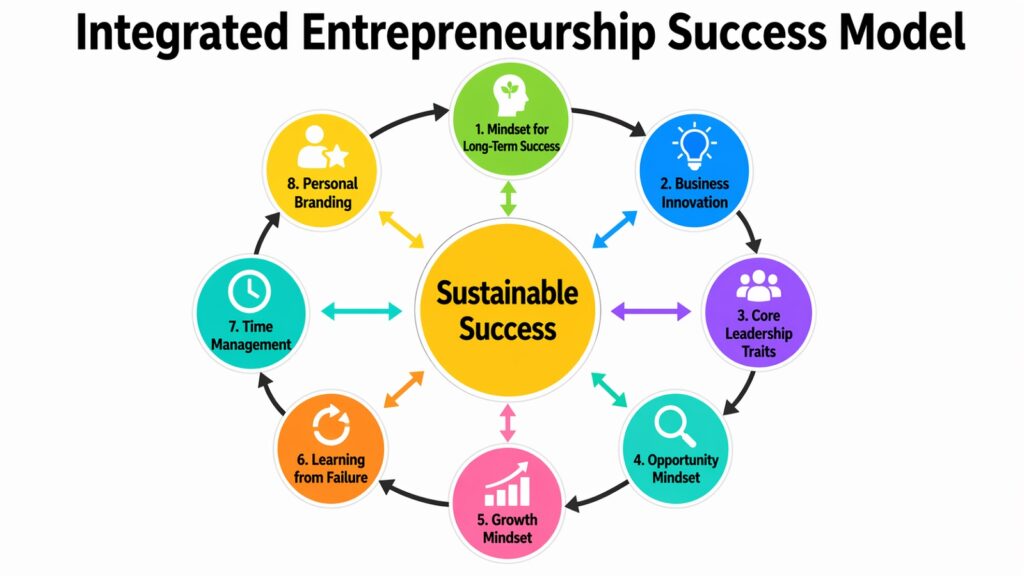
Entrepreneurship at its best is not a single act. It is a system, one made up of habits, decisions, and practices that reinforce each other over time. The eight aspects explored in this article are not independent checklists. They are interconnected elements of a framework that, when developed together, creates the conditions for sustained success.
The mindset comes first, because without the internal capacity to persist, none of the other elements can take hold. Innovation keeps the business relevant, while leadership ensures it can be organized and grown beyond the founder. The opportunity mindset directs attention toward gaps worth filling, and the growth mindset ensures that direction stays flexible as conditions change.
Learning from failure turns experience into expertise. Time management ensures that energy is spent where it matters most. And personal branding allows the entrepreneur to extend their reach in a world where visibility and trust are inseparable. Together, these eight areas cover the full range of what entrepreneurship demands.
What is worth noticing is that none of these elements produces overnight results. They compound. A consistent routine adds up over months. A personal brand builds across years of content. Resilience is tested and strengthened through repeated exposure to difficulty. The rewards of entrepreneurship tend to match the depth of the commitment made to these underlying practices.
As markets continue to evolve and technology reshapes entire industries, the surface details of entrepreneurship will change. New tools will emerge. New business models will replace old ones. But the foundational principles explored here, mindset, innovation, leadership, opportunity, learning, discipline, time, and identity, will remain as relevant as they have always been. Entrepreneurship will keep asking the same things of the people who choose it. The ones who understand that and prepare accordingly are the ones who tend to leave something behind that lasts.
Entrepreneurship: How Each Core Aspect Contributes to Long-Term Success
| Core Aspect of Entrepreneurship | Long-Term Contribution to Success |
| Entrepreneur Mindset for Long-Term Success | Builds the internal foundation of resilience and patience that sustains effort during inevitable slow periods |
| Business Innovation in Modern Entrepreneurship | Keeps the business competitive and relevant as market conditions, technology, and consumer needs shift |
| Core Leadership Traits of Entrepreneurs | Creates trust and direction within teams, enabling the business to grow beyond the founder’s direct involvement |
| Opportunity Mindset in Business Growth | Directs energy toward genuine market needs, reducing wasted effort on ideas without sustainable demand |
| Growth Mindset vs Fixed Mindset in Entrepreneurship | Ensures the entrepreneur continues to learn and adapt, preventing the plateau that fixed thinking creates |
| Learning from Failure in Entrepreneurship | Converts setbacks into operational knowledge that reduces the cost and frequency of future mistakes |
| Time Management for Entrepreneurs | Protects the entrepreneur’s most valuable resource, ensuring consistent progress on high-priority goals |
| Personal Branding for Entrepreneurs | Builds visible credibility and audience trust that supports business growth across the entrepreneur’s career |