Table of Contents
Introduction: Green Technology and the Future of Sustainable Innovation
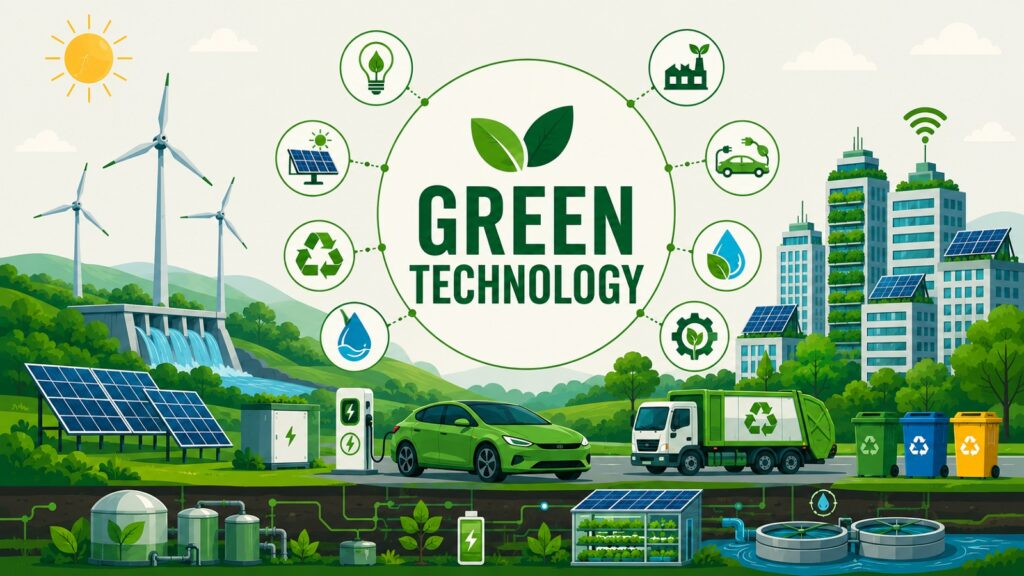
The world is changing faster than most people realize. Industries that once thrived on fossil fuels and linear production models are now being pushed toward cleaner, smarter, and more responsible alternatives. At the center of this shift is Green Technology, a broad and dynamic field that brings together engineering, science, environmental thinking, and economic strategy to create solutions that work for both people and the planet.
Green Technology has become an indispensable aspect of modern technology. It refers to the development and use of products, systems, and processes that reduce environmental harm while delivering economic value. It covers everything from solar panels and electric vehicles to smart water management systems and low-emission manufacturing. The scope of Green Technology is wide, and its influence is growing steadily across every major sector of the global economy.
What makes Green Technology especially important today is the pressure it addresses on multiple fronts. Climate change is accelerating. Resource depletion is a real concern. Energy security is becoming a geopolitical issue. At the same time, businesses face growing pressure from regulators, investors, and consumers to operate more responsibly. Green Technology provides practical tools to meet all these demands without sacrificing productivity or economic progress.
Infrastructure systems around the world are being redesigned with Green Technology at the core. Power grids are becoming smarter and more flexible. Buildings are being retrofitted to consume less energy. Industrial facilities are adopting cleaner production methods that reduce both waste and cost. These changes are not happening in isolated pockets. They represent a systemic transformation that touches governments, corporations, and communities alike.
The economic rationale for Green Technology is becoming increasingly evident. In numerous regions, clean energy has reached cost parity with fossil fuels. Buildings designed for energy efficiency reduce operating costs over time. Furthermore, sustainable supply chains mitigate the risks associated with fluctuations in resource prices. Green Technology transcends mere environmental responsibility; it is progressively recognized as a strategic advantage for organizations that opt to lead rather than follow.
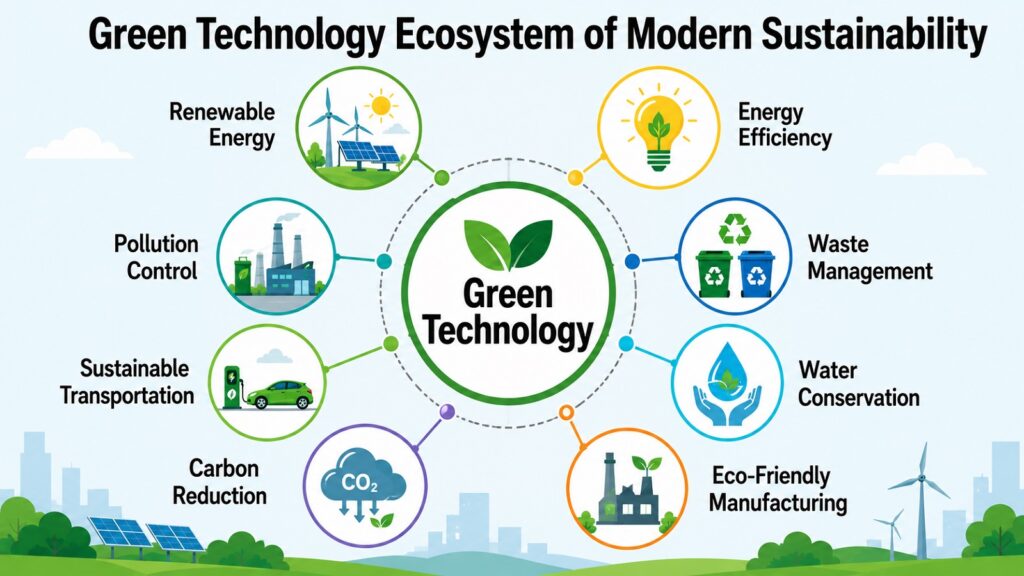
This article explores eight major areas where Green Technology is driving meaningful change. Each section examines a specific domain, from renewable energy and pollution control to water conservation and eco-friendly manufacturing. Together, these areas reveal just how deeply Green Technology is reshaping the modern world.
Table 1: Green Technology — Eight Key Areas of Innovation
| Area of Green Technology | What It Addresses |
| Renewable Energy Technologies | Solar, wind, hydro, geothermal power systems |
| Energy Efficiency Technologies | Smart grids, LED systems, efficient buildings |
| Pollution Control Technologies | Air filtration, emission reduction, wastewater treatment |
| Waste Management Technologies | Recycling, waste-to-energy, smart disposal systems |
| Green Transportation Technologies | Electric vehicles, hydrogen mobility, clean transit |
| Water Conservation Technologies | Smart irrigation, desalination, leakage detection |
| Carbon Reduction and Climate Technologies | Carbon capture, climate monitoring, low-emission systems |
| Eco-Friendly Manufacturing Technologies | Sustainable materials, clean production, green packaging |
1. Green Technology in Renewable Energy Technologies
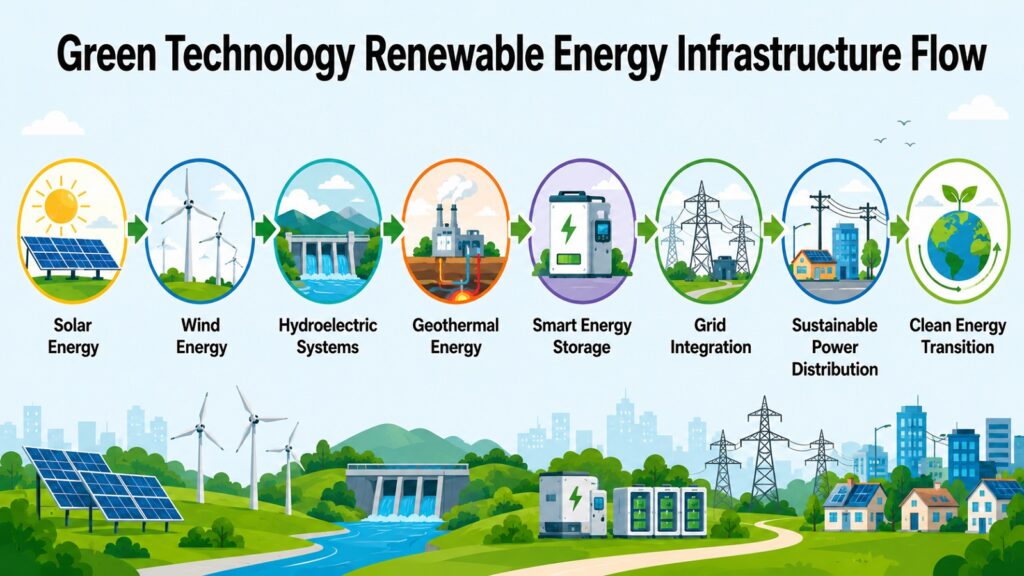
Renewable energy serves as the foundation for a sustainable future. It harnesses power from natural resources that are continuously replenished, including sunlight, wind, flowing water, and geothermal heat. In contrast to fossil fuels, these resources are inexhaustible and do not emit carbon dioxide during electricity generation. Green Technology is pivotal in enhancing the efficiency, affordability, and reliability of these energy sources on a large scale.
Solar energy is one of the most visible applications of Green Technology in the energy sector. Photovoltaic cells convert sunlight directly into electricity, and the technology behind them has improved dramatically over the past two decades. Modern solar panels are more efficient and far cheaper than earlier versions. Large-scale solar farms now supply electricity to millions of homes, while smaller rooftop installations allow households and businesses to generate their own power. Green Technology continues to push solar innovation forward through better materials, improved storage systems, and smarter grid integration.
Wind energy is another area where Green Technology has produced remarkable results. Onshore and offshore wind turbines now generate significant portions of the electricity supply in countries like Denmark, Germany, and the United Kingdom. Offshore wind installations benefit from stronger and more consistent winds, while advances in turbine design allow more energy to be captured from each rotation. Green Technology improvements in blade materials, tower engineering, and predictive maintenance have made wind power increasingly cost-effective.
Hydroelectric systems have supplied clean electricity for over a century, but Green Technology is bringing new innovations to this field as well. Run-of-river systems and small-scale hydro installations allow energy generation with less environmental disruption than large dam projects. Pumped-storage hydropower serves as a large-scale energy storage mechanism, helping to balance the intermittent output of solar and wind farms.
Geothermal energy taps into the heat stored beneath Earth’s surface. Countries like Iceland and Kenya generate a significant share of their electricity from geothermal sources. Green Technology improvements in drilling techniques and heat exchange systems are expanding the geographic reach of this energy source. Together, these renewable energy technologies represent a sweeping transformation of global energy systems driven by Green Technology.
Table 2: Green Technology in Renewable Energy — Key Systems and Benefits
| Renewable Energy Technology | Application or Environmental Benefit |
| Photovoltaic Solar Panels | Generates electricity from sunlight with zero emissions |
| Offshore Wind Turbines | Captures consistent wind energy over open water |
| Concentrated Solar Power | Uses mirrors to generate utility-scale heat and electricity |
| Run-of-River Hydropower | Low-impact hydro generation without large reservoirs |
| Pumped-Storage Hydropower | Stores energy by pumping water uphill for later release |
| Geothermal Power Plants | Converts earth’s internal heat into electricity |
| Floating Solar Farms | Installs panels on water bodies to save land and reduce evaporation |
| Tidal and Wave Energy Systems | Harnesses ocean motion for predictable power generation |
2. Green Technology in Energy Efficiency Technologies
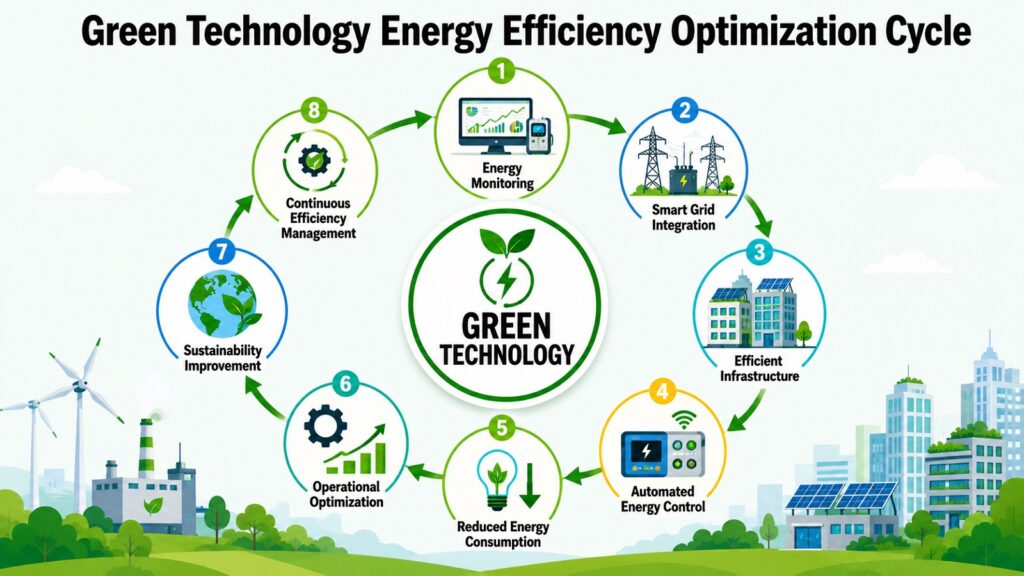
Generating clean energy is only half the equation. The other half is making sure that energy is used as efficiently as possible. Wasted energy means wasted resources, higher costs, and unnecessary emissions. Green Technology addresses this problem directly through a wide range of systems designed to get more output from less input.
Smart grids represent one of the most transformative applications of Green Technology in the energy efficiency space. Unlike traditional power grids that move electricity in one direction from power plant to consumer, smart grids use digital communication and sensors to create a two-way flow of both energy and information. Utilities can monitor consumption in real time, detect faults quickly, and balance supply and demand more effectively. This reduces energy waste at the system level and allows a higher proportion of renewable energy to be integrated without destabilizing the grid.
Energy-efficient buildings are another major area where Green Technology is delivering measurable results. Modern building design incorporates advanced insulation, double or triple-glazed windows, and passive solar heating techniques that dramatically reduce the energy needed for heating and cooling. Smart thermostats and automated lighting systems respond to occupancy and natural light levels, cutting electricity consumption further. Buildings certified under programs like LEED or BREEAM can use up to 30 percent less energy than conventional structures.
LED lighting technology has transformed energy consumption in both commercial and residential settings. LEDs use roughly 75 percent less electricity than incandescent bulbs and last many times longer. Their adoption across offices, factories, streets, and homes has eliminated enormous amounts of unnecessary energy use. Green Technology continues to push LED performance forward, improving both efficiency and light quality.
In industrial environments, Green Technology enables energy efficiency through automated process controls, variable-speed motors, and heat recovery systems. Variable-speed drives adjust motor speed to match actual demand rather than running at full capacity continuously. Industrial heat recovery captures waste heat from manufacturing processes and redirects it for use elsewhere in the facility. These technologies together reduce energy costs substantially while lowering industrial emissions. Green Technology in this domain is proving that efficiency and sustainability are not competing goals but deeply complementary ones.
Table 3: Green Technology in Energy Efficiency — Systems and Operational Benefits
| Energy Efficiency Technology | Operational Benefit |
| Smart Grid Infrastructure | Real-time demand management reduces waste and grid losses |
| LED Lighting Systems | Uses 75% less energy than incandescent alternatives |
| Building Automation Systems | Controls lighting, HVAC, and security for optimal efficiency |
| Variable Speed Motor Drives | Reduces industrial motor energy use by 20–50% |
| High-Performance Insulation | Lowers heating and cooling loads in buildings |
| Smart Thermostats | Learns usage patterns to minimize energy consumption |
| Industrial Heat Recovery Systems | Captures and reuses waste thermal energy |
| Energy Management Software | Monitors and optimizes energy use across facilities |
3. Green Technology in Pollution Control Technologies
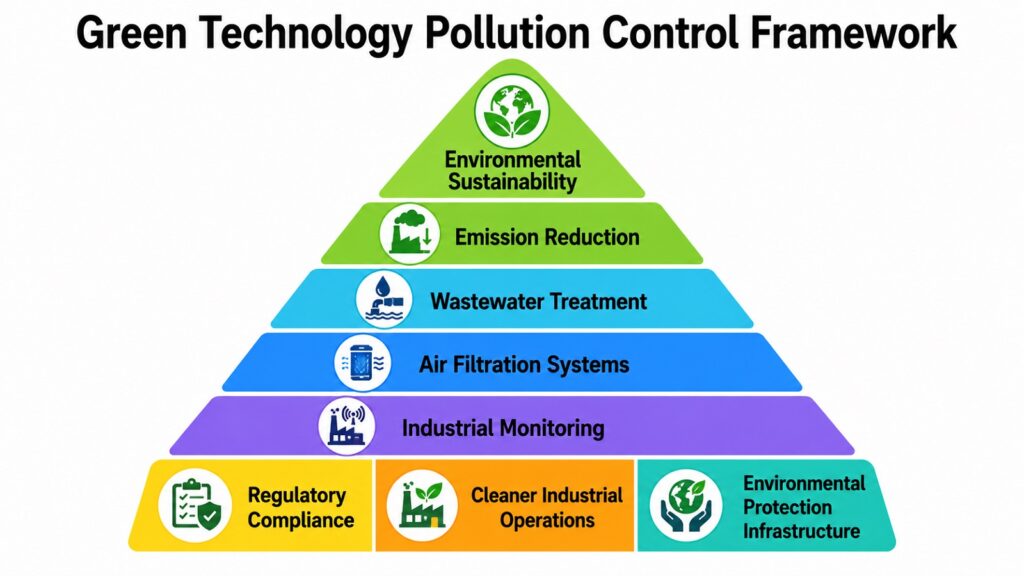
Pollution remains one of the most pressing environmental challenges of our time. Air pollution contributes to respiratory disease and climate change. Industrial effluents contaminate waterways and soil. Noise and chemical pollution degrade ecosystems and human health. Green Technology provides industries and municipalities with practical tools to reduce these impacts and move toward cleaner, healthier environments.
Air pollution control technologies are among the most established applications of Green Technology in industrial settings. Electrostatic precipitators and fabric filter baghouses capture particulate matter from industrial exhaust streams before they are released into the atmosphere. Selective catalytic reduction systems treat nitrogen oxide emissions from power plants and industrial furnaces. Wet scrubbers neutralize acidic gases and capture harmful particles from factory exhaust. These systems are now standard components of compliance strategies for heavy industries operating under modern environmental regulations.
Wastewater treatment technology represents another critical domain where Green Technology contributes to pollution reduction. Modern treatment plants use biological, chemical, and physical processes to remove contaminants from industrial and municipal wastewater before it is discharged into rivers or the sea. Membrane bioreactor technology combines biological treatment with ultrafiltration to produce high-quality treated water that can be safely reused in industrial processes. Green Technology advances in this area are not only protecting waterways but also creating opportunities for water recycling in water-stressed regions.
Environmental monitoring systems are becoming increasingly important as Green Technology tools for pollution management. Networks of air quality sensors provide real-time data on pollutant concentrations across urban areas, allowing authorities to issue warnings and take action quickly. Satellite monitoring platforms track industrial emissions, deforestation, and changes in land use with a precision that was not possible a generation ago. These systems give policymakers and industries the information they need to address pollution more effectively.
Green Technology is also driving innovation in cleaner industrial processes that prevent pollution at the source rather than treating it afterward. Industrial ecology principles encourage the reuse of byproducts between facilities, reducing waste and emissions simultaneously. Low-solvent coatings and water-based adhesives are replacing toxic chemical formulations in manufacturing. These cleaner production methods reflect the broader philosophy of Green Technology, which is to redesign industrial systems so that they generate less harm in the first place.
Table 4: Green Technology in Pollution Control — Technologies and Environmental Improvements
| Pollution Control Technology | Environmental Improvement |
| Electrostatic Precipitators | Removes 99%+ of particulate matter from industrial exhaust |
| Selective Catalytic Reduction | Reduces nitrogen oxide emissions from power plants and factories |
| Membrane Bioreactor Systems | Treats industrial wastewater to near-drinking-water quality |
| Wet Scrubber Systems | Neutralizes acidic gases and captures particulate pollutants |
| Urban Air Quality Sensor Networks | Provides real-time pollution data for public health action |
| Industrial Biotreatment Systems | Uses microorganisms to break down chemical pollutants in soil |
| Closed-Loop Industrial Cooling | Prevents thermal and chemical contamination of waterways |
| Low-Emission Industrial Coatings | Replaces solvent-based formulations with safer alternatives |
4. Green Technology in Waste Management Technologies
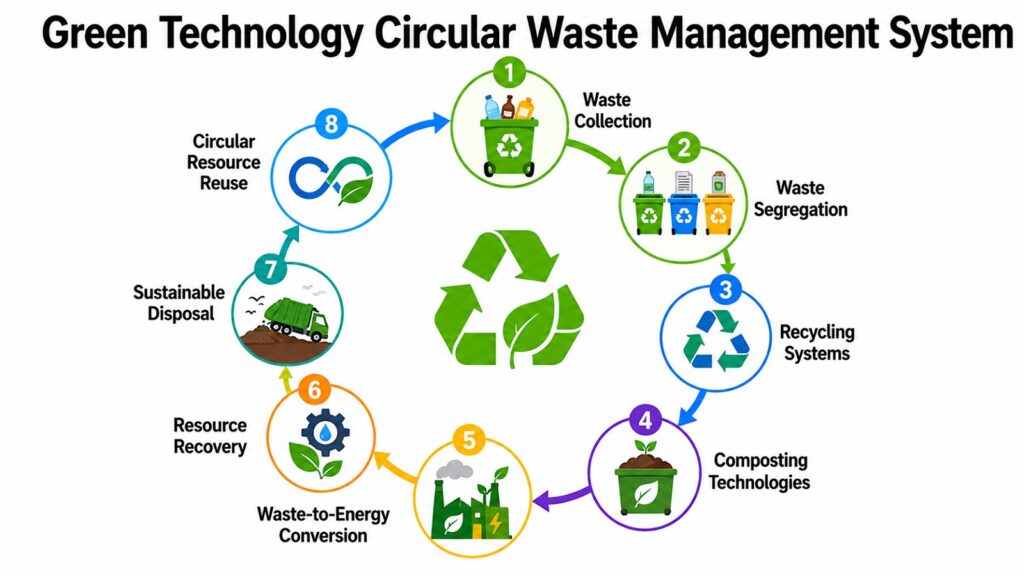
Waste is not just an eyesore. It is a symptom of linear economic systems that extract, use, and discard resources without recovering their value. Every year, billions of tons of waste end up in landfills, incinerators, or the environment, releasing greenhouse gases and toxic compounds along the way. Green Technology is reshaping waste management by turning discarded materials into resources and making the entire process more intelligent and sustainable.
Recycling technology is one of the most fundamental pillars of Green Technology in waste management. Advanced sorting systems now use sensors, cameras, and artificial intelligence to identify and separate recyclable materials with much greater accuracy than manual sorting allows. Optical sorters can distinguish between different types of plastics in milliseconds, dramatically improving material recovery rates. This enhanced sorting capability makes recycling more economically viable and reduces the amount of material that ends up in landfills.
Waste-to-energy technology represents an important bridge in the transition to a circular economy. Facilities using anaerobic digestion convert organic waste into biogas, which can be used to generate heat and electricity. Gasification and pyrolysis processes break down non-recyclable waste materials at high temperatures to produce synthetic fuels and other useful outputs. While waste-to-energy is not a substitute for reducing waste in the first place, it extends the useful life of materials that would otherwise contribute to landfill emissions.
Smart waste monitoring systems are another innovation where Green Technology is improving operational efficiency. Sensor-equipped bins can report their fill levels in real time, allowing waste collection routes to be optimized dynamically. This reduces the number of vehicle trips needed, cutting fuel consumption and emissions while lowering the operational cost of waste collection for cities and facilities. Several European and Asian cities have implemented these systems with measurable reductions in collection costs.
Composting technology converts organic waste into nutrient-rich material that can enrich agricultural soil and reduce the need for chemical fertilizers. Large-scale composting facilities can process food waste, garden trimmings, and biodegradable packaging efficiently. Industrial composting systems use controlled temperature and humidity conditions to accelerate decomposition while eliminating pathogens. Green Technology in waste management is ultimately about closing resource loops, recovering value from discarded materials, and reducing the environmental burden of waste disposal.
Table 5: Green Technology in Waste Management — Technologies and Sustainability Benefits
| Waste Management Technology | Sustainability Benefit |
| AI-Powered Optical Sorting | Increases material recovery rates from mixed waste streams |
| Anaerobic Digestion Systems | Converts organic waste into biogas and compost |
| Pyrolysis and Gasification | Breaks down non-recyclable waste into synthetic fuels |
| Smart Bin Sensor Networks | Optimizes collection routes to reduce vehicle emissions |
| Industrial Composting Facilities | Diverts food waste from landfills and produces soil amendment |
| Chemical Recycling Technology | Breaks down plastics into base materials for reuse |
| Landfill Gas Capture Systems | Prevents methane release and converts it to usable energy |
| Biodegradable Packaging Materials | Reduces persistent waste in landfills and natural environments |
5. Green Technology in Green Transportation Technologies
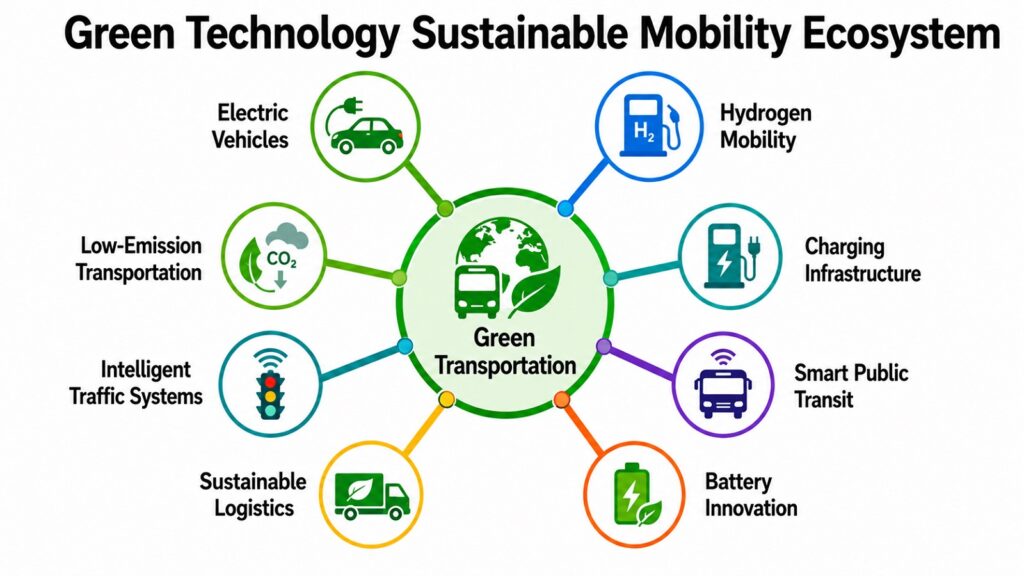
Transportation accounts for a substantial share of global greenhouse gas emissions. Road vehicles, aircraft, and shipping collectively release enormous quantities of carbon dioxide, nitrogen oxides, and particulate matter. Green Technology is transforming transportation by replacing fossil fuels with cleaner energy sources, improving vehicle efficiency, and redesigning mobility infrastructure from the ground up.
Electric vehicles represent the most visible and rapidly growing application of Green Technology in transportation. Battery technology has improved dramatically over the past decade, with modern electric vehicles offering ranges of 400 kilometers or more on a single charge. Charging infrastructure is expanding in parallel, with fast-charging networks enabling long-distance travel more practically. Global electric vehicle sales exceeded 14 million units in 2023, a clear indicator that the transition away from internal combustion engines is accelerating. Green Technology continues to push battery energy density higher while reducing cost and charging time.
Hydrogen-powered transportation is emerging as a complementary technology to battery electric systems, particularly for heavy-duty vehicles that require long ranges and fast refueling. Hydrogen fuel cells convert hydrogen into electricity with water as the only by-product. Fuel cell buses, trucks, and trains are already in operation in several countries. Green Technology investment in hydrogen production, storage, and distribution infrastructure is growing as governments and industries recognize hydrogen’s potential to decarbonize segments of transportation that are difficult to electrify with batteries alone.
Public transportation modernization is another important dimension of Green Technology in mobility. Electric buses and trams reduce urban air pollution and noise compared to diesel alternatives. Rail networks powered by renewable electricity carry passengers efficiently with minimal per-passenger emissions. Intelligent traffic management systems reduce congestion, cutting fuel consumption and travel time simultaneously. Green Technology applied to urban mobility planning is helping cities move more people more cleanly.
Sustainable logistics and freight transportation are also being transformed by Green Technology. Electric delivery vehicles are replacing diesel vans in urban delivery operations. Route optimization software reduces the distance traveled by freight vehicles, lowering fuel use and emissions. Aerodynamic improvements, low-rolling-resistance tires, and driver assistance systems are making conventional trucks more efficient while the industry transitions to cleaner propulsion systems. Green Technology is reshaping every layer of the transportation sector.
Table 6: Green Technology in Green Transportation — Technologies and Environmental Benefits
| Green Technology in Transportation | Environmental Benefit |
| Battery Electric Vehicles | Zero tailpipe emissions in urban and highway driving |
| Hydrogen Fuel Cell Vehicles | Zero-emission transport for heavy-duty and long-range use |
| Electric Bus Systems | Reduces urban air pollution and traffic noise |
| High-Speed Electric Rail | Carries passengers at low per-trip carbon cost |
| Route Optimization Software | Cuts freight vehicle mileage and fuel consumption |
| Vehicle-to-Grid Technology | Uses EV batteries to stabilize the electricity grid |
| Regenerative Braking Systems | Recovers kinetic energy during deceleration in EVs and trains |
| Urban Bicycle and E-Scooter Networks | Provides zero-emission last-mile mobility options |
6. Green Technology in Water Conservation Technologies
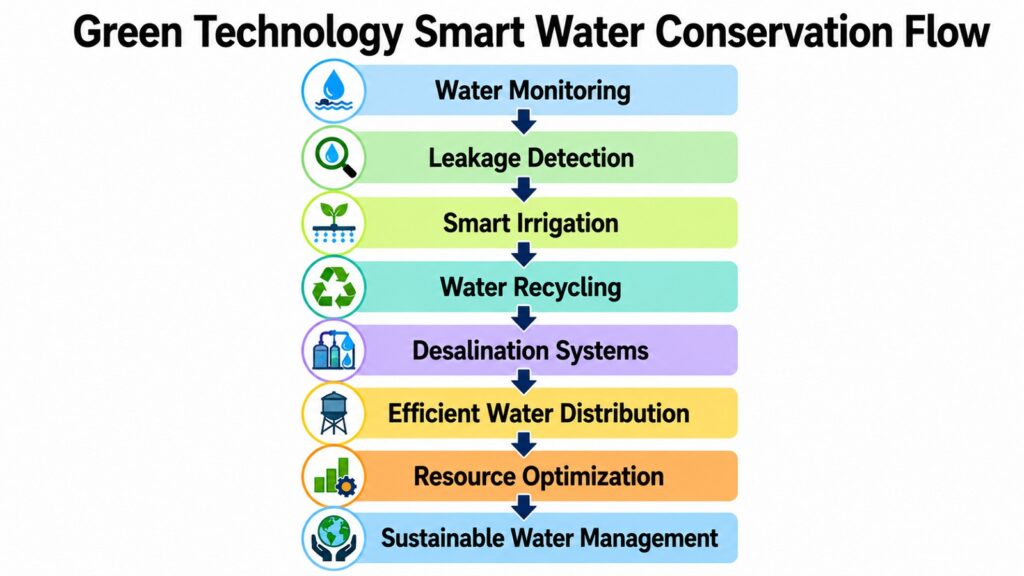
Water scarcity affects more than two billion people globally. Agricultural demand, industrial use, population growth, and climate change are putting unprecedented pressure on freshwater supplies. Green Technology is responding to this challenge with innovations that improve how water is sourced, used, monitored, and recycled across sectors ranging from agriculture to urban infrastructure.
Smart irrigation systems represent one of the most impactful applications of Green Technology in agriculture, which accounts for about 70 percent of global freshwater withdrawals. Sensor-based irrigation systems monitor soil moisture, weather forecasts, and crop water requirements to deliver precisely the right amount of water at the right time. Drip irrigation technology delivers water directly to plant root zones, minimizing evaporation and surface runoff. These systems can reduce agricultural water consumption by 30 to 50 percent compared to conventional flood irrigation, a significant saving in regions where water is increasingly scarce.
Water recycling and reuse technology allows treated wastewater to be returned to productive use rather than discharged into waterways. Industrial facilities are increasingly recycling process water internally, reducing both freshwater consumption and wastewater treatment costs. Municipal water recycling systems in cities like Singapore and Windhoek in Namibia have demonstrated that properly treated recycled water can safely supplement drinking water supplies. Green Technology advances in membrane filtration and ultraviolet disinfection make water reuse safer and more cost-effective than ever before.
Desalination technology converts seawater or brackish water into fresh water, expanding available water supplies in coastal and arid regions. Modern reverse osmosis desalination systems are considerably more energy-efficient than older thermal desalination methods. Saudi Arabia, Israel, and Australia are among the countries that rely heavily on desalination to meet water demand. Green Technology innovations in membrane materials and energy recovery systems are continuing to bring down the cost of desalination.
Leakage detection technology is addressing a significant but often overlooked source of water loss. In many cities, water distribution networks lose 20 to 40 percent of treated water through pipe leaks before it reaches consumers. Acoustic sensors, pressure monitoring systems, and artificial intelligence algorithms can now identify leak locations with high precision, allowing repairs to be made before losses accumulate. Green Technology applied to water infrastructure management is one of the most cost-effective ways to stretch existing water supplies further.
Table 7: Green Technology in Water Conservation — Technologies and Sustainability Benefits
| Water Conservation Technology | Sustainability Benefit |
| Drip Irrigation Systems | Reduces agricultural water use by up to 50% |
| Soil Moisture Sensor Networks | Delivers irrigation only when and where crops need water |
| Membrane Bioreactor Water Recycling | Produces reusable-quality water from industrial wastewater |
| Reverse Osmosis Desalination | Converts seawater into potable water for arid regions |
| Acoustic Leakage Detection | Locates pipe leaks to reduce distribution system water loss |
| Rainwater Harvesting Systems | Captures and stores precipitation for non-potable use |
| Smart Water Meters | Tracks household consumption and detects unusual usage patterns |
| Greywater Recycling Systems | Treats and reuses household wastewater for irrigation and flushing |
7. Green Technology in Carbon Reduction and Climate Technologies
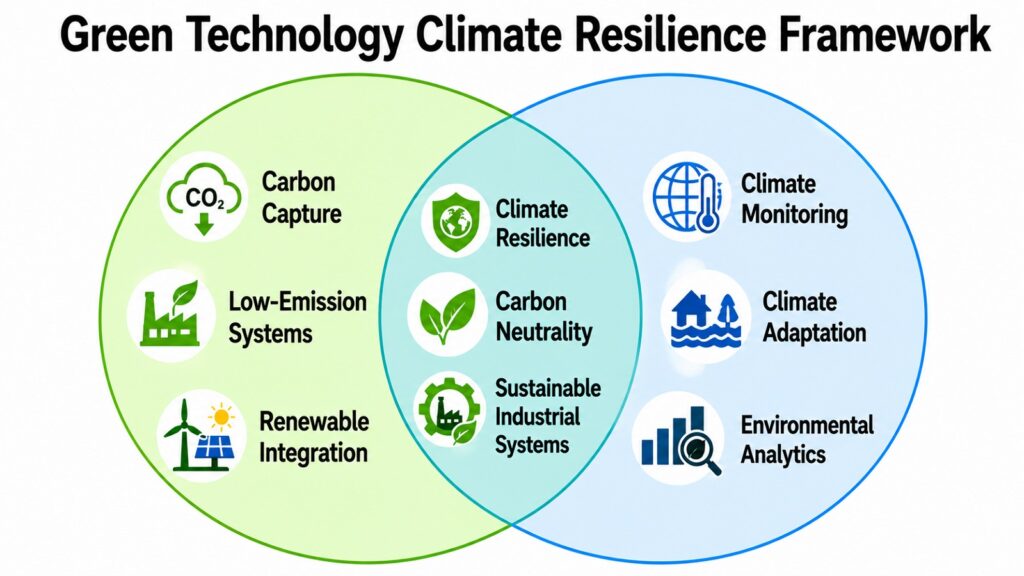
Reducing carbon emissions and building resilience against climate change are two of the most urgent priorities facing modern society. Green Technology is responding to both challenges through carbon capture systems, climate monitoring infrastructure, low-emission industrial processes, and analytical tools that help organizations understand and manage their environmental footprint.
Carbon capture and storage technology removes carbon dioxide from industrial exhaust streams or directly from the atmosphere and stores it underground or converts it into useful products. Point-source carbon capture systems are being deployed at power plants and cement factories, where large volumes of carbon dioxide are emitted in concentrated streams. Direct air capture technology extracts carbon dioxide from ambient air and can theoretically operate anywhere on earth. While these technologies remain expensive today, Green Technology innovation is driving costs down, and several commercial direct air capture facilities are now in operation.
Climate monitoring technologies provide the data infrastructure that underpins effective climate action. Satellite systems track atmospheric carbon dioxide concentrations, surface temperatures, sea ice extent, and deforestation rates with global coverage. Ground-based sensor networks monitor local air quality, water temperatures, and ecosystem health. These monitoring systems enable scientists to detect changes, model future scenarios, and evaluate the effectiveness of climate policies. Without the data that Green Technology-powered monitoring provides, managing climate risk would be far more difficult.
Low-emission industrial systems are reducing the carbon intensity of manufacturing, mining, and chemical production. Electric arc furnaces powered by renewable electricity are replacing coal-fired blast furnaces in steel production. Green hydrogen is being developed as a zero-emission feedstock for fertilizer production and chemical synthesis. Industrial electrification, fuel switching, and process redesign are all components of a Green Technology-driven industrial decarbonization strategy that major companies and governments are beginning to pursue seriously.
Carbon analytics platforms help organizations measure, manage, and report their carbon emissions with greater accuracy and transparency. These software systems aggregate energy consumption data, supply chain information, and operational records to calculate scope one, two, and three emissions. They enable companies to identify the largest sources of emissions in their operations, set reduction targets, and track progress over time. Green Technology in this space is making carbon accountability more practical and actionable for businesses of all sizes.
Table 8: Green Technology in Carbon Reduction — Systems and Environmental Benefits
| Carbon Reduction Technology | Environmental Benefit |
| Point-Source Carbon Capture | Removes CO2 from power plant and industrial exhaust |
| Direct Air Carbon Capture | Extracts CO2 directly from the atmosphere |
| Satellite Climate Monitoring | Tracks global emissions and environmental change in real time |
| Green Hydrogen Production | Provides zero-emission fuel for industrial processes |
| Electric Arc Steelmaking | Produces steel using electricity instead of coal |
| Industrial Electrification | Replaces fossil fuel combustion with clean electricity in factories |
| Carbon Analytics Platforms | Measures and tracks organizational carbon footprints |
| Nature-Based Carbon Sequestration | Restores forests and wetlands to absorb atmospheric CO2 |
8. Green Technology in Eco-Friendly Manufacturing Technologies
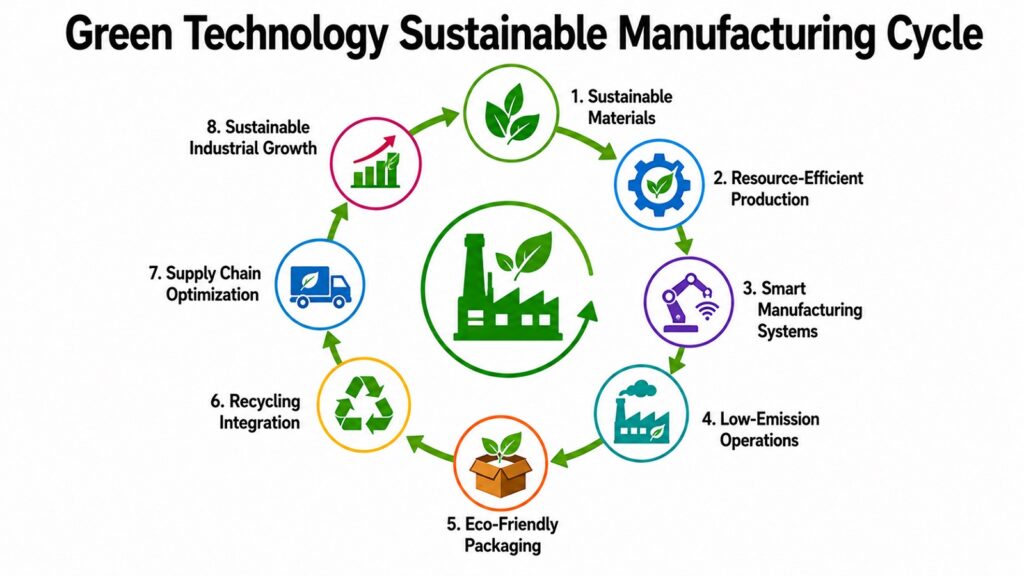
Manufacturing is one of the most resource-intensive activities in the modern economy. It consumes enormous amounts of energy and raw materials while generating significant quantities of waste, emissions, and hazardous by-products. Green Technology is transforming manufacturing by introducing cleaner production methods, more sustainable materials, and smarter industrial systems that reduce environmental impact without compromising output quality or efficiency.
Sustainable materials innovation is at the heart of eco-friendly manufacturing. Bio-based polymers derived from sugarcane, corn starch, or cellulose are replacing petroleum-based plastics in packaging and consumer goods. Recycled content materials are being incorporated into products that previously relied entirely on virgin resources. Advanced composites and lightweight alloys enable manufacturers to reduce material consumption while maintaining strength and performance. Green Technology is driving rapid progress in materials science, expanding the range of sustainable options available to manufacturers.
Additive manufacturing, more commonly known as three-dimensional printing, represents a fundamentally different production paradigm that aligns naturally with Green Technology principles. By building objects layer by layer rather than cutting them from larger blocks, additive manufacturing dramatically reduces material waste. It also enables on-demand production of complex components that would require multiple manufacturing steps in conventional systems. Industries from aerospace to medical devices are adopting additive manufacturing to reduce both material use and the carbon footprint of their supply chains.
Lean manufacturing principles, when combined with Green Technology tools, create production systems that generate minimal waste while maximizing productivity. Value stream mapping identifies non-value-adding activities in production processes, and Green Technology enables these activities to be eliminated or redesigned. Closed-loop manufacturing systems capture and recycle materials internally, reducing both raw material consumption and waste disposal costs. These approaches reflect a broader shift in industrial thinking toward resource efficiency as a competitive advantage.
Sustainable packaging is an area where Green Technology is reshaping both the manufacturing and consumer products industries. Biodegradable packaging materials derived from plant fibers, starches, and natural polymers are replacing plastic films and expanded polystyrene. Lightweight packaging design reduces material use and transportation emissions simultaneously. Digital printing technology allows packaging to be produced on demand with minimal setup waste. Green Technology in manufacturing is ultimately about redesigning industrial systems so they contribute to sustainability rather than undermining it.
Table 9: Green Technology in Eco-Friendly Manufacturing — Technologies and Benefits
| Green Technology in Manufacturing | Environmental Benefit |
| Bio-Based Polymers | Replaces petroleum plastics with renewable material alternatives |
| Additive Manufacturing (3D Printing) | Reduces material waste through layer-by-layer production |
| Closed-Loop Manufacturing Systems | Recaptures and reuses materials internally within production |
| Lean Manufacturing with Green Tools | Eliminates waste while improving production efficiency |
| Sustainable Packaging Materials | Biodegradable alternatives reduce persistent plastic waste |
| Industrial Water Recycling in Factories | Reduces freshwater consumption in production processes |
| Renewable Energy-Powered Plants | Eliminates fossil fuel combustion from manufacturing operations |
| Green Supply Chain Management | Reduces environmental impact across the full production lifecycle |
Conclusion: Green Technology as a Foundation for Sustainable Growth
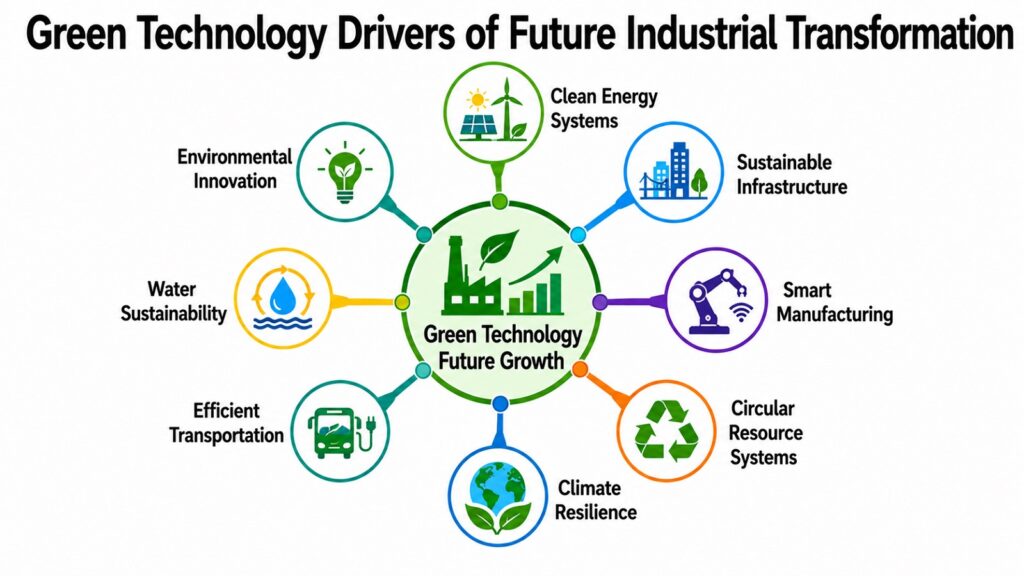
The eight domains explored in this article tell a consistent story. Green Technology is not a single invention or a narrow specialty. It is a broad and evolving ecosystem of innovations that is reshaping how the world generates energy, builds infrastructure, moves people and goods, manages resources, and produces the things modern life depends upon.
Renewable energy technologies are making clean power affordable and accessible on a global scale. Energy efficiency systems are reducing waste and lowering costs across industries and communities. Pollution control technologies are cleaning up the air, water, and soil that human health depends on. Waste management innovations are turning discarded materials into resources and closing the loops that linear economies leave open.
Green transportation technologies are reducing the carbon footprint of mobility while improving urban livability. Water conservation systems are stretching finite freshwater supplies further in a world where scarcity is growing. Carbon reduction technologies are addressing the climate crisis directly, both by cutting emissions and by pulling carbon dioxide out of the atmosphere. And eco-friendly manufacturing is proving that production and sustainability can coexist and even reinforce each other.
What unites all these developments is the underlying logic of Green Technology. It is the recognition that environmental responsibility and economic performance are not opposing forces. They are increasingly inseparable. Organizations that invest in Green Technology are discovering that efficiency, resilience, and sustainability tend to arrive together. Governments that create supportive policy environments for Green Technology are attracting investment, creating jobs, and building stronger long-term economic foundations.
The shift towards an economy driven by Green Technology is not yet finalized nor is it guaranteed. It necessitates ongoing investment, political determination, and a transformation in cultural attitudes. However, the trajectory is evident, and the speed of change is increasing. For enterprises, legislators, and individuals seeking to comprehend the future direction of the contemporary world, Green Technology serves as the most transparent guide accessible.
Table 10: Green Technology — Summary of Major Innovations and Sustainability Impact
| Green Technology Domain | Key Sustainability Impact |
| Renewable Energy | Replaces fossil fuels with clean, inexhaustible power sources |
| Energy Efficiency | Reduces energy waste across buildings, grids, and industries |
| Pollution Control | Cleans air, water, and soil while enabling regulatory compliance |
| Waste Management | Recovers materials and energy from waste, reducing landfill use |
| Green Transportation | Cuts transport emissions and improves urban air quality |
| Water Conservation | Extends freshwater supplies and improves agricultural efficiency |
| Carbon Reduction | Captures and reduces greenhouse gas emissions at scale |
| Eco-Friendly Manufacturing | Produces goods with lower resource use and environmental harm |