Table of Contents
Introduction: Human Resources as the Foundation of Business Success
Human Resources is one of the most critical business functions in any organization. It enables businesses to build, manage, develop, and retain a productive workforce while supporting long-term growth and operational effectiveness. Without strong Human Resources practices, even well-resourced organizations struggle to align their people with strategic goals or sustain consistent performance.
Modern Human Resources extends far beyond administrative responsibilities such as payroll or contract management. It plays a strategic role in shaping leadership pipelines, building organizational culture, driving innovation, ensuring regulatory compliance, and improving business performance. Organizations that treat Human Resources as a purely operational function consistently underperform those that invest in it as a strategic partner.
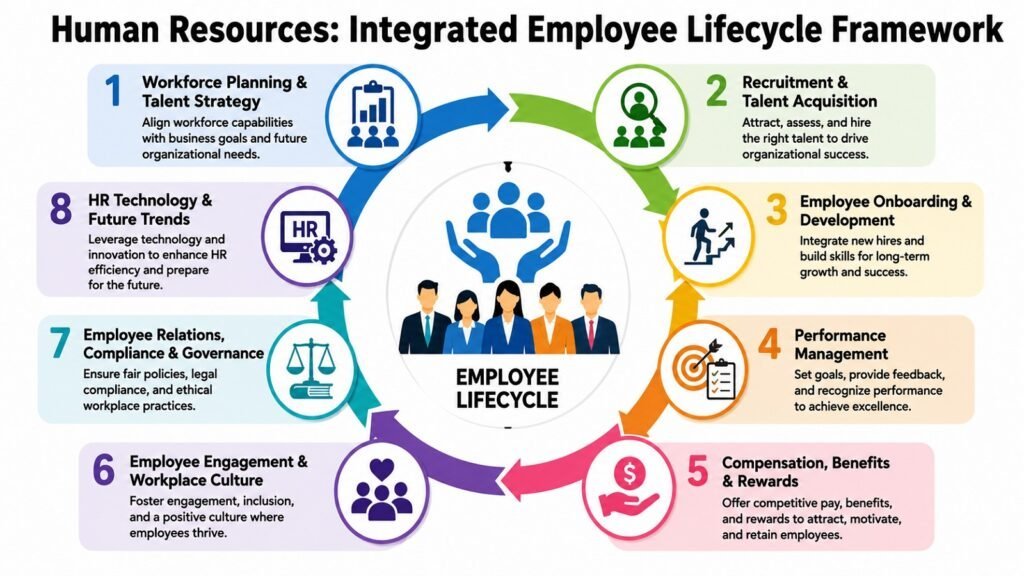
Competitive advantage increasingly depends on the quality of an organization’s workforce. Human Resources is the function responsible for managing talent throughout the entire employee lifecycle, from initial hiring through development, engagement, and eventual transition. Every stage of this journey requires deliberate strategy and execution, and each stage influences how effectively the organization performs.
This article is a comprehensive, research-based guide that combines theoretical frameworks, practical applications, industry best practices, and real-world examples. It approaches Human Resources from both strategic and operational perspectives, making it relevant to leaders, practitioners, students, and anyone seeking a deeper understanding of how workforce management drives organizational success.
The eight functions discussed throughout this article collectively represent the foundation of modern Human Resources. Each covers a distinct area of workforce management, but together they form an integrated system where every element supports and reinforces the others. The table below introduces all eight functions at a glance.
Table 1: Human Resources Functions and Their Primary Purpose
| Human Resources Function | Primary Purpose |
| Workforce Planning and Talent Strategy | Ensures the organization has the right people and skills to meet business goals |
| Recruitment and Talent Acquisition | Attracts and selects qualified candidates who fit organizational needs |
| Employee Onboarding and Development | Prepares new employees and builds workforce capability over time |
| Performance Management | Measures, develops, and improves employee performance against goals |
| Compensation, Benefits and Rewards | Attracts, motivates, and retains employees through competitive reward systems |
| Employee Engagement and Workplace Culture | Builds motivated, connected, and high-performing work environments |
| Employee Relations, Compliance and Governance | Maintains fair, legal, and ethical workplace practices and policies |
| Human Resources Technology and Future Trends | Uses technology and data to improve efficiency and strategic decision-making |
1. Human Resources Workforce Planning and Talent Strategy
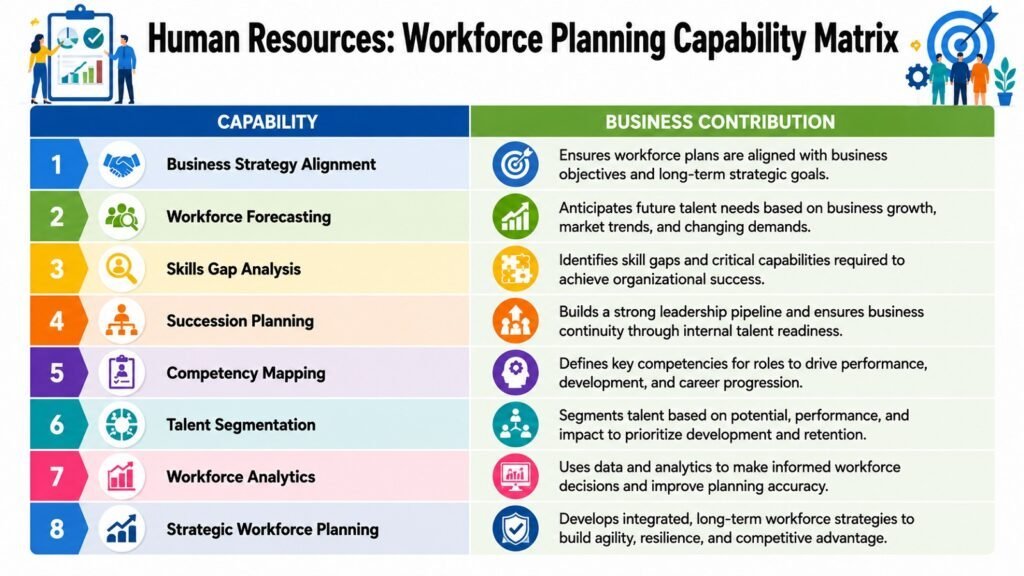
Effective Human Resources begins with workforce planning, the process of ensuring an organization has the right people, skills, leadership capabilities, and workforce structure to meet its current and future objectives. It is a forward-looking discipline that connects business demand with human talent supply and sets the strategic direction for every other Human Resources activity.
Workforce forecasting sits at the core of this function. Human Resources teams analyze business growth plans, technology investments, and operational changes to estimate how many employees will be needed, in which roles, and with what capabilities. Succession planning builds on this by identifying and preparing high-potential employees to fill critical roles when they become vacant, reducing exposure to leadership gaps and knowledge loss.
Competency mapping defines the specific skills and behaviors each role requires, while skills gap analysis compares current workforce capabilities with future organizational needs. These tools identify where investment in hiring, training, or restructuring is most necessary. Organizational design determines how roles and teams are structured to maximize performance, and talent segmentation prioritizes attention and investment toward the employees most critical to strategic success.
Human Capital Theory, associated with economists Gary Becker and Theodore Schultz, provides a strong intellectual foundation for workforce planning by arguing that investing in people creates measurable economic value. The Resource-Based View of strategy adds that a skilled, well-organized workforce is among the most difficult competitive advantages for rivals to imitate. Both frameworks support the business case for long-term talent investment rather than short-term cost reduction.
Traditional workforce planning relied on annual budgets and historical data. Modern approaches use AI-powered analytics to model talent supply and demand with greater precision and spot skills shortages earlier. Research from McKinsey & Company consistently shows that high-performing companies apply more rigorous planning practices than their peers. Common challenges include limited data quality, rapidly evolving technology, and the difficulty of predicting future skill requirements.
Table 2: Human Resources Workforce Planning — Key Concepts and Applications
| Concept or Activity | Practical Application |
| Workforce Forecasting | Predicts future talent needs based on business growth and strategy |
| Succession Planning | Identifies and develops employees ready to fill critical leadership roles |
| Skills Gap Analysis | Compares current capabilities against future organizational requirements |
| Competency Mapping | Defines the skills and behaviors needed in each role |
| Organizational Design | Structures roles and teams to optimize performance and efficiency |
| Human Capital Theory | Supports investment in people as a source of long-term business value |
| Resource-Based View | Treats a skilled workforce as a sustainable competitive advantage |
| AI Workforce Analytics | Uses data and algorithms to improve planning accuracy and foresight |
2. Human Resources Recruitment and Talent Acquisition
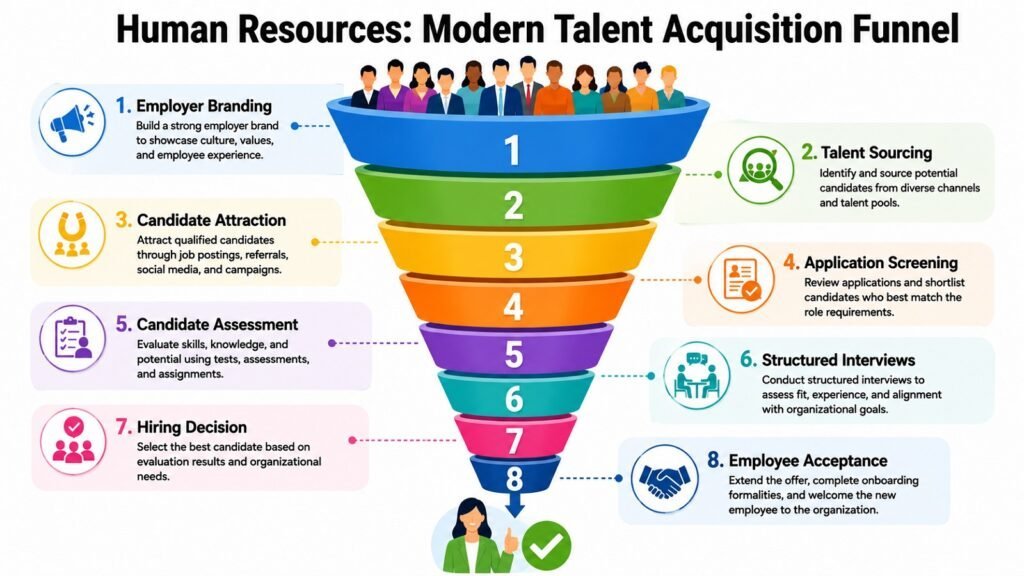
Once workforce planning identifies talent needs, Human Resources moves into recruitment and talent acquisition, the process of attracting, evaluating, and selecting employees who can contribute to organizational performance and long-term growth. The quality of this process directly shapes workforce capability and business competitiveness.
Employer branding is the foundation of effective recruitment. It refers to how an organization presents itself as a place to work, and it significantly influences both the volume and quality of candidates who apply. According to LinkedIn Talent Solutions, organizations with strong employer brands see up to 50 percent lower cost per hire and attract significantly more qualified applicants than those without a clear value proposition for prospective employees.
Recruitment channels now span job boards, professional networks, employee referral programs, social media, graduate recruitment schemes, and direct sourcing. Each channel reaches different candidate audiences and suits different types of roles. Human Resources professionals must select the right combination based on the position, the talent pool, and available resources. Modern talent acquisition also integrates applicant tracking systems, which automate application collection and initial screening at scale.
Artificial intelligence has entered recruitment in meaningful ways. AI tools assess applications, predict candidate success, and, when configured carefully, reduce the influence of unconscious bias in early screening. Structured interviews and standardized assessment frameworks improve hiring accuracy compared to unstructured conversations alone, giving Human Resources teams greater confidence in their selection decisions.
The cost of poor hiring decisions is substantial. The Society for Human Resource Management estimates that replacing a single employee can cost between 50 and 200 percent of their annual salary, depending on seniority. These costs include recruitment fees, productivity loss, training time, and team disruption. Organizations that treat talent acquisition as a strategic discipline rather than a transactional necessity consistently build stronger, more cohesive workforces with lower long-term turnover rates.
Table 3: Human Resources Recruitment — Key Methods and Insights
| Recruitment Element | Key Insight or Application |
| Employer Branding | Strong brands lower cost per hire and attract higher-quality candidates |
| Applicant Tracking Systems | Automate screening and reduce manual workload in high-volume recruitment |
| Structured Interviews | Improve hiring accuracy by standardizing questions and scoring criteria |
| AI Screening Tools | Assess applications quickly and help reduce unconscious bias |
| Employee Referrals | Typically produce higher-quality hires with better cultural alignment |
| Skills-Based Assessment | Work-sample tests predict job performance more reliably than interviews alone |
| Talent Pipeline Building | Proactive sourcing reduces time-to-hire when vacancies arise |
| Cost of Poor Hiring | Replacing an employee can cost 50–200% of their annual salary |
3. Human Resources Employee Onboarding and Development
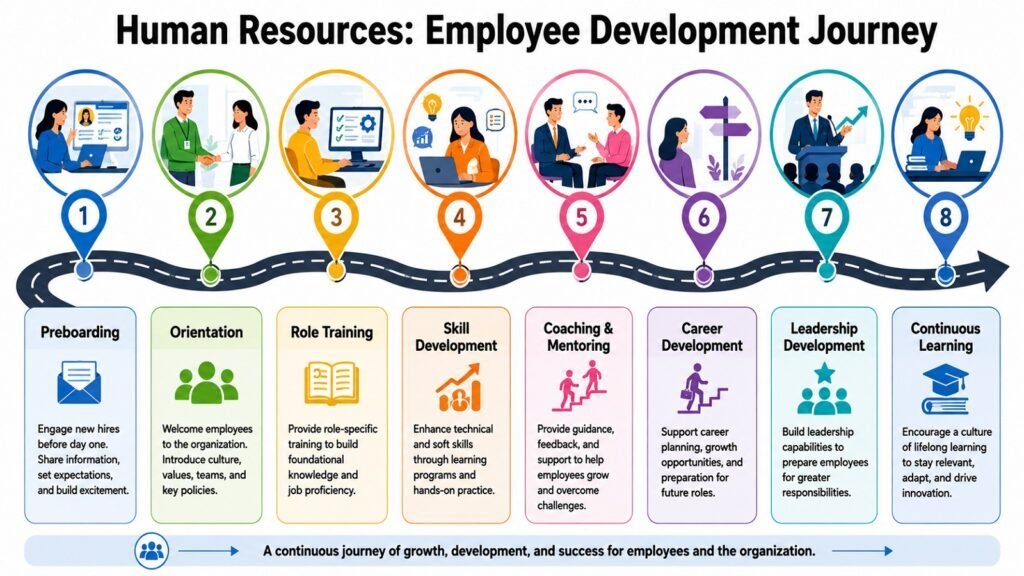
Effective recruitment is only the beginning. Human Resources must also ensure that new employees transition successfully into their roles and that all employees continue developing their skills throughout their careers. Onboarding and development directly influence engagement, performance, and retention from an employee’s very first days in an organization.
Research from Brandon Hall Group found that structured onboarding programs improve new hire retention by 82 percent and productivity by more than 70 percent. Despite this evidence, many organizations still treat onboarding as a brief administrative formality rather than a multi-month integration process. A well-designed onboarding experience introduces new employees to organizational values, establishes clear role expectations, connects them with colleagues and mentors, and gives them the tools to begin contributing quickly.
Learning and development extends well beyond the onboarding phase. Training programs address specific skill gaps, while career development frameworks show employees a visible pathway for growth within the organization. Leadership development prepares high-potential employees for greater responsibility and ensures a pipeline of capable leaders for the future. Coaching and mentoring provide the experiential dimension that formal training alone cannot replicate.
Reskilling and upskilling have become urgent priorities as automation and artificial intelligence reshape job requirements. The World Economic Forum estimated that more than half of all employees would need significant reskilling by the mid-2020s. Human Resources teams that anticipate these shifts and build continuous learning cultures are far better positioned to support organizational adaptation without the disruption of large-scale redundancies.
Digital learning platforms have transformed development delivery. Self-paced e-learning, virtual instruction, and AI-personalized learning pathways make it possible to reach distributed workforces at scale and at lower cost than traditional classroom training. However, digital learning is most effective when it complements human interaction rather than replacing it. Practical application, peer learning, and direct feedback from managers and coaches remain essential components of genuine capability development.
Table 4: Human Resources Onboarding and Development — Key Approaches and Evidence
| Development Activity | Key Insight or Application |
| Structured Onboarding | Improves new hire retention by 82% and productivity by over 70% |
| Mentoring Programs | Provides experience-based guidance unavailable through formal training alone |
| Coaching | Supports behavioral development and helps employees navigate role challenges |
| Career Development Frameworks | Gives employees a visible future path, improving motivation and retention |
| Leadership Development | Prepares high-potential employees for greater responsibility and future roles |
| Reskilling and Upskilling | Addresses capability gaps caused by automation and technology change |
| Digital Learning Platforms | Delivers scalable learning at the pace and preference of each employee |
| Continuous Learning Culture | Sustains workforce adaptability and innovation over the long term |
4. Human Resources Performance Management
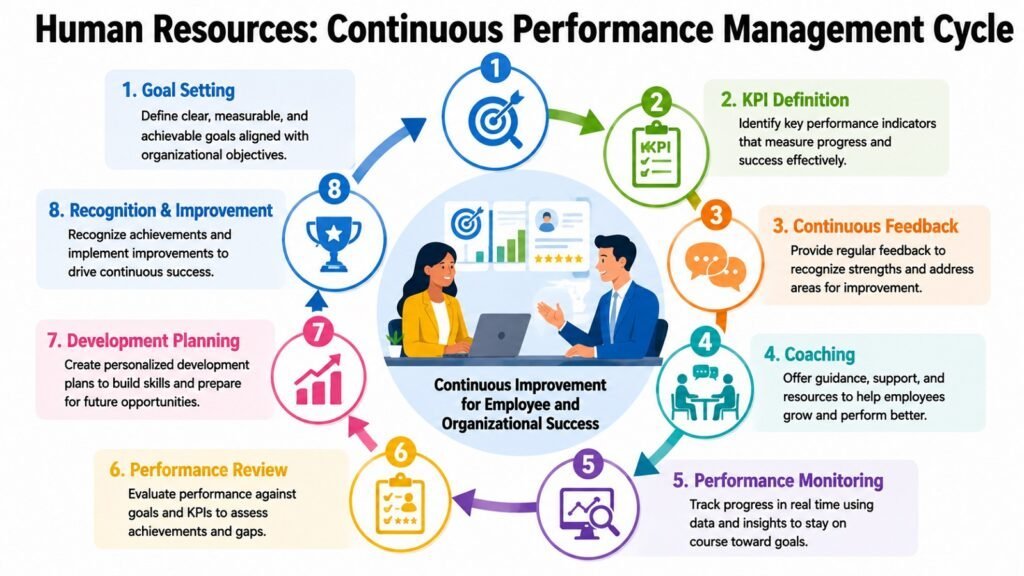
Employee development is most effective when connected to a clear framework for measuring and improving performance. Performance management is the Human Resources function that creates this connection by setting expectations, measuring results, delivering feedback, and supporting employees in reaching their full potential.
Goal setting is the starting point. SMART goals, which are Specific, Measurable, Achievable, Relevant, and Time-bound, give employees clear targets and reduce ambiguity about what success looks like. Many organizations complement individual goal setting with OKRs, meaning Objectives and Key Results, which align team and individual goals with broader organizational priorities. Companies including Google and Intel have used OKRs to drive focused, transparent growth at scale.
Traditional annual performance reviews have come under significant criticism. A Deloitte study found that only 8 percent of organizations believed their performance management process delivered high business value. The main weaknesses are infrequent feedback, retrospective focus, and vulnerability to recency bias. Continuous performance management addresses these gaps through regular manager-employee check-ins, ongoing coaching conversations, and a stronger developmental emphasis rather than backward-looking ratings.
Companies including Adobe, General Electric, and Deloitte have replaced formal annual reviews with more frequent, conversation-based approaches and reported improvements in both engagement and business outcomes. Performance improvement planning plays a supporting role when employees consistently fall short of expectations, providing a structured and constructive framework for addressing performance issues with documented targets and clear support.
The Balanced Scorecard, developed by Kaplan and Norton, offers a multidimensional framework for measuring performance across financial results, customer satisfaction, internal processes, and learning and growth. This approach prevents organizations from overemphasizing short-term financial metrics at the expense of the longer-term capabilities that sustain performance. Connecting key performance indicators to Human Resources goals helps bridge individual contribution and organizational strategy.
Table 5: Human Resources Performance Management — Frameworks and Insights
| Performance Tool or Concept | Practical Relevance |
| SMART Goals | Gives employees clear, measurable, and time-bound performance targets |
| OKRs (Objectives and Key Results) | Aligns individual goals with organizational strategy and creates transparency |
| Annual Performance Reviews | Traditional approach criticized for being infrequent and retrospective |
| Continuous Performance Management | Regular check-ins and feedback improve engagement and development |
| Performance Improvement Plans | Provides a structured and supportive framework for addressing underperformance |
| Balanced Scorecard | Measures performance across financial, customer, process, and learning dimensions |
| Key Performance Indicators | Tracks measurable outcomes aligned with team and organizational goals |
| 360-Degree Feedback | Collects performance input from managers, peers, and direct reports |
5. Human Resources Compensation, Benefits and Rewards
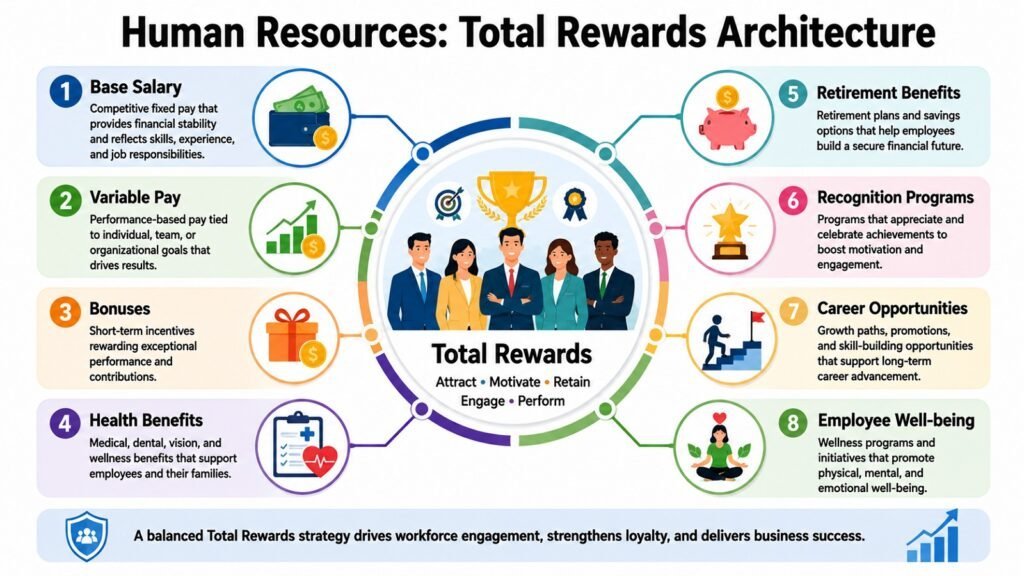
Regardless of how strong an organization’s culture or development programs may be, employees also need to feel fairly compensated for their contributions. Human Resources is responsible for designing reward systems that attract talented candidates, sustain employee motivation, and retain the people the organization depends on most.
Salary structures form the foundation of compensation strategy. Most organizations design salary bands to ensure internal fairness while remaining competitive with market rates. Regular benchmarking is essential, as salaries that fall below market levels raise turnover and reduce candidate attraction. Incentive programs such as performance bonuses, profit-sharing, and equity awards connect financial rewards to individual or organizational performance, reinforcing the link between effort and outcomes.
Employee benefits have grown increasingly important. Health insurance, retirement contributions, paid leave, flexible working arrangements, and employee assistance programs collectively support financial security, well-being, and work-life balance. According to Mercer’s Global Talent Trends research, employees consistently rate benefits as a key factor in both accepting job offers and deciding to remain with their current employer.
Modern total rewards strategies take a broader view than traditional compensation models. Rather than focusing solely on salary and standard benefits, total rewards frameworks combine financial incentives, development opportunities, work flexibility, recognition, wellness programs, and career growth pathways. This holistic approach reflects research showing that intrinsic motivators such as purpose, autonomy, and recognition often drive engagement as powerfully as financial incentives alone.
Pay equity has become a critical Human Resources priority. Unjustified pay gaps expose organizations to legal risk, reputational damage, and erosion of employee trust. Many jurisdictions now require gender pay gap reporting, and employees increasingly expect transparency in how pay decisions are made. Proactive pay equity audits and clear compensation policies are among the most practical measures for addressing this challenge.
Table 6: Human Resources Compensation and Rewards — Key Components and Insights
| Compensation Element | Key Insight or Application |
| Salary Structures | Salary bands ensure internal fairness and market competitiveness |
| Performance Bonuses | Link financial rewards to individual or team performance outcomes |
| Profit-Sharing | Aligns employee interests with broader organizational financial success |
| Employee Benefits | Health, retirement, and leave programs support well-being and retention |
| Total Rewards Strategy | Combines financial and non-financial incentives to motivate and retain talent |
| Recognition Programs | Non-monetary acknowledgment strengthens motivation and engagement |
| Flexible Benefits | Personalized benefit packages reflect diverse employee needs and preferences |
| Pay Equity Audits | Identify and correct unjustified pay disparities across demographic groups |
6. Human Resources Employee Engagement and Workplace Culture
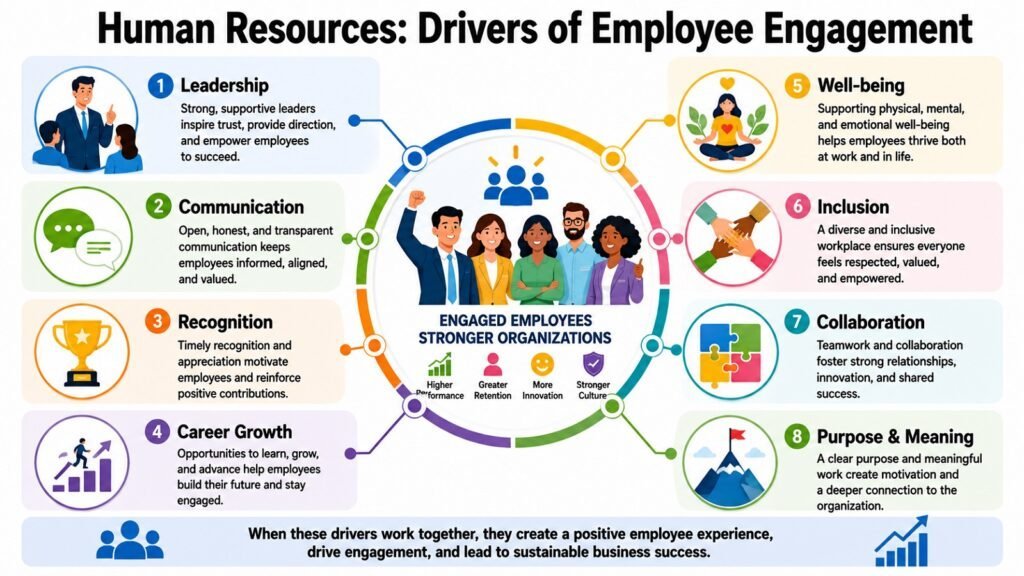
Compensation and development create the conditions for performance, but engagement and culture determine whether employees choose to give their best. Human Resources plays a central role in building workplaces where people feel motivated, connected, and genuinely invested in organizational success.
Employee engagement refers to the emotional commitment an employee has to their organization and its goals. Gallup’s State of the Global Workplace research has found that only around one-third of employees globally are actively engaged at work. Engaged employees perform better, take fewer sick days, innovate more, and stay longer, making the engagement gap one of the most consequential and addressable performance challenges in business.
Organizational culture encompasses the shared values, beliefs, behaviors, and norms that shape how work gets done. It influences every aspect of the employee experience, from how decisions are made and conflicts resolved, to how innovation is encouraged and leadership is exercised. Leaders shape culture more powerfully through their everyday behavior than through any formal policy, which is why leadership development and culture strategy are inseparable within effective Human Resources practice.
Diversity, equity, and inclusion have emerged as essential ethical priorities and critical business imperatives. Research conducted by McKinsey & Company indicates that organizations in the highest quartile for gender diversity are 25 percent more likely to attain above-average profitability, while those in the top quartile for ethnic diversity surpass their peers by 36 percent. Workplaces that embrace inclusivity benefit from a wider array of perspectives, foster more innovative solutions, and enhance decision-making across a broader spectrum of challenges.
Psychological safety, developed by Harvard professor Amy Edmondson, describes a workplace condition where employees feel safe to speak up, share ideas, and raise concerns without fear. Google’s Project Aristotle identified it as the single most important factor in high-performing teams. Well-being programs addressing physical, mental, and financial health reinforce this environment and reduce absenteeism, making them among the highest-return Human Resources investments.
Table 7: Human Resources Engagement and Culture — Key Concepts and Evidence
| Concept or Factor | Key Insight or Application |
| Employee Engagement | Only ~33% of global employees are actively engaged at work (Gallup) |
| Organizational Culture | Shared values and norms shape how employees work and make decisions |
| Diversity and Inclusion | Top-quartile diverse organizations outperform peers by 25–36% on profitability |
| Psychological Safety | The top predictor of high-performing teams, per Google’s Project Aristotle |
| Leadership Influence | Leaders shape culture through everyday behavior more than policy alone |
| Employee Well-Being | Investment in well-being reduces absenteeism and improves retention |
| Recognition Programs | Regular recognition strengthens motivation and reinforces desired behaviors |
| Internal Communication | Transparent communication builds trust and reduces organizational uncertainty |
7. Human Resources Employee Relations, Compliance and Governance
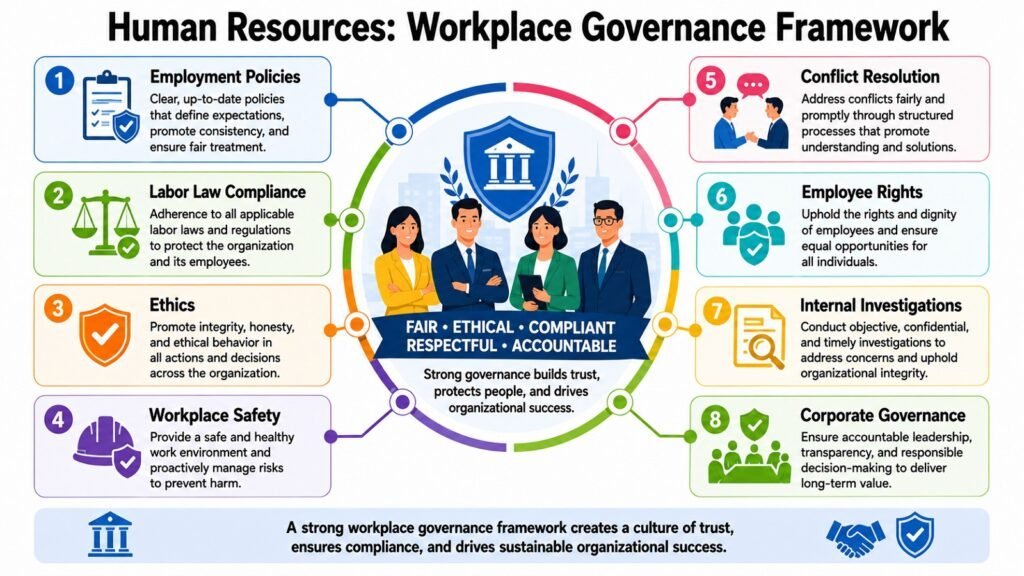
Building an engaged workforce also requires a foundation of fairness, legal integrity, and trust. Human Resources is responsible for managing employee relations, developing organizational policies, maintaining regulatory compliance, and upholding governance standards that protect both employees and the organization.
Employee relations encompasses the full range of interactions between employers and employees, including communication, conflict resolution, grievance handling, and disciplinary procedures. When managed effectively, it creates an environment where people feel respected and treated fairly. When managed poorly, disputes escalate, trust deteriorates, and organizational performance suffers. Human Resources professionals must combine legal knowledge with interpersonal skill to navigate this function well.
Compliance is a non-negotiable Human Resources responsibility. Organizations must adhere to a wide range of employment laws covering contracts, working hours, minimum wage, anti-discrimination, data protection, occupational health and safety, and termination procedures. Non-compliance carries serious consequences including financial penalties, legal proceedings, and lasting reputational damage. Human Resources teams operating across multiple jurisdictions must monitor an ever-evolving regulatory landscape to remain compliant at every level.
Occupational health and safety deserves particular attention. The International Labour Organization estimates that more than 2.3 million people die each year from work-related accidents and diseases, underlining the genuine stakes of inadequate safety governance. Human Resources is typically responsible for developing safety policies, conducting risk assessments, managing workplace incidents, and ensuring minimum legal standards are consistently met.
Proactive governance extends well beyond basic compliance. Organizations that embed ethical standards, transparent decision-making, and accountability into their Human Resources practices build more resilient workplaces and stronger reputations. Ethics codes, whistleblowing policies, conflict of interest frameworks, and regular governance audits are practical tools that forward-thinking Human Resources functions use to maintain organizational integrity and sustain employee trust over the long term.
Table 8: Human Resources Compliance and Governance — Key Areas and Applications
| Compliance or Governance Area | Key Responsibility or Application |
| Employment Law Compliance | Ensures contracts, pay, hours, and termination meet legal requirements |
| Anti-Discrimination Policies | Protects employees from unfair treatment based on protected characteristics |
| Grievance Handling | Provides a fair and structured process for resolving employee complaints |
| Disciplinary Procedures | Ensures consistent and fair responses to performance or conduct issues |
| Occupational Health and Safety | Minimizes workplace risk and meets statutory safety obligations |
| Data Protection (GDPR etc.) | Governs how employee personal data is collected, stored, and used |
| Labor Relations | Manages constructive engagement with trade unions and employee representatives |
| Ethics and Governance Frameworks | Embeds accountability, integrity, and transparency into organizational practices |
8. Human Resources Technology and Future Trends
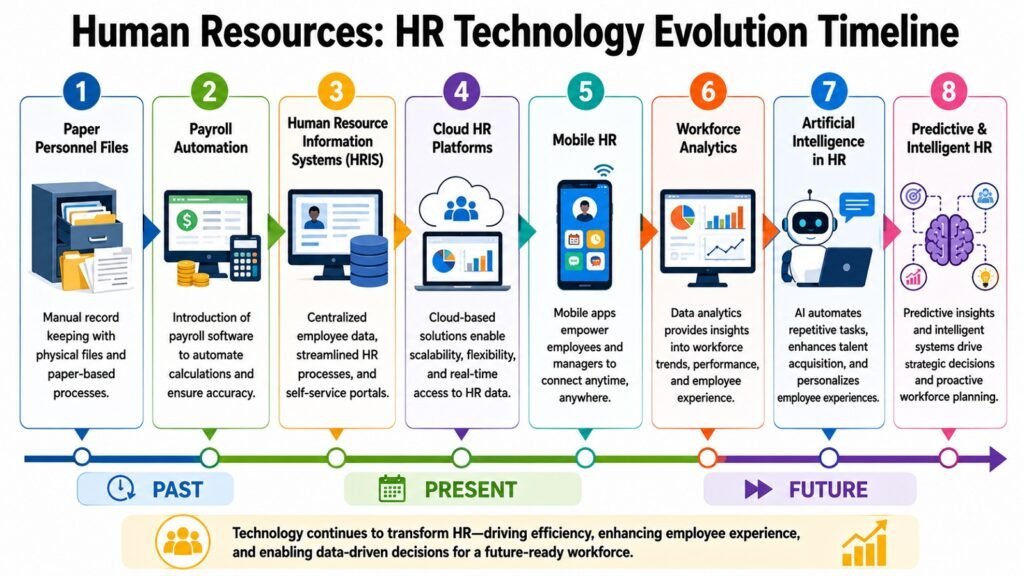
Technology is reshaping Human Resources at every level, from automating routine administrative tasks to enabling sophisticated analytics that inform strategic decisions. Understanding how technology fits into Human Resources practice is now essential for any organization that wants to remain competitive in a data-driven and digitally connected business environment.
Human Resource Information Systems, commonly abbreviated as HRIS, form the technological backbone of most modern Human Resources operations. These platforms centralize employee data, automate processes such as payroll, leave management, and benefits enrollment, and provide dashboards giving managers real-time access to workforce information. Cloud-based HRIS platforms have extended these capabilities to organizations of all sizes, not just large enterprises with substantial technology budgets.
People analytics involves the systematic use of workforce data to improve decisions about hiring, retention, performance, and development. According to Deloitte’s Global Human Capital Trends research, organizations that invest in people analytics report lower turnover, faster time-to-hire, and higher revenue per employee. The shift from intuition-based to evidence-based people management is accelerating, and the Human Resources functions driving it are gaining significant strategic influence within their organizations.
Artificial intelligence is expanding its role in recruitment, learning, and employee experience through tools that assist with resume screening, sentiment analysis, and predictive attrition modeling. A Society for Human Resource Management report noted that more than 25 percent of organizations were already using AI in recruitment by the mid-2020s. AI adoption also raises ethical questions about algorithmic bias, data privacy, and transparency that require careful organizational attention.
Remote and hybrid work have permanently changed the operational landscape for Human Resources. Managing distributed teams requires new approaches to onboarding, communication, performance, and culture-building. Microsoft’s Work Trend Index found that most employees now expect some degree of location flexibility, making digital employee experience a lasting Human Resources priority alongside emerging capabilities such as predictive analytics, immersive learning, and AI-assisted decision support.
Table 9: Human Resources Technology — Key Tools and Future Trends
| Technology or Future Trends | Practical Impact on HR |
| HRIS Platforms | Centralizes employee data and automates core HR administrative processes |
| People Analytics | Converts workforce data into evidence-based insights for strategic decisions |
| AI Recruitment Tools | Automates resume screening and reduces bias in early candidate assessment |
| Predictive Attrition Models | Identifies flight-risk employees before they decide to resign |
| Cloud-Based HR Platforms | Makes enterprise-grade HR technology accessible to organizations of any size |
| Digital Employee Experience | Ensures remote and hybrid employees stay connected and supported |
| Learning Management Systems | Delivers personalized and scalable employee development at low cost |
| AI-Assisted Decision Support | Provides HR leaders with data-backed recommendations for complex decisions |
Conclusion: Human Resources as the Driver of Sustainable Business Success
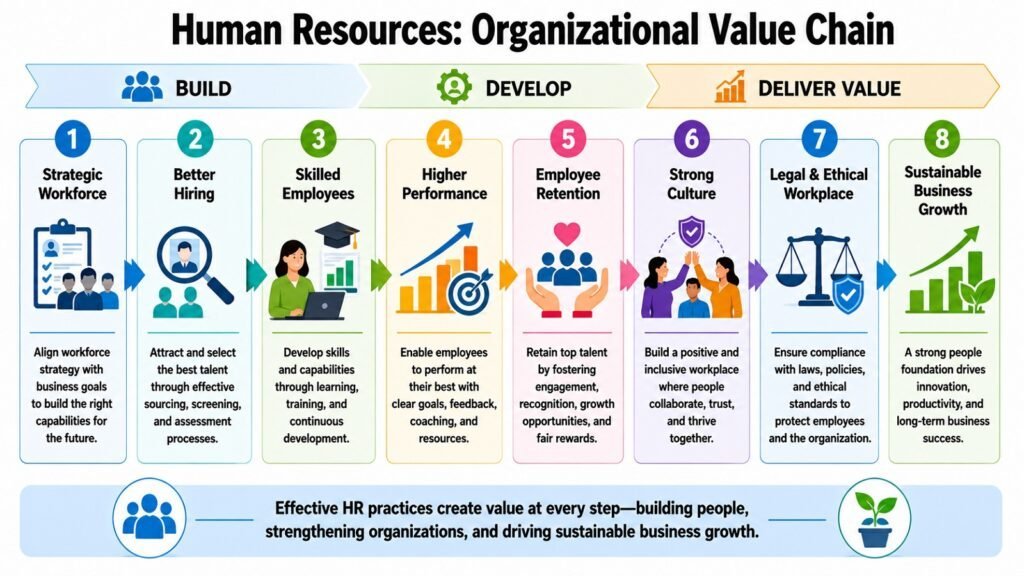
Human Resources is not a background support function. It is a strategic driver that shapes organizational performance at every level. The eight functions discussed in this article collectively form an integrated system for managing the most important asset any organization possesses: its people.
Workforce planning ensures the right talent is available when needed. Talent acquisition brings capable people in. Onboarding and development grow their capabilities. Performance management connects effort to results. Compensation sustains motivation. Engagement and culture shape the environment where people give their best. Compliance and governance protect the organization and its employees. Technology ties all of these together, making Human Resources faster, smarter, and more strategically influential.
Research consistently shows that organizations with mature Human Resources practices outperform those that treat workforce management as a secondary concern. Human Resources now influences leadership decisions, shapes business strategy, drives innovation, and contributes directly to competitive advantage in ways that were not widely recognized even two decades ago.
The future of Human Resources will be shaped by artificial intelligence, skills-based hiring, and rising employee expectations around flexibility and purpose. Organizations that invest in strong Human Resources capabilities now are building the resilience and adaptability they will need to compete for talent in the years ahead. Each of the eight functions covered here rewards deeper exploration, and the individual articles on each topic provide the next level of practical insight.
Table 10: Human Resources Functions and Their Primary Business Contribution
| Human Resources Function | Primary Business Contribution |
| Workforce Planning and Talent Strategy | Aligns talent supply with business needs and future objectives |
| Recruitment and Talent Acquisition | Builds workforce quality through rigorous candidate selection |
| Employee Onboarding and Development | Accelerates productivity and builds long-term workforce capability |
| Performance Management | Drives accountability, development, and alignment with business goals |
| Compensation, Benefits and Rewards | Attracts, motivates, and retains high-performing employees |
| Employee Engagement and Workplace Culture | Creates high-performance environments and reduces voluntary turnover |
| Employee Relations, Compliance and Governance | Protects the organization and builds employee trust and legal integrity |
| Human Resources Technology and Future Trends | Improves efficiency, decision quality, and strategic HR capability |